
Germany's Fiscal Resilience and EU Compliance: A Catalyst for European Equity Markets and Sovereign Bonds
Germany's 2025 fiscal reforms represent a seismic shift in its economic strategy, blending ambitious infrastructure spending with strategic exemptions from its long-standing “debt brake” rule. These reforms, framed within the constraints of EU fiscal compliance, have already begun reshaping European equity markets and sovereign bond dynamics. For investors, understanding the interplay between Germany's political and economic stability and its broader regional impact is critical to navigating the opportunities and risks in the eurozone.
Fiscal Reforms and Growth Projections
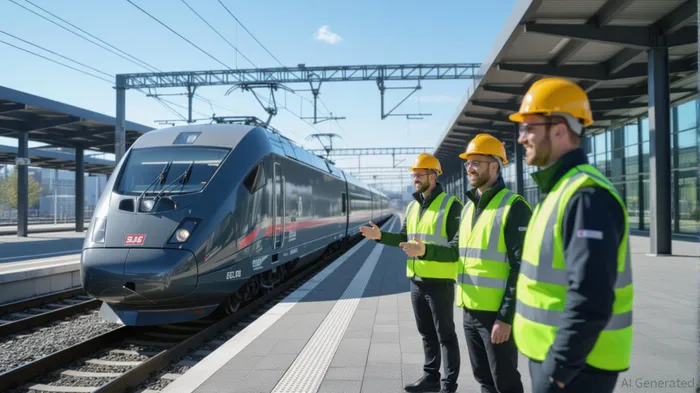
At the heart of Germany's 2025 reforms is a €500 billion infrastructure fund, designed to accelerate investments in transport, healthcare, energy, and digitalization. Model simulations suggest that if these funds are allocated to productive projects, Germany's GDP could rise by 1.25% by 2029 and 2.5% by 2035. This growth is driven by increased capital stock and productivity, with minimal drag on public debt (a projected 3.25% rise in the debt-to-GDP ratio by 2035). Crucially, the reforms also exempt defense spending above 1% of GDP from the debt brake, and allow federal states to borrow up to 0.35% of GDP annually, easing regional fiscal pressures.
However, these measures are not without trade-offs. The infrastructure fund's debt-financed nature has already triggered a sharp sell-off in German government bonds. In March 2025, 10-year yields surged by 43 basis points to 2.84%, the largest weekly increase since 1990. This volatility underscores the tension between growth-oriented fiscal expansion and the traditional German aversion to debt—a tension that investors must weigh carefully.
Equity Market Rally and Investor Sentiment
The fiscal reforms have been a tailwind for European equities. Following the March 2025 announcement, German stocks surged, with the DAX index rising over 12% in a month. The optimism stems from expectations of a more resilient German economy and the spillover effects of its growth on the eurozone. Sectors poised to benefit include construction, energy, and technology, as the infrastructure fund prioritizes modernization in these areas.
Yet, the rally is not without caveats. The ZEW investor confidence index for Germany, while improved to 52.7 in July 2025, reflects cautious optimism. Structural challenges—such as high energy costs, an aging population, and competition from Chinese automakers—remain headwinds. For instance, Volkswagen's recent revision of its financial guidance, citing $1.5 billion in tariff-related costs, highlights the fragility of export-driven sectors.
Sovereign Bond Yields and Yield Curve Dynamics
The surge in German bond yields has reverberated across the EU. European sovereign yields have risen in tandem, as investors recalibrate risk premiums amid the shift in Germany's fiscal stance. The steepening of Germany's yield curve—a sign of confidence in long-term growth—has also created a divergence with other eurozone economies. Countries with weaker fiscal positions, such as Italy and Spain, face steeper borrowing costs as the benchmark (German) yield rises.
The European Central Bank (ECB) has responded cautiously, maintaining a neutral stance while monitoring inflationary pressures. The ECB's March 2025 statement noted that Germany's fiscal expansion introduces “increased uncertainty” into the eurozone's economic outlook, particularly given global trade tensions. For bond investors, this means a delicate balancing act: while inflation-linked bonds may outperform in a higher-inflation environment, traditional fixed-rate bonds face duration risk as yields climb.
Political Stability: A Double-Edged Sword
Germany's political landscape remains fragmented, with the February 2025 federal elections producing a polarized outcome. The CDU/CSU leads with 30%, but coalition negotiations are complex, with potential alliances including a “Kenya coalition” (CDU/CSU, SPD, Greens) or a “Germany coalition” (CDU/CSU, SPD, FDP). While Friedrich Merz's market-oriented policies could stabilize investor sentiment, the risk of delayed coalition formation persists.
Political stability, however, is improving. The ZEW index's rise to 52.7 in July 2025 suggests growing confidence in Germany's ability to navigate these challenges. The new government's focus on structural reforms—such as labor market flexibility and public administration modernization—could further bolster economic resilience.
Investment Implications and Strategic Recommendations
For equity investors, the German fiscal reforms present a compelling case for exposure to growth-oriented sectors. Infrastructure plays (e.g., Siemens, RWE) and industrial conglomerates (e.g., Bosch) are prime candidates, given their alignment with the government's priorities. Additionally, European banks, which stand to benefit from higher lending margins in a rising-yield environment, warrant attention.
Bond investors, meanwhile, should adopt a defensive stance. While German government bonds offer a safe haven, the risk of further yield increases necessitates a tilt toward shorter-duration instruments. Inflation-linked bonds and high-quality corporate credits in sectors like utilities and healthcare may provide better risk-adjusted returns.
In real estate, the European market remains resilient, though Germany's Q2 2025 transaction volumes dropped to their weakest since 2010. Investors should focus on sectors like logistics and purpose-built student accommodation (PBSA), which are less sensitive to macroeconomic volatility.
Conclusion: A New Fiscal Paradigm
Germany's 2025 reforms mark a paradigm shift in its fiscal policy, prioritizing growth and resilience over austerity. While the immediate risks—political uncertainty, trade tensions, and bond market volatility—remain, the long-term benefits for European equities and the broader eurozone are substantial. For investors, the key lies in balancing optimism with caution, leveraging the growth potential of Germany's reforms while hedging against near-term uncertainties. As the EU's largest economy navigates this transition, its success could redefine the region's economic trajectory for years to come.







Comentarios
Aún no hay comentarios