
Germany-Egypt Economic Collaboration: A Strategic Nexus for Renewable Energy and Infrastructure Growth
In the evolving landscape of global energy transitions, Egypt has emerged as a pivotal partner for Germany in advancing sustainable infrastructure. Recent developments in 2023–2024 underscore a deepening economic collaboration between the two nations, driven by ambitious renewable energy projects and strategic financial frameworks. This partnership not only aligns with Egypt's national priorities but also reflects Germany's commitment to decarbonizing its global energy footprint.
A Financial Framework for Green Transformation
According to a Zawya report, Egypt and Germany inked a €118 million financial cooperation agreement in 2023, with €86 million earmarked for connecting Aqua Power Stations (1) and (2) to the national grid. This initiative is critical for offloading 1,100 megawatts of wind energy under Egypt's Nexus of Water, Food, and Energy (NWFE) program. Complementing this, a €21 million debt swap agreement was added to the Egypt-Germany Debt Swap Programme, raising its total value to €297 million (EGP 16.8 billion). This funding is directed toward integrating wind farms like Noes and Amunet in the Red Sea, which together have a combined capacity of 500 megawatts, the report noted.
Germany's broader support for Egypt's NWFE energy pillar includes a €250 million commitment, with €104 million allocated through debt swaps. These figures highlight a calculated approach to leveraging financial instruments to address Egypt's energy infrastructure gaps while reducing debt burdens, the report added.
Policy Reforms and Investment Attraction
Egypt's proactive legislative reforms have made it a magnet for international renewable energy investment. As stated by Egyptian officials and noted in the report, the country has streamlined regulatory frameworks to attract private sector participation, a move that has positioned it among the top destinations for green energy projects in the Middle East. This aligns with Germany's dual objectives: supporting Egypt's energy security and advancing global climate goals.
German Ambassador Jürgen Schulz emphasized the transformative potential of these projects, noting that they will supply green electricity to over 2.5 million households, according to the report. This not only addresses Egypt's growing energy demand but also reduces reliance on fossil fuels, a critical step for a nation grappling with resource constraints.
Strategic Implications and Future Prospects
The collaboration extends beyond financial metrics. By integrating Egypt's renewable energy capacity into its national grid, Germany is effectively creating a regional hub for clean energy. The Red Sea wind farms, for instance, are part of a larger vision to position Egypt as a bridge between Europe and Africa in the green energy transition.
Conclusion
The Egypt-Germany partnership exemplifies how strategic financial tools and policy alignment can catalyze large-scale infrastructure development. For investors, this collaboration presents a unique opportunity to engage in projects with both economic and environmental returns. As Egypt continues to refine its regulatory environment and Germany doubles down on its climate commitments, the region is poised to become a cornerstone of the global renewable energy economy.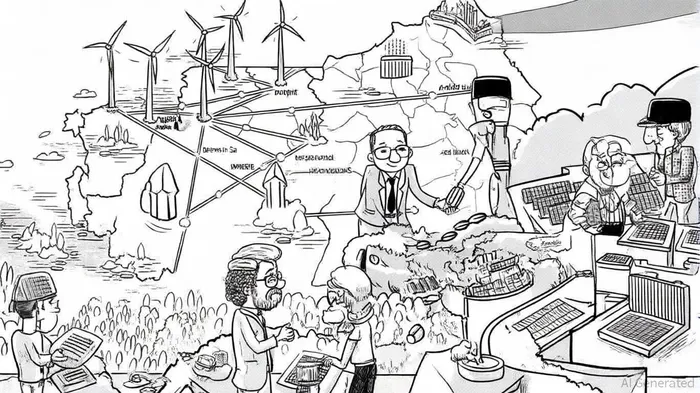







Comentarios
Aún no hay comentarios