
Germany's Air Conditioning Market: A Green HVAC Revolution in the Age of Climate Change
Germany's air conditioning market is undergoing a transformative shift, driven by a confluence of climate pressures, regulatory evolution, and technological innovation. As summer temperatures in the country have climbed to an average of 15.33°C in 2022 (World Bank data), the demand for cooling solutions is surging. This growth is not merely a response to rising heat but a strategic pivot toward climate-resilient infrastructure, with green HVAC technologies and renewable energy integration emerging as the next frontier. For investors, this represents a compelling intersection of environmental necessity and market opportunity.
The Climate Imperative: A Market in Motion
The German air conditioning market is projected to grow at a CAGR of 6.20% from 2025 to 2034, reaching USD 4.13 billion by 2034. This trajectory is fueled by three key drivers:
1. Urbanization and Building Modernization: With 192,744 new residential and commercial buildings constructed in 2022 (German Federal Statistical Office), the need for energy-efficient cooling systems is acute. Older structures, often lacking insulation or climate adaptability, are being retrofitted with advanced HVAC solutions.
2. Government Incentives: The KfW regulation offers up to EUR 10,000 in subsidies for heat pumps in multi-family housing, while the Gebäudeenergiegesetz (GEG) mandates 65% renewable energy use in new constructions. These policies are accelerating the adoption of green technologies.
3. Technological Innovation: Inverter-driven AC units, smart thermostats, and IoT-enabled systems are becoming mainstream. These technologies not only reduce energy consumption but also align with Germany's broader decarbonization goals.
Renewable Integration: The Next Frontier
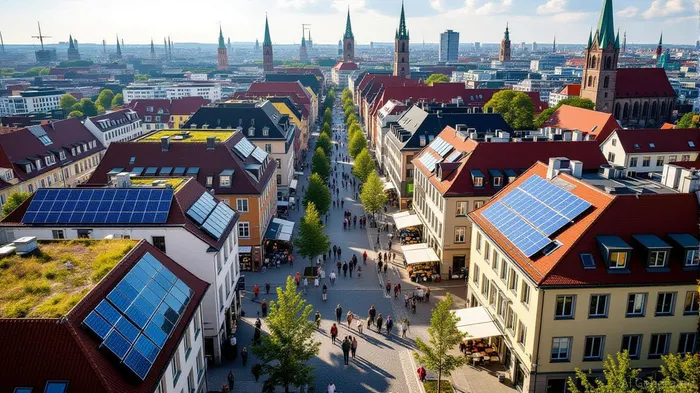
The integration of renewable energy into HVAC systems is reshaping the market. Solar-powered air conditioners, for instance, are gaining traction, leveraging Germany's robust photovoltaic infrastructure. According to the Green Cool Factor framework, hybrid systems that combine solar power with smart grid management can reduce operational costs by up to 40% while cutting carbon emissions.
Moreover, the rise of decentralized energy solutions—such as geothermal heat exchangers and phase-change materials—is enabling buildings to become net-zero energy consumers. This shift is particularly relevant in Germany, where the building sector accounts for 40% of total energy use. Startups and established firms alike are innovating in this space, with companies like Sobie Systems and Carnot Innovations leading the charge in predictive maintenance and AI-driven energy optimization.
Regulatory Uncertainty and Political Volatility
Despite the momentum, challenges persist. The 2023 leak of the GEG draft triggered a 51% surge in heat pump sales by year-end, only to see demand plummet by 50% in early 2024 due to regulatory confusion and political debates. The 2025 federal elections have further stoked uncertainty, with opposition parties threatening to roll back key provisions of the GEG. This volatility underscores the need for investors to hedge against policy shifts while focusing on long-term trends.
Investment Opportunities in a Green HVAC Ecosystem
The German air conditioning market offers multiple entry points for investors:
1. Heat Pump Manufacturers: Companies like Bosch and Vaillant, which dominate the domestic market with a three-tiered distribution model (manufacturers → wholesalers → installers), are well-positioned to capitalize on the renewable energy transition. Their ability to leverage existing networks and R&D pipelines provides a competitive edge.
2. Smart HVAC Startups: Firms specializing in IoT-enabled systems, such as Sensgreen and MechaSense, are addressing the growing demand for precision climate control. These companies are also exploring partnerships with renewable energy providers to create integrated solutions.
3. Renewable Energy Providers: As HVAC systems become more reliant on solar and wind power, energy companies with grid management expertise—like E.ON or EnBW—stand to benefit from the sector's expansion.
Strategic Considerations for Investors
- Diversification Across Sectors: Given the political uncertainty, investors should balance exposure to domestic HVAC firms with international opportunities in markets like Finland or Sweden, where green HVAC adoption is more mature.
- Focus on Resilience: Prioritize companies with robust R&D pipelines and diversified revenue streams (e.g., repair services, software solutions) to weather regulatory and economic fluctuations.
- Long-Term Horizon: The replacement of Germany's aging heating stock (21.6 million systems, only 7.9% heat pumps) will drive demand for over a decade. Patience and strategic patience are key.
Conclusion: A Climate-Resilient Future
Germany's air conditioning market is not just responding to climate change—it is redefining it. By integrating renewable energy and smart technologies, the sector is laying the groundwork for a sustainable, energy-efficient future. For investors, this represents a unique opportunity to align financial returns with environmental impact. However, success will require navigating regulatory complexities and embracing innovation. As the market matures, the companies that lead in green HVAC technology and renewable integration will emerge as the defining players of a climate-resilient Germany.







Comentarios
Aún no hay comentarios