
German Power Market Volatility and the Implications for OTC Baseload Power Exposure
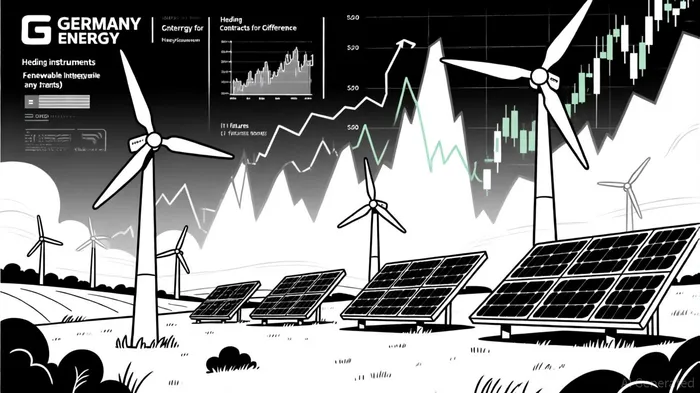
The German power market is undergoing a seismic shift as the Energiewende accelerates, driven by ambitious renewable integration targets and evolving policy frameworks. By 2024, renewables accounted for 57% of electricity generation, with a goal of 80% by 2030[1]. This rapid decarbonization, while critical for climate objectives, has introduced volatility into the market, compounding challenges related to grid stability, storage capacity, and pricing dynamics. For investors with over-the-counter (OTC) baseload power exposure, navigating this landscape requires a nuanced understanding of hedging strategies and tactical positioning amid regulatory and technological uncertainties.
Drivers of Volatility: Policy Shifts and Renewable Integration
Germany's transition to a market-based support system for renewables—replacing fixed-price subsidies with mechanisms like contracts for difference (CfDs) and revenue clawbacks—has reshaped risk profiles for market participants[2]. According to a report by Reuters, this shift aims to stabilize costs while maintaining climate goals, but it has also created short-term uncertainty in electricity pricing[2]. EEX prices, for instance, are now more sensitive to variables such as renewable generation levels, carbon certificate costs, and demand fluctuations[3].
The phaseout of nuclear and coal power further exacerbates volatility. With renewables accounting for 31.8% of electricity production in 2024 (wind alone), the market is increasingly exposed to weather-dependent supply shocks[4]. Meanwhile, the EU Emissions Trading System (ETS) remains a bullish driver for carbon prices, indirectly inflating power costs[5]. These dynamics underscore the need for robust hedging frameworks to mitigate exposure.
Hedging OTC Baseload Exposure: Beyond Traditional Instruments
For investors with OTC baseload power exposure, traditional linear hedging strategies—such as long-term Power Purchase Agreements (PPAs)—are proving insufficient. A study published in ScienceDirect highlights that such strategies often fail to address tail risks in renewable PPAs due to low hedging effectiveness[6]. Instead, market-specific approaches are gaining traction.
Monthly hedging contracts, for example, demonstrate higher effectiveness than annual ones, as they align more closely with the volatility of renewable generation cycles[6]. Financial instruments like ICE's German Power Financial Base Futures, which settle based on Day-Ahead auction prices, offer a tactical solution for short-term exposure[7]. Additionally, Guarantees of Origin (GOs) are emerging as a hedging tool, with prices projected to rise to EUR 5.77/MWh by 2027 as market balance tightens[5].
However, the rise in imbalance costs—projected to increase from EUR 1.50/MWh in 2025 to EUR 2.40/MWh by 2050—demands that hedging strategies explicitly account for renewable volatility[5]. A proposed "hedging obligation," requiring suppliers to hedge supply obligations via futures markets or demand flexibility, could further stabilize the system while avoiding costly capacity markets[8].
Investment Positioning: Opportunities and Risks in the Transition
Germany's energy transition requires an estimated €13.2 trillion in investments by 2050, with private capital playing a pivotal role[9]. Private equity firms are increasingly targeting infrastructure projects such as offshore wind (targeting 30 GW by 2030), grid-connected storage, and green hydrogen[10]. Yet, regulatory risks remain the top obstacle for investors, followed by technological and market uncertainties[11].
The government's goal of 80% renewable electricity by 2030 and a climate-neutral power system by 2035 hinges on grid expansion and interconnections with neighboring countries. Investors must weigh these opportunities against challenges like grid bottlenecks and geopolitical risks (e.g., US protectionism)[9]. For instance, while 53% of investment experts predict more private capital transactions in 2025, high seller price expectations and political uncertainties persist[9].
Strategic Recommendations for Investors
- Adopt Dynamic Hedging Portfolios: Combine short-term futures (e.g., ICE contracts) with market-based mechanisms like CfDs to balance volatility and regulatory shifts.
- Prioritize Storage and Grid Infrastructure: Allocate capital to projects that address intermittency and grid constraints, such as battery storage and hydrogen infrastructure.
- Monitor Carbon and Gas Price Trends: Given the EU ETS's tightening market, carbon prices will remain a key determinant of power costs[5].
- Engage in Policy Advocacy: Advocate for regulatory stability to reduce investment risks, particularly as Germany phases out nuclear and coal.
Conclusion
Germany's power market volatility is a double-edged sword: it presents risks for OTC baseload exposure but also opens doors for strategic investors who can navigate the transition's complexities. By leveraging market-specific hedging tools, prioritizing infrastructure resilience, and aligning with policy trajectories, investors can position themselves to thrive in a decarbonizing energy landscape.







Comentarios
Aún no hay comentarios