
German Equities as a Play on Resilient European Growth
The German economy’s Q1 2025 GDP surprise—upwardly revised to 0.4% quarterly growth—has exposed a critical investment opportunity. Beneath the headline figure lies a story of sector-specific resilience, particularly in manufacturing and technology, which are defying broader economic stagnation. Investors ignoring these pockets of strength risk missing out on a uniquely positioned market. Let’s dissect why German equities in these sectors are primed for growth and why now is the time to act.
Manufacturing’s Comeback: A Catalyst for Growth
German manufacturing—the backbone of Europe’s industrial might—delivered a 1% quarterly expansion, reversing its prior contraction and outpacing market expectations. This surge was fueled by export front-loading as companies scrambled to avoid impending U.S. tariffs, boosting shipments of automobiles, machinery, and pharmaceuticals. The sector’s rebound isn’t just a blip:
- Automotive exports rose sharply, with companies like Daimler and BMW leveraging advanced manufacturing (robotics, AI) to maintain competitiveness.
- Pharmaceuticals saw strong demand, driven by global health trends and Germany’s biotech leadership.
- Industrial machinery production increased, signaling renewed confidence in capital spending.
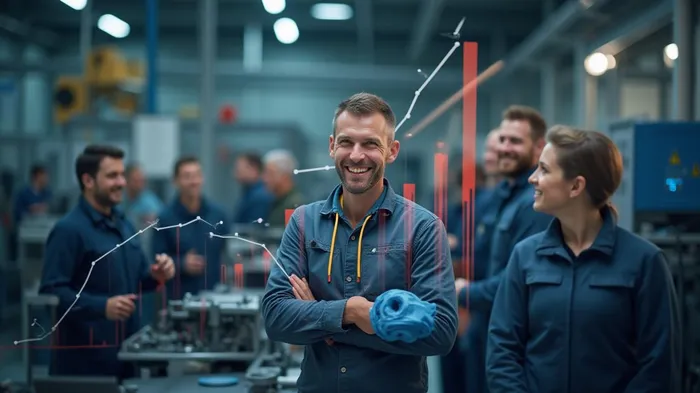
The export-driven recovery is no accident. Even as annual GDP remains in recession (0.2% decline YoY), the manufacturing sector’s agility in adapting to trade headwinds—such as accelerating production schedules and diversifying supply chains—proves its resilience. For investors, this bodes well for companies exposed to high-value manufacturing, such as industrial conglomerates and automotive suppliers.
Tech’s Quiet Triumph: The Unsung Engine of Growth
While manufacturing grabs headlines, Germany’s tech sector quietly delivered a 1.7% quarterly growth spurt—the strongest among major sectors—driven by demand for IT services, cloud infrastructure, and advanced manufacturing tools. Key highlights include:
- Information and communications (ICT) firms like SAP and Software AG are capitalizing on Europe’s digital transformation.
- Robotics and automation investments, led by Kuka and Festo, are reshaping manufacturing efficiency.
- Sensor and precision engineering companies (e.g., Sartorius, Zeiss) are critical to high-tech industries like semiconductors and medical devices.
The tech-manufacturing nexus is a key differentiator. Germany’s advanced manufacturing base relies on cutting-edge tech to maintain global competitiveness, creating a symbiotic relationship between the two sectors. This dynamic is reflected in the DAX Tech Sector Index, which has outperformed broader equity benchmarks over the past year.
Why Now? The Perfect Storm of Catalysts
- Trade-Related Tailwinds: The U.S.-EU tariff dispute, while a near-term risk, has accelerated strategic investments in automation and supply chain resilience—sectors where German firms lead.
- ECB Rate Cuts: A cumulative 150 basis points of easing since mid-2024 has lowered borrowing costs, fueling capex in high-tech machinery and software.
- Structural Reforms: The new German government’s focus on simplifying regulations and boosting innovation funding (e.g., AI and green tech) creates a favorable environment for growth.
Risks? Yes. But the Upside Outweighs Them
- U.S. Tariffs: A 25% levy on automotive exports could hurt, but companies are already pivoting to new markets (e.g., Southeast Asia).
- Energy Costs: While high, Germany’s transition to renewables and storage (e.g., Siemens Energy) mitigates long-term risks.
The Q1 GDP surprise itself is a risk-mitigant. Even as annual growth remains weak, the quarterly rebound suggests the economy is stabilizing—a far cry from the gloom of 2024.
Investment Playbook: Target These Sectors
- Manufacturing Leaders:
- Daimler (DAI.DE): Automotive exporter benefiting from pre-tariff demand and EV innovation.
- Siemens (SIE.DE): Industrial conglomerate with exposure to robotics, infrastructure, and energy tech.
- Tech Innovators:
- SAP (SAP.DE): Cloud and enterprise software leader.
- Software AG (SOW.DE): IoT and digital process automation specialist.
- ETFs: DBXG (Germany Equity ETF) or sector-specific funds like XSD (DAX Tech Sector).
Conclusion: A Resilient Play for European Growth
Germany’s Q1 GDP surprise isn’t just a statistical blip—it’s a signal of sector-specific strength in manufacturing and tech. These industries are not only weathering headwinds but positioning Germany as a high-tech industrial powerhouse for the next decade. For investors seeking growth in a slowing European economy, now is the time to load up on German equities. The risks are real, but the upside—driven by innovation, trade adaptation, and structural reforms—is undeniable.
Act now before the market catches up.







Comentarios
Aún no hay comentarios