
German Equities and Defense Stocks: Sectoral Divergence Amid Geopolitical and Economic Pressures
The German stock market has exhibited a striking divergence in recent months, with defense stocks surging while broader economic headwinds threaten to undermine other sectors. This dichotomy reflects the interplay of geopolitical urgency and structural economic challenges, creating a complex landscape for investors.
The DAX index closed October 2025 at nearly 24,635 points, a 32% increase from its April 2025 low, driven largely by defense sector gains, according to MarketScreener. European leaders' commitments to boost defense spending-such as Germany's Chancellor Friedrich Merz loosening constitutional constraints on military budgets-have fueled optimism. The German Aerospace & Defense industry's market capitalization ballooned from €111.9 billion in July to €125.5 billion by October 2025, with a price-to-earnings (PE) ratio of 122.9x, far exceeding its three-year average of 51.5x, according to Simply Wall St. Companies like Rheinmetall and Thales have seen share prices more than double, reflecting investor confidence in sustained demand for advanced military technologies, according to Forbes.
Yet this outperformance contrasts sharply with broader economic pressures. The DAX's overall gains have been unevenly distributed. While the index has surged, export-dependent sectors face headwinds from U.S. tariffs on German goods and global trade uncertainties. Data from Macrotrends indicates that the DAX's year-to-date return of 25–30% masks underlying fragility, as easing inflation and modest domestic growth fail to offset external risks, as reported by CentstoSense. Analysts at Berenberg Bank caution that export headwinds could cap the index's upside, with forecasts of 24,000 points by year-end contingent on geopolitical stability.
The divergence is further amplified by global market dynamics. The DAX's performance has been influenced by the European Central Bank's rate cuts and the Federal Reserve's September 2025 easing, which have made equities more attractive than bonds, as MarketScreener noted above. However, the S&P 500's 2% decline through March 2025 underscores the uneven recovery across regions, with European defense stocks benefiting from localized spending booms, according to Forbes.
For investors, the key question is sustainability. While European defense budgets are projected to grow at 6.8% annually through 2035, Bloomberg Professional projects continued expansion in defense-related markets and raises questions about valuation pressure Bloomberg Professional. Morningstar analysts note that companies like Rheinmetall and Leonardo are positioned to benefit from long-term trends, but short-term volatility remains a risk.
In conclusion, the German market's performance highlights a sectoral split: defense stocks are thriving amid geopolitical tensions, while broader economic vulnerabilities persist. Investors must weigh the momentum in defense against macroeconomic risks, including trade frictions and global growth uncertainties. The coming months will test whether this divergence reflects a temporary anomaly or a structural shift in European industrial priorities.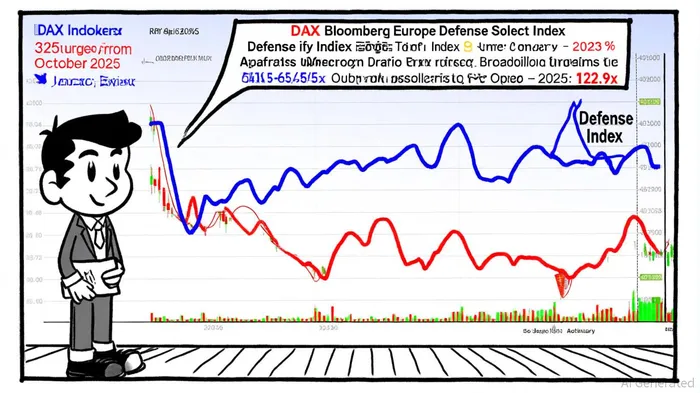







Comentarios
Aún no hay comentarios