
German Bund Yields and Equity Market Disconnect: A Mispricing Opportunity in the Eurozone
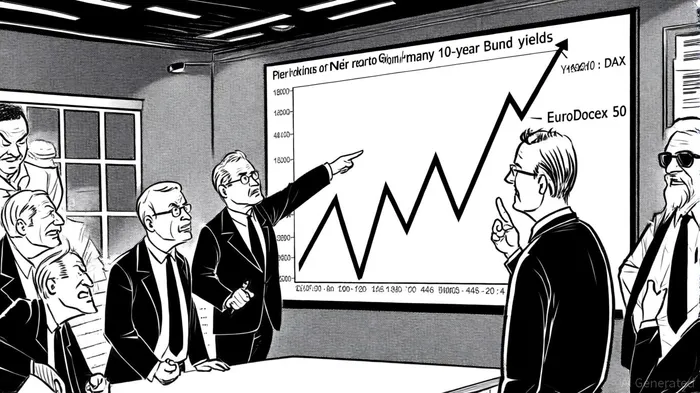
The eurozone's financial markets are at a crossroads, with German 10-year Bund yields and European equity indices exhibiting a striking disconnect. While Bund yields have surged to multi-year highs amid structural fiscal reforms and inflationary pressures, equity markets like the DAX and Euro Stoxx 50 have shown resilience-sometimes even outperforming-despite macroeconomic headwinds. This divergence raises critical questions about mispricing and asset reallocation opportunities, particularly as investors navigate a landscape shaped by shifting monetary policies, geopolitical risks, and divergent sectoral dynamics.
The Rise of German Bund Yields: Structural Shifts and Fiscal Stimulus
German 10-year Bund yields have climbed sharply since 2023, reaching 2.79% in March 2025-a 43-basis-point increase from February alone, according to a Morningstar report. This upward trajectory reflects a recalibration of market expectations driven by Germany's historic fiscal stimulus, including a EUR 500 billion infrastructure fund and relaxed debt rules for defense spending, as noted in a Morningstar article. Analysts at an Oxford Economics analysis note that structural factors-such as increased government borrowing, persistent inflation volatility, and a higher term premium-will likely keep yields elevated, potentially approaching 2.8% by late 2026.
The selloff in Bunds has been exacerbated by global macroeconomic uncertainties, including U.S. trade policy shifts and geopolitical tensions. As of October 2025, the 10-year yield stood at 2.57%, down slightly from its September peak of 2.67% but still 52 basis points above its 2024 level, per Trading Economics. This suggests that while short-term volatility may ease, long-term structural forces-such as Germany's pivot to expansionary fiscal policy-will continue to underpin higher yields.
Equity Market Resilience: DAX Outperformance and Sectoral Dynamics
In contrast to the bond market's turbulence, European equities have shown surprising resilience. The DAX reached record highs in Q3 2025, outperforming the Euro Stoxx 50 despite weak trade data and a 0.4% decline in the broader index, according to Saxo Bank. This divergence can be attributed to sectoral strength: materials and industrial stocks, including Heidelberg Materials and Bayer, drove gains as global demand for infrastructure and commodities remained robust, per an Investing.com recap.
The Euro Stoxx 50, meanwhile, reflected mixed signals. While it closed at 5,604.34 on October 16, 2025, per Yahoo Finance data, its performance was weighed down by financial stocks and trade war anxieties. Saxo Bank's Market Quick Take noted that the index's volatility-exacerbated by U.S. tariff threats-highlighted its sensitivity to global macroeconomic shifts, a point echoed in FX Empire's analysis. Yet, the DAX's composition-focused on Germany's export-driven industrial base-allowed it to weather these headwinds better, underscoring the divergent risk profiles of European equity indices.
Mispricing and Reallocation Opportunities
The disconnect between Bund yields and equity valuations points to potential mispricing. With German 10-year yields approaching 2.6%, the implied cost of capital for long-duration assets has risen significantly. Yet, European equities, particularly in the DAX, have not fully priced in these higher discount rates. For instance, the DAX's 10-day historical volatility of 12.49 in September 2025-up 52.5% year-to-date-suggests heightened uncertainty, yet valuations remain anchored to growth expectations in industrial and materials sectors, according to Wall Street Numbers.
This misalignment creates opportunities for strategic reallocation. Bond fund managers have already begun shifting portfolios, offloading longer-dated Bunds in favor of corporate bonds offering higher yields, as Morningstar has documented. Similarly, equity investors may find value in sectors insulated from rate-sensitive valuations, such as industrials and materials, while hedging against currency risks tied to the euro's strength. Morningstar analysts note that the DAX's outperformance "reflects not just fiscal optimism but a recalibration of risk appetites in a fragmented European market."
The Path Forward: Balancing Yields and Equities
Looking ahead, the key challenge for investors lies in balancing the upward pressure on Bund yields with the growth potential of European equities. While Oxford Economics projects Bund yields to stabilize within a 2.6%-3.1% range by 2026, supported by the eurozone's improving growth outlook, equity markets may continue to diverge based on sectoral fundamentals. The ECB's dovish stance-hinting at potential rate cuts-adds another layer of complexity, as lower borrowing costs could buoy equities even as yields rise.
For asset allocators, the lesson is clear: the current disconnect between bonds and equities is not merely a temporary anomaly but a reflection of structural shifts in fiscal policy and global trade dynamics. Those who act decisively-reallocating toward yield-earning equities while hedging against currency and rate risks-may find themselves well-positioned as the eurozone navigates this pivotal phase.







Comentarios
Aún no hay comentarios