
Gerdau's Strategic Position in a Tariff-Driven North American Steel Market
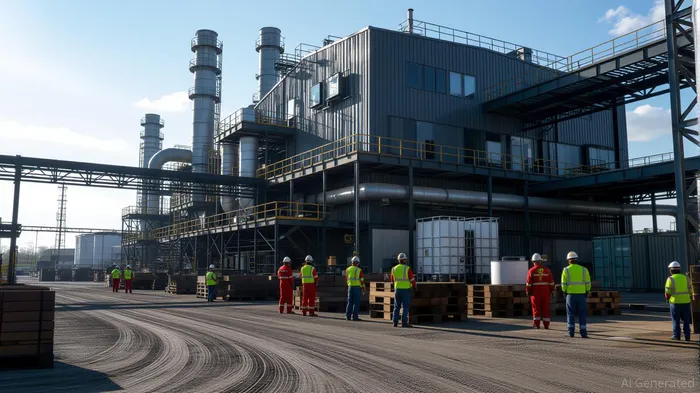
The U.S. steel industry has become a battleground for protectionist policies, with tariffs reshaping competitive dynamics in ways that favor domestic producers like Gerdau S.A. (NYSE: GGB). Since the Trump 2.0 administration's aggressive tariff hikes under Section 232 of the Trade Act of 1974, the North American steel market has seen a dramatic shift. By April 2025, U.S. tariffs on steel and aluminum had climbed to 50% for many imports, effectively shielding domestic producers from cheaper foreign competition. For Gerdau, a vertically integrated steelmaker with a strong North American footprint, these policies have unlocked value by compressing import volumes and inflating margins.
Tariffs as a Catalyst for Gerdau's North American Expansion
Gerdau's North American operations now account for nearly 50% of its total net sales, a figure that underscores the region's growing importance. In Q1 2025, the company's U.S. and Canadian operations contributed 61.4% of its consolidated adjusted EBITDA, the highest in its historical series. This surge is directly tied to the U.S. tariff regime, which has reduced the influx of steel from China, Brazil, and the EU. For example, Brazil's steel exports to the U.S. faced a 50% tariff in August 2025, while EU steel imports were taxed at 50% as well. These barriers have left U.S. buyers with fewer alternatives, forcing them to turn to domestic producers like Gerdau.
The company has responded by accelerating its North American investments. A $6 billion global capital expenditure plan in 2025 includes expansions at its Texas and Michigan plants, adding 450,000 tons of annual steel capacity. These projects are not just about scale—they reflect a strategic pivot toward high-value products, such as specialty steel bars and plates, which command premium pricing. UBS analysts have upgraded Gerdau to “Buy,” citing a 32% increase in its 2026 EBITDA forecast to R$13.2 billion, driven by higher spreads and a 15% free cash flow (FCF) yield in 2025.
South America's Struggles: A Tale of Two Markets
While North America thrives under the tariff shield, Gerdau's South American operations—particularly in Brazil—face persistent headwinds. In Q1 2025, South America contributed just 7% of the company's net sales, with Brazil's domestic steel market plagued by 22% import penetration. The lack of equivalent trade protections in South America has left Gerdau vulnerable to low-cost imports from Asia and the U.S., which undercut domestic producers. Shipment volumes in Brazil grew by 5.1% year-on-year in Q1 2025, but this was offset by pricing declines and margin compression.
The disparity between regions is stark. While U.S. steel prices have risen by double digits in 2025 due to tariffs, Brazilian steel prices have fallen by 8% year-to-date. This imbalance has forced Gerdau to pivot its strategy: it has postponed a planned special steel mill in Mexico and instead focused on North American expansion. The company's management has also called for stronger trade defense measures in Brazil, where high interest rates and import competition continue to erode profitability.
The Long-Term Play: Tariffs as a Structural Tailwind
The U.S. tariffs are not a temporary phenomenon but a structural shift in the global steel landscape. By reducing reliance on imports, they have created a more favorable environment for domestic producers to consolidate market share. For Gerdau, this means sustained demand for its North American operations, particularly in nonresidential construction and automotive sectors. The company's order backlog in North America now exceeds 75 days, a level that suggests robust near-term visibility.
Investors should also consider Gerdau's financial health. Its “GREAT” credit rating and a P/E ratio of 9.42 (well below the industry average) position it as a value play in a sector often characterized by cyclicality. The company's commitment to returning capital—through dividends and buybacks—is another draw, with plans to return up to 17% of equity to shareholders. UBS analysts estimate that Gerdau's FCF yield will reach 12% by 2026, further enhancing its appeal.
Investment Implications
Gerdau's strategic position in a tariff-driven North American steel market offers a compelling case for investors. While South America remains a drag, the company's North American operations are a cash-generating engine that offsets regional weaknesses. The U.S. tariffs have created a near-monopoly-like environment for domestic steelmakers, and Gerdau's vertical integration and expansion plans position it to capture long-term value.
However, risks remain. A reversal in U.S. trade policy, a slowdown in construction demand, or a deterioration in Brazil's economic environment could dampen growth. For now, though, the company's strong balance sheet, strategic investments, and favorable market dynamics make it a standout in a sector reshaped by protectionism.
In conclusion, Gerdau's ability to leverage U.S. tariffs to strengthen its North American operations while navigating South America's challenges makes it a unique opportunity. For investors seeking exposure to a steelmaker with a clear path to margin expansion and capital returns, Gerdau's stock warrants a closer look.







Comentarios
Aún no hay comentarios