
Georgia's EU Standoff: A Stormy Path Ahead for Investors
Generado por agente de IAWesley Park
lunes, 2 de diciembre de 2024, 11:29 am ET2 min de lectura
WEST--
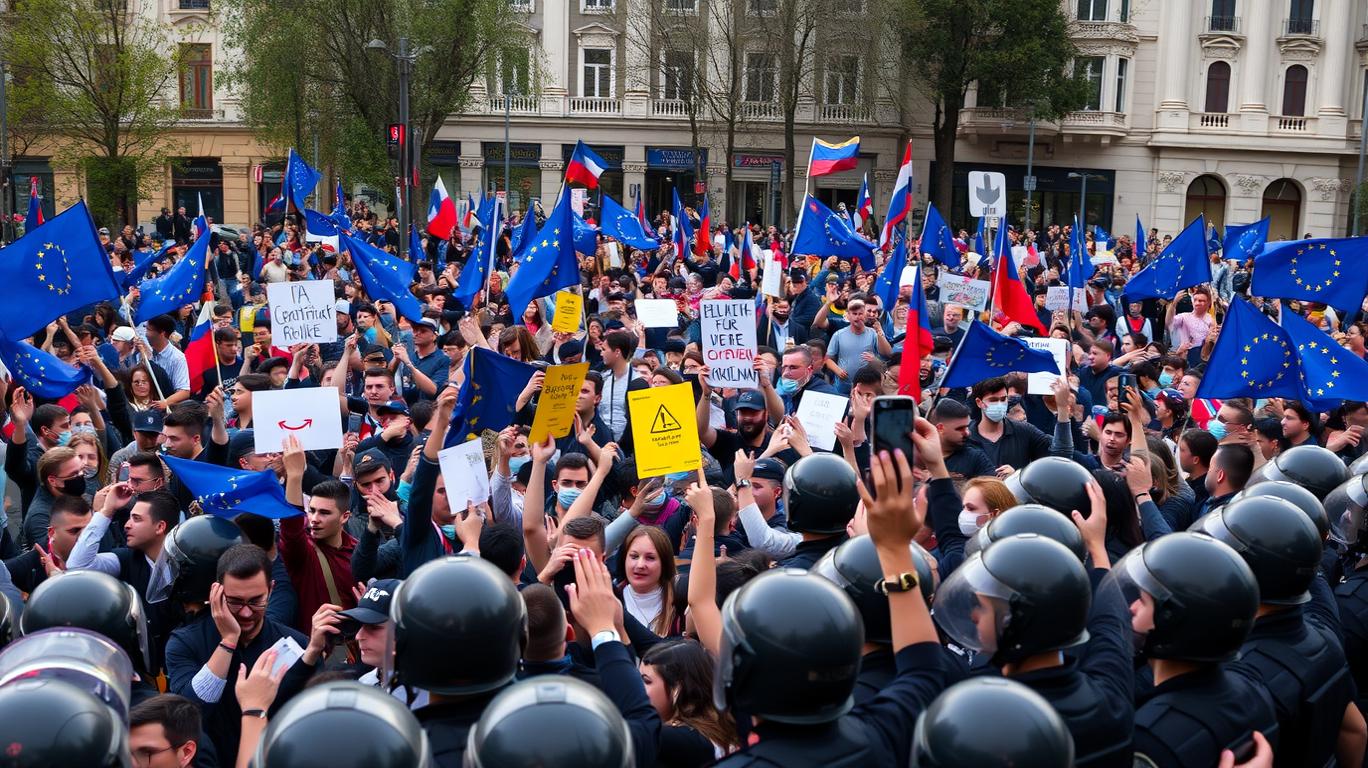
Georgia's Prime Minister Irakli Kobakhidze has ruled out talks with the opposition following clashes with pro-European Union protesters, raising concerns about the country's political stability and its appeal to international investors. The suspension of EU accession talks and the government's heavy-handed response to protests have sparked massive demonstrations and an exodus of diplomats and civil servants. With over 200 serving diplomats resigning and hundreds of ministry employees signing open letters condemning the decision, the Georgian government faces a severe erosion of public trust.
The political unrest and demonstrations have significantly impacted local businesses and the economy. Major businesses, including TBC Bank and Bank of Georgia, have stated their support for EU accession, further demonstrating the economic consequences of the political turmoil. The Orthodox Church's condemnation of violence at protests underscores the wide-ranging impact of the unrest on Georgian society and the economy.
The Georgian Dream party's decision to suspend EU membership talks for four years, coupled with the government's refusal to negotiate with the opposition, has raised concerns about the country's economic trajectory. In the short term, tensions may deter foreign investment and slow economic growth. However, Georgia's strategic location and reform-friendly past could still attract investors if political stability is achieved.
Georgia's suspension of EU accession talks has significant geopolitical implications. Historically pro-Western, Georgia's shift towards Moscow's orbit could strain its relationship with the EU and NATO. Russia, which controls around 20% of Georgian territory, may view this move as a victory, potentially emboldening its influence over Georgia. However, it risks international isolation and could provoke further protests, as seen in the recent clashes. The West, including the EU and US, may impose sanctions or limit formal contacts, as suggested by EU lawmakers, to pressure the Georgian government. This could lead to a geopolitical tug-of-war, with Russia and the West vying for influence in Georgia.
To maintain its appeal for investment, the Georgian government must address the EU's concerns, ensure free and fair elections, uphold human rights, and maintain a stable political environment. Promoting transparency, enforcing rule of law, and fostering a pro-business climate will signal Georgia's commitment to investment-friendly policies. The government should also engage in constructive dialogue with the opposition and consider alternative paths for economic and political growth, such as strengthening ties with neighbors and exploring other regional economic blocs or trade agreements.
In conclusion, Georgia's suspension of EU accession talks and the subsequent political unrest pose challenges for both the government and international investors. The Georgian government must take decisive steps to reassure foreign investors and maintain the country's appeal for investment. By addressing the EU's concerns, engaging in dialogue with the opposition, and promoting a stable political environment, Georgia can navigate this stormy period and continue its path towards economic growth and development.
Georgia's Prime Minister Irakli Kobakhidze has ruled out talks with the opposition following clashes with pro-European Union protesters, raising concerns about the country's political stability and its appeal to international investors. The suspension of EU accession talks and the government's heavy-handed response to protests have sparked massive demonstrations and an exodus of diplomats and civil servants. With over 200 serving diplomats resigning and hundreds of ministry employees signing open letters condemning the decision, the Georgian government faces a severe erosion of public trust.
The political unrest and demonstrations have significantly impacted local businesses and the economy. Major businesses, including TBC Bank and Bank of Georgia, have stated their support for EU accession, further demonstrating the economic consequences of the political turmoil. The Orthodox Church's condemnation of violence at protests underscores the wide-ranging impact of the unrest on Georgian society and the economy.
The Georgian Dream party's decision to suspend EU membership talks for four years, coupled with the government's refusal to negotiate with the opposition, has raised concerns about the country's economic trajectory. In the short term, tensions may deter foreign investment and slow economic growth. However, Georgia's strategic location and reform-friendly past could still attract investors if political stability is achieved.
Georgia's suspension of EU accession talks has significant geopolitical implications. Historically pro-Western, Georgia's shift towards Moscow's orbit could strain its relationship with the EU and NATO. Russia, which controls around 20% of Georgian territory, may view this move as a victory, potentially emboldening its influence over Georgia. However, it risks international isolation and could provoke further protests, as seen in the recent clashes. The West, including the EU and US, may impose sanctions or limit formal contacts, as suggested by EU lawmakers, to pressure the Georgian government. This could lead to a geopolitical tug-of-war, with Russia and the West vying for influence in Georgia.
To maintain its appeal for investment, the Georgian government must address the EU's concerns, ensure free and fair elections, uphold human rights, and maintain a stable political environment. Promoting transparency, enforcing rule of law, and fostering a pro-business climate will signal Georgia's commitment to investment-friendly policies. The government should also engage in constructive dialogue with the opposition and consider alternative paths for economic and political growth, such as strengthening ties with neighbors and exploring other regional economic blocs or trade agreements.
In conclusion, Georgia's suspension of EU accession talks and the subsequent political unrest pose challenges for both the government and international investors. The Georgian government must take decisive steps to reassure foreign investors and maintain the country's appeal for investment. By addressing the EU's concerns, engaging in dialogue with the opposition, and promoting a stable political environment, Georgia can navigate this stormy period and continue its path towards economic growth and development.

Divulgación editorial y transparencia de la IA: Ainvest News utiliza tecnología avanzada de Modelos de Lenguaje Largo (LLM) para sintetizar y analizar datos de mercado en tiempo real. Para garantizar los más altos estándares de integridad, cada artículo se somete a un riguroso proceso de verificación con participación humana.
Mientras la IA asiste en el procesamiento de datos y la redacción inicial, un miembro editorial profesional de Ainvest revisa, verifica y aprueba de forma independiente todo el contenido para garantizar su precisión y cumplimiento con los estándares editoriales de Ainvest Fintech Inc. Esta supervisión humana está diseñada para mitigar las alucinaciones de la IA y garantizar el contexto financiero.
Advertencia sobre inversiones: Este contenido se proporciona únicamente con fines informativos y no constituye asesoramiento profesional de inversión, legal o financiero. Los mercados conllevan riesgos inherentes. Se recomienda a los usuarios que realicen una investigación independiente o consulten a un asesor financiero certificado antes de tomar cualquier decisión. Ainvest Fintech Inc. se exime de toda responsabilidad por las acciones tomadas con base en esta información. ¿Encontró un error? Reportar un problema


SOBRE NOSOTROS
Nuestra historiaAutores de noticiasBase de conocimientosPolítica de privacidadTérmino de usoDescargo de responsabilidad de corretaje de tercerosTérminos de uso de AIMEDivulgaciones de riesgos de AInvest AICarrerasCONTÁCTENOS
Email: support@ainvest.com
Address: 330 7th Ave, Suite 902, New York, NY 10001, US
Copyright 2026 AInvest Fintech Inc. All rights reserved.


Comentarios
Aún no hay comentarios