
Geopolitical Volatility and Oil: A Strategic Opportunity in Commodity Exposure
The global oil market in late 2025 and early 2026 is being shaped by a collision of U.S. policy shifts and OPEC+ supply adjustments, creating a volatile yet potentially lucrative environment for investors. As geopolitical tensions and strategic recalibrations converge, crude oil prices are poised to react to both immediate supply risks and long-term structural changes. This analysis explores the short-term bullish catalysts driving commodity exposure, focusing on U.S. sanctions, OPEC+ production dynamics, and the interplay between policy and market forces.
U.S. Policy Risks: A Double-Edged Sword
The Trump administration's recent actions in Venezuela have introduced significant uncertainty into global oil markets. On January 9, 2026, President Trump signed an Executive Order exempting Venezuelan oil revenues and diluent sales from U.S. judicial claims, effectively shielding these funds from private litigation while framing the move as a national security imperative. This decision, coupled with a selective rollback of sanctions to enable the transport and sale of 30–50 million barrels of Venezuelan crude, signals a strategic pivot toward stabilizing the country's oil sector while maintaining pressure on the Maduro regime.
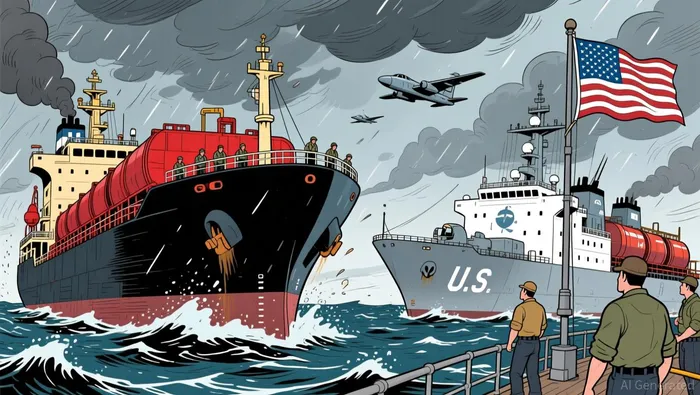
However, the U.S. has simultaneously escalated its blockade of sanctioned oil tankers servicing Venezuela, a move that could reduce the country's exports by up to 600,000 barrels per day. This dual approach-facilitating controlled sales while restricting unapproved shipments-creates a fragmented supply chain, increasing the risk of price spikes if geopolitical tensions escalate further. Analysts warn that continued U.S. sanctions on Venezuela's shadow fleet and associated companies could further complicate global access to its oil, amplifying short-term volatility.
OPEC+ Supply Strategy: Controlled Rebalancing
OPEC+ has adopted a measured approach to market rebalancing, with a production pause from January to March 2026 aimed at stabilizing prices during a period of weak demand. This pause follows a "layered unwinding" of prior production cuts, with 2.2 million barrels per day of reductions unwound in late 2025 and a second tranche of 1.65 million barrels per day addressed in October 2025. While the group plans to resume unwinding cuts at a rate of 137,000 barrels per day per month starting April 2026, capacity constraints are expected to limit the effective increase to roughly 40% of that pace.
This cautious strategy reflects OPEC+'s awareness of the fragility of global demand, particularly in light of U.S. policy risks. By maintaining a degree of supply discipline, OPEC+ is positioning itself to act as a counterbalance to potential U.S.-driven supply shocks, such as the Venezuela blockade or further sanctions on Russia's energy sector. The group's ability to adjust output in response to geopolitical developments could become a critical factor in sustaining price momentum.
The U.S. "Drill, Baby, Drill" Dilemma
The Trump administration's emphasis on domestic energy production, encapsulated in its "drill, baby, drill" policy, aims to boost U.S. oil output and reduce consumer costs. While this strategy could enhance energy independence, it faces challenges in aligning with global market dynamics. For instance, U.S. shale producers are constrained by infrastructure bottlenecks and environmental regulations, limiting their ability to rapidly scale production. Moreover, the administration's focus on domestic output may inadvertently exacerbate global supply imbalances if OPEC+ maintains its production pause or if U.S. sanctions on Venezuela and Russia persist.
Strategic Opportunities for Investors
The interplay of these factors creates a compelling case for short-term bullish exposure to crude oil. Key catalysts include:
1. Venezuela's Controlled Reentry: The U.S.-sanctioned sale of 30–50 million barrels of Venezuelan oil, while limited in scope, could temporarily tighten global supplies if geopolitical risks disrupt alternative sources.
2. OPEC+ Supply Discipline: The group's phased unwinding of cuts and January–March production pause provide a structural floor for prices, particularly if U.S. policy risks persist.
3. Geopolitical Contingencies: Escalating tensions in Venezuela or a failure to reach a peace deal in Ukraine could trigger further sanctions on Russia, compounding supply risks.
Investors should consider hedging against volatility through diversified commodity exposure, including oil futures, energy equities, and ETFs tied to geopolitical risk indices. The current environment favors a tactical, near-term approach, leveraging the convergence of policy-driven supply constraints and OPEC+'s strategic flexibility.
Conclusion
The oil market in late 2025 is a microcosm of broader geopolitical and economic tensions. While U.S. policies introduce short-term uncertainty, OPEC+'s disciplined approach and the fragility of global supply chains create a fertile ground for price resilience. For investors, the key lies in capitalizing on the asymmetry between controlled supply adjustments and unanticipated geopolitical shocks-a dynamic that underscores the enduring strategic value of crude oil in a volatile world.







Comentarios
Aún no hay comentarios