
Geopolitical Turbulence and the Reconfiguration of Global Investment Landscapes
The current standoff over Iran's nuclear program and the looming threat of sanctions reimposition under the snapback mechanism of UN Security Council Resolution 2231 has created a volatile crossroads for global markets. As European powers, the U.S., and Iran navigate a precarious path between diplomacy and confrontation, investors must grapple with the cascading implications for energy prices, European financial assets, and emerging market equities. The stakes are high, and the interplay of geopolitical risk and market fundamentals will shape risk premiums and capital flows for months to come.
Energy Markets: A Tipping Point Amid Supply Chain Fragility
The snapback mechanism—set to expire in October 2025—has become a double-edged sword. If triggered, it would reimpose sanctions that slashed Iranian oil exports by 90% in 2018, potentially reducing global supply by 1.4 million barrels per day. This would not only tighten oil markets but also amplify volatility in a landscape already strained by Red Sea shipping disruptions. The recent Houthi attacks and rerouted trade flows have added a 30% premium to transit times and a 9% reduction in effective shipping capacity, compounding inflationary pressures.
OPEC+'s accelerated production increases—548,000 barrels per day in August 2025—aim to offset these shocks, but the strategy hinges on summer demand resilience. If the snapback occurs, the group's efforts may prove insufficient, pushing prices above $100 per barrel. Energy majors like ChevronCVX-- (CVX) and TotalEnergiesTTE-- (TTE) could benefit from higher prices, but integrated players face margin compression if refining margins contract due to supply chain bottlenecks.
European Financial Assets: The Flight to Safety and Currency Volatility
European equity indices are already priced for increased geopolitical risk. The MSCIMSCI-- EMU Index has retreated 1.5% since June 2025, reflecting investor caution. A snapback could exacerbate this trend, with sectors like utilities and consumer staples acting as safe havens. Conversely, financials and industrials may underperform as credit spreads widen and capital flight accelerates.
Bond markets are poised for a mixed response. Initially, European government bond yields may dip as investors seek safety, but inflation-linked risks—driven by energy price shocks and Red Sea rerouting costs—could reverse this trend. The 10-year German Bund yield, currently at 1.8%, may rise to 2.5% if sanctions reimposition triggers a spike in energy prices. Currency volatility will intensify, particularly for the euro, which has already weakened by 0.9% against the dollar since the June conflict.
Emerging Markets: Diversification or Disruption?
Emerging market equities face a dual challenge. On one hand, higher oil prices could bolster energy-exporting economies like Russia and Saudi Arabia. On the other, import-dependent nations—India, Indonesia, and Brazil—will bear the brunt of inflationary shocks. The MSCI Emerging Markets Index has underperformed developed markets by 4% in 2025, and a snapback could widen this gap.
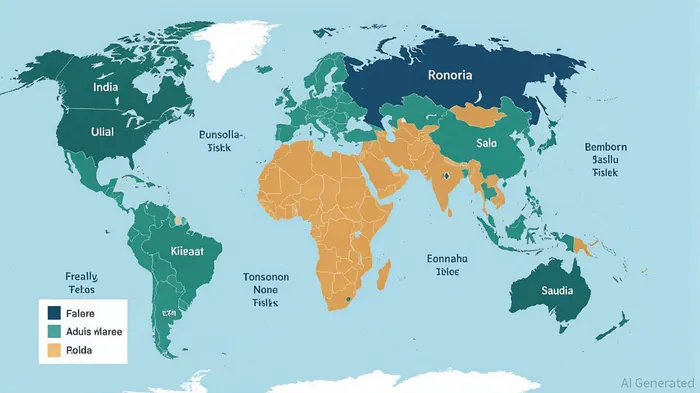
Capital flows will likely shift toward commodities and hard currency assets. Gold, which has gained 8% year-to-date, may outperform as a hedge against currency devaluation. Equity markets in commodity-rich jurisdictions could see inflows, while sectors like manufacturing and retail in import-dependent economies face outflows.
Strategic Implications for Investors
- Energy Sector Hedging: Position in energy equities and commodities while maintaining short-term liquidity to navigate price spikes. Consider derivatives to hedge against oil volatility.
- European Equities: Overweight defensive sectors (utilities, healthcare) and underweight cyclical ones (industrials, financials). Monitor EUR/USD for currency exposure.
- Emerging Markets: Diversify portfolios by tilting toward energy-exporting regions and hard currency assets. Avoid overexposure to import-dependent economies.
Conclusion: Navigating the New Normal
The Iran nuclear talks and the snapback mechanism represent a pivotal moment in global geopolitics. While diplomatic breakthroughs could stabilize markets, the likelihood of a snapback remains high, given the E3's August 2025 deadline. Investors must prepare for a world where energy prices and geopolitical risk premiums dominate asset valuations. In this environment, agility and a nuanced understanding of regional dynamics will be critical to capturing opportunities while mitigating risks. The path forward is uncertain, but those who anticipate the reconfiguration of global investment landscapes will be better positioned to thrive.





Comentarios
Aún no hay comentarios