
Geopolitical Trade Policy Risks and Gulf Equity Market Volatility: Navigating Uncertainty in 2025
The Gulf equity markets in 2025 have become a barometer of global geopolitical and trade policy turbulence. As tensions between Israel and Iran escalate and U.S. President Donald Trump's aggressive tariff policies reverberate across supply chains, Gulf investors are grappling with a complex interplay of risks and opportunities. While the region's economies have demonstrated resilience-driven by strategic diversification and robust non-oil sectors-the specter of prolonged uncertainty looms large.
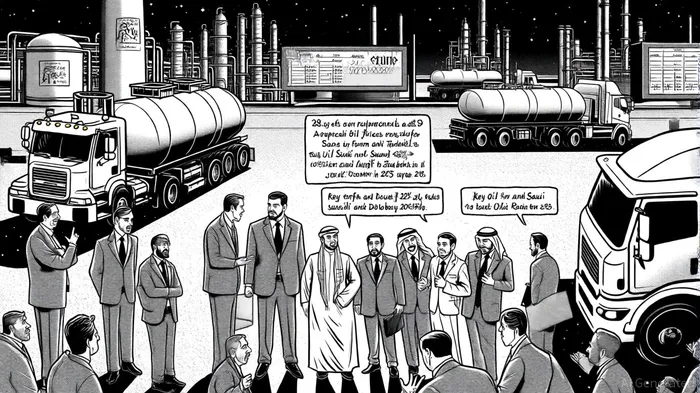
Geopolitical Tensions and Energy Market Volatility
The Israel-Iran conflict has injected significant volatility into global energy markets. By October 2025, oil prices had surged 22% to $77/barrel, fueled by fears of supply disruptions in the Strait of Hormuz, a critical artery for 20% of global oil exports, according to a Gulf News report. The UAE, in particular, has emerged as a regional safe haven, with its economy projected to grow at 4.6%-the highest in the GCC-thanks to a diversified economic strategy and strong OPEC+ alignment, the report notes. However, the immediate market reaction has been mixed. For instance, the Dubai main index fell 1.9% on June 13, 2025, amid fears of military escalation, though it later rebounded to deliver 27% annual gains as oil prices stabilized, the Gulf News analysis found.
S&P Global has warned that a full-scale disruption of the Strait of Hormuz could trigger a global oil price spike and tighten financial conditions, compounding risks for Gulf markets reliant on energy exports, according to a Penn Wharton analysis. Meanwhile, central banks in Europe have cut interest rates, creating currency volatility that further complicates capital flows into the region, the Gulf News report adds.
Trump's Tariff Policies: A Double-Edged Sword
Trump's 2025 tariff regime, including 25% levies on Mexico and Canada and a 15% average on imports, has created a fragile environment for Gulf investors. According to a report by Lombard Odier, the immediate market reaction to these policies was a global sell-off, with Gulf markets affected by broader trade anxieties reported in Gulf media. By May 2025, a U.S. court ruling temporarily blocking blanket tariffs provided some relief, with oil prices rebounding and Gulf indices showing mixed performance, the Penn Wharton analysis observed.
Yet the long-term implications are dire. The Penn Wharton Budget Model estimates that Trump's tariffs could reduce U.S. GDP by 6% and wages by 5%, with cascading effects on global economic stability. Gulf markets have already seen sectoral strains, particularly in automotive and consumer goods, where rising production costs and supply chain disruptions have eroded profit margins, as discussed in a Gulf News analysis. Currency markets have also been volatile, with the U.S. dollar initially strengthening but later weakening as trading partners retaliated with tariffs of their own, the Gulf News piece notes.
Investor Sentiment: Caution Amid Diversification
Despite these headwinds, Gulf investors are adopting a cautiously opportunistic stance. Saudi Arabia's Tadawul index fell 0.78% in Q3 2025, reflecting fragility, while Dubai's market hit its highest level since 2008, the Gulf News report observed. Analysts attribute this divergence to the UAE's proactive diversification into non-oil sectors, including technology and renewable energy, which have attracted $41 billion in non-oil exports and significant foreign direct investment, according to the same Gulf News coverage.
A growing number of Gulf investors are also pivoting toward non-U.S. partners like China and BRICS nations to mitigate exposure to Trump-era trade tensions, the Gulf News analysis explains. This shift is evident in the UAE's strategic deepening of economic ties with China, which has offset some of the volatility caused by U.S. policy uncertainty.
Looking Ahead: A Delicate Balancing Act
The coming months will hinge on two critical factors: the trajectory of Israeli-Iranian tensions and the resolution of Trump's tariff policies. Corporate earnings reports in late 2025 will provide further clarity on the resilience of Gulf firms, particularly in energy and manufacturing, the Gulf News report suggests. Meanwhile, the GCC's ability to maintain economic momentum amid global headwinds will depend on its capacity to leverage regional partnerships and structural reforms.
For investors, the key takeaway is to balance caution with strategic exposure. While geopolitical and trade policy risks remain elevated, the Gulf's economic diversification and geopolitical positioning offer a buffer against prolonged downturns. As one analyst noted, "The GCC is learning to look beyond Trump and tariffs for growth cues," a point explored in the Gulf News analysis.







Comentarios
Aún no hay comentarios