
Geopolitical Tensions and Supply Chain Resilience: Japan's Strategic Rebalancing in the China-Plus-One Era
The evolving geopolitical landscape in East Asia, particularly the tensions between Japan and China, has become a pivotal force reshaping regional supply chain strategies. As global supply chains face unprecedented pressures from trade wars, pandemics, and shifting political dynamics, Japan's approach to balancing economic interdependence with strategic de-risking offers critical insights for investors. This analysis examines how Japan's dual-track strategy-deepening collaboration with China while diversifying into Southeast Asia and the U.S.-reflects a broader recalibration of global trade networks.
The Geopolitical Context: Rising Tensions and Economic Calculus
Recent years have seen a marked escalation in Japan-China tensions, driven by historical grievances, 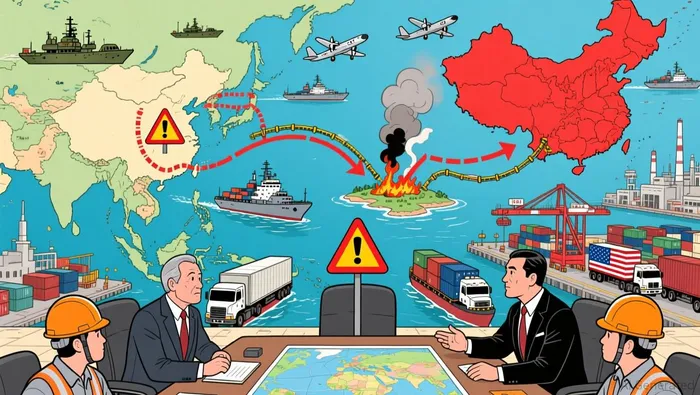 territorial disputes, and divergent geopolitical alignments. Japanese Prime Minister Sanae Takaichi's remarks on Taiwan in 2023, for instance, prompted retaliatory measures from China, including increased customs inspections on Japanese goods, travel advisories for Chinese citizens, and import bans on seafood products. These actions underscore the fragility of economic ties amid political friction. Yet, despite these challenges, Japan's investments in China surged by 55.5% year-on-year in the first three quarters of 2025, reflecting the enduring importance of China's market and supply chain infrastructure. Analysts attribute this resilience to Japanese firms' strategic hedging: deepening technology collaboration in China while diversifying production bases elsewhere.
Corporate Strategies: China + 1 and Cross-Border Restructuring
Japanese companies are increasingly adopting a "China + 1" model, retaining key operations in China while shifting lower-value production to Southeast Asia and India. This approach allows firms to leverage China's advanced supplier ecosystem and domestic demand while mitigating risks from geopolitical volatility. For example, Toyota Tsusho strengthened its copper foil supply chain for EV batteries by acquiring a stake in SK nexilis Malaysia, a critical player in lithium-ion battery materials. Similarly, Sumisho Machinery X partnered with Marketech International Corporation to establish a semiconductor facility engineering joint venture, combining Marketech's technical expertise with Sumisho's domestic network. These cases illustrate how Japanese firms are embedding resilience into their supply chains through regional partnerships and localized innovation.
Government incentives have further accelerated this transition. The Japanese Ministry of Economy, Trade, and Industry (METI) has subsidized onshoring projects in sectors like semiconductors and medical equipment, while JETRO has supported near-shoring initiatives in ASEAN countries. These efforts align with Japan's broader "Free and Open Indo-Pacific" vision, which seeks to counter China's growing influence while fostering economic ties with Southeast Asia.
Investment Trends: Quantifying the Shift
While exact investment figures for Southeast Asia in 2023–2025 remain opaque, the scale of Japan's strategic commitments is evident. Chinese outbound investment to ASEAN rose by 13% year-on-year in 2024, reaching USD 162.8 billion, as firms sought to diversify production and access new markets. Japanese companies have mirrored this trend, with Vietnam, Indonesia, and Malaysia emerging as key destinations for manufacturing and technology investments. For instance, SoftBank Robotics' acquisition of exclusive distribution rights for Australian AI firm icetana's security solutions highlights Japan's expanding footprint in advanced technologies.
Notably, Japan's investments in China have not waned. A survey by the Japanese Chamber of Commerce and Industry in China revealed that 54% of respondents plan to maintain or increase their investments, citing China's large market and robust supply chains as critical advantages. This duality-simultaneously deepening ties with China and diversifying into Southeast Asia-reflects a pragmatic approach to balancing risk and reward.
Implications for Investors: Resilience, Partnerships, and Uncertainty
For investors, Japan's supply chain strategy underscores the importance of resilience over efficiency. The "China + 1" model, while costly, reduces overreliance on any single region, a lesson amplified by the U.S.-China trade war and pandemic disruptions. Regional partnerships, particularly with ASEAN, are also gaining traction. The third China International Supply Chain Expo and Expo 2025 Osaka, for example, highlight growing collaboration between Chinese and Japanese firms in industrial and supply chain innovation.
However, uncertainties persist. China's reluctance to retaliate with measures like rare earth export restrictions-despite escalating tensions-suggests the economic costs of disengagement remain unquantified. Investors must also weigh the risks of geopolitical volatility against the potential rewards of participating in Japan's "economic security" initiatives, which prioritize critical industries like semiconductors and rare earths.
Conclusion: A New Equilibrium in Global Trade
Japan's recalibration of its supply chain strategies in the face of China's geopolitical assertiveness exemplifies the broader trend of global trade reconfiguration. By embracing diversification, regional partnerships, and strategic de-risking, Japanese firms are navigating a complex landscape where economic interdependence and political rivalry coexist. For investors, the key takeaway is clear: resilience and adaptability are no longer optional but essential. As the "China + 1" model gains momentum, Southeast Asia and the U.S. will likely emerge as critical nodes in a more fragmented yet dynamic global supply chain network.







Comentarios
Aún no hay comentarios