
Geopolitical Tensions and Oil Price Volatility in 2026: U.S. Actions in Venezuela and Iran Reshape Energy Markets
The global oil market in 2026 is being reshaped by U.S. geopolitical interventions in Venezuela and Iran, creating both volatility and strategic investment opportunities. As the United States consolidates control over Venezuela's oil sector and intensifies pressure on Iran's energy exports, the interplay of sanctions, infrastructure bottlenecks, and market competition is driving near-term price fluctuations while signaling long-term shifts in energy geopolitics.
Venezuela: A Strategic Reopening Amid Infrastructure Challenges
The U.S. military intervention in Venezuela, culminating in the removal of President Nicolás Maduro, has positioned the country as a focal point for energy investment. According to a report by , Venezuela's oil production currently stands at 800,000 barrels per day, far below its historical peak of 3 million barrels per day. The Trump administration has pledged to involve U.S. oil giants like ChevronCVX--, ExxonMobilXOM--, and ConocoPhillipsCOP-- in rebuilding Venezuela's energy infrastructure, with an estimated $100 billion in investment required over a decade. However, major oil executives, including ExxonMobil's Darren Woods, have cautioned that Venezuela's "uninvestible" legal and political environment remains a barrier.
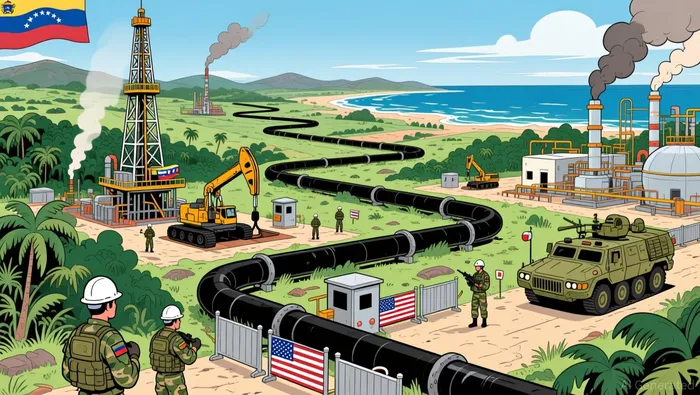 The immediate challenge lies in stabilizing production before scaling up. Analysts estimate that meaningful output increases-such as reaching 1.5 million barrels per day-could take two to three years and require $10 billion in upfront investment. U.S. refiners, particularly those on the Gulf Coast, stand to benefit from access to Venezuela's heavy crude, which is tailored to their refining capabilities. Yet, the oversupplied global oil market means any additional barrels from Venezuela could temporarily depress prices, complicating the return-on-investment calculus for energy firms.
Iran: Sanctions and Supply Chain Resilience
While Venezuela's oil sector is in flux, Iran's production remains relatively stable at over 3 million barrels per day in 2025, with exports averaging 2 million barrels per day, primarily to China. However, U.S. sanctions and geopolitical tensions- exacerbated by civil unrest and internet blackouts in Iran-have heightened concerns about supply disruptions. The Trump administration's redirection of Venezuela's oil flows away from Chinese state-owned firms like CNPC and Sinopec further underscores a broader strategy to counter non-hemispheric competitors.
Iran's oil exports face a dual threat: U.S. sanctions on tankers and individuals involved in sanctions evasion, and the collapse of its Venezuela-linked sanctions-evasion network. This has left Iran's oil sector vulnerable to bottlenecks, particularly as the U.S. seeks to enforce stricter compliance with export controls. For investors, the risk of Iranian supply shocks-while currently limited- remains a wildcard in 2026, with financial markets already pricing in potential disruptions.
Investment Opportunities in Energy Infrastructure and Trading Firms
The U.S. intervention in Venezuela has created a unique opening for energy infrastructure investment, albeit with significant risks. Swiss oil traders like Vitol and Trafigura are cautiously positioning themselves to facilitate Venezuelan oil sales, leveraging preliminary U.S. licenses to navigate sanctions and logistics challenges. These firms are prioritizing transparency and employee safety while assessing upstream investment opportunities, though they emphasize the need for political stability before committing capital.
Oil Price Momentum and Strategic Entry Points
The interplay of U.S. actions in Venezuela and Iran has created a tug-of-war between supply-side optimism and geopolitical uncertainty. In the first quarter of 2026, oil prices surged as market participants priced in the risk of supply disruptions from both countries. However, the long-term outlook remains mixed: while Venezuela's potential production rebound could add 500,000 barrels per day within two years, its current exports represent less than 1% of global supply, limiting its immediate impact.
Investors should focus on two strategic entry points:
1. Energy Infrastructure in Venezuela: Firms with expertise in heavy crude refining and midstream logistics-such as U.S. Gulf Coast refiners-stand to gain from increased access to Venezuelan oil. However, due diligence on political and regulatory risks is critical.
2. Swiss Trading Firms: Vitol and Trafigura's role in brokering U.S.-Venezuela oil deals positions them as key players in managing supply chain bottlenecks. Their ability to navigate sanctions and geopolitical risks could yield alpha in a volatile market.
Conclusion
The U.S. reshaping of Venezuela's oil sector and its pressure on Iran's exports are creating a volatile but dynamic environment for energy investors. While near-term price spikes are driven by geopolitical uncertainty, the long-term potential for Venezuela's oil recovery-and the associated infrastructure and trading opportunities-offers a compelling, albeit high-risk, investment thesis. As the 2026 oil market navigates these shifts, strategic patience and a focus on geopolitical alignment will be paramount for capitalizing on the emerging landscape.







Comentarios
Aún no hay comentarios