
Geopolitical Tensions and Macron's Defense Push: Navigating Opportunities in Europe's Security Sector
The escalating geopolitical landscape, marked by conflicts in Ukraine, Gaza, and the Iran-Israel standoff, has propelled European nations to reassess their defense strategies. At the forefront of this transformation is French President Emmanuel Macron, whose aggressive push to boost defense spending—from 2% to 3.5% of GDP by 2025—reflects a dual aim: mitigating civilian casualties through precision warfare and securing Europe's strategic autonomy. This shift presents a compelling investment thesis for sectors tied to advanced defense technology, cybersecurity, and multinational military integration.
Macron's Defense Blueprint: Precision Over Profligacy
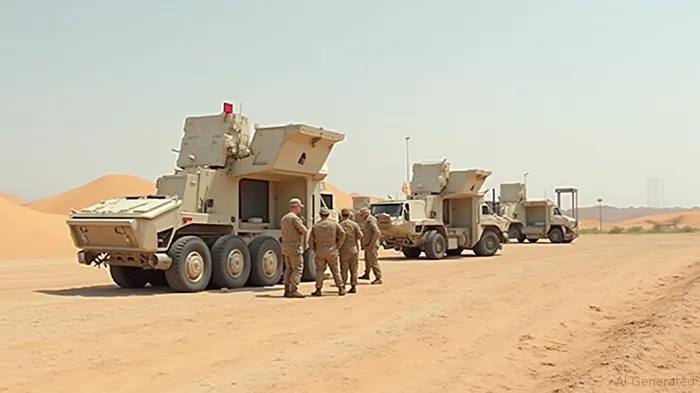
Macron's defense strategy prioritizes minimizing civilian harm while countering threats like asymmetric warfare and nuclear proliferation. The 2024-2030 Military Programming Law, allocating €413 billion (a 40% increase from prior plans), earmarks funds for air defense systems, AI-driven intelligence, and nuclear modernization. Notably, air defense spending is set to rise by 50%, while military intelligence budgets will jump 60%. This focus on precision weapons, cyber resilience, and real-time intelligence underscores a tactical pivot: avoiding collateral damage while maintaining deterrence.
For investors, this points to opportunities in European defense contractors with expertise in missile defense, cyber systems, and reconnaissance drones. Companies like Thales (EPA: HO) or Airbus Defence (EPA: AIR), which supply air defense systems to NATO allies, are well-positioned. Meanwhile, cybersecurity firms like Sopra Steria (EPA: SOA) or Darktrace (LSE: DARK) could benefit from heightened demand for protecting military infrastructure.
Geopolitical Drivers: Why the Surge in Spending Is Here to Stay
The Ukraine conflict and Iran-Israel tensions have exposed Europe's reliance on U.S. military capabilities, from satellite intelligence to missile technology. With U.S. geopolitical priorities shifting under successive administrations, European nations are accelerating efforts to build independent defense ecosystems. Macron's vision of a “European strategic autonomy” aligns with Germany's defense debt reforms and the EU's proposed €150 billion rearmament fund.
However, the path is fraught with challenges. France's public debt stands at €3.3 trillion, and its deficit remains above EU targets. To fund defense without austerity, Macron is exploring national loans, corporate taxes on windfall profits, and savings accounts dedicated to defense. While fiscal risks exist, the political will to prioritize defense is clear: 68% of French voters support increased military spending, even among far-left and far-right factions.
Investment Themes: Where to Deploy Capital
- Precision Weapons & Munitions:
- Companies like Nexter (subsidiary of Navarro), which develops guided artillery systems, or MBDA, a missile consortium involving France, Italy, and the UK, are critical to reducing civilian casualties.
Raytheon Technologies (NYSE: RTX), a U.S. firm with strong European partnerships, benefits from transatlantic collaboration.
Cybersecurity & AI-Driven Intelligence:
Defense tech firms like Hensoldt (part of Airbus), which specializes in radar and electronic warfare systems, and Elsag Datamat (EPA: ELS), an AI analytics provider, are vital for real-time threat detection.
Nuclear Modernization:
France's €5.6 billion annual investment in nuclear modernization (e.g., the M51 submarine-launched missile) favors Atomic Energy and Alternative Energies Commission (CEA) partners like Safran (EPA: SAF).
Multinational Defense Projects:
- The EU's push for a unified defense market favors companies involved in pan-European programs, such as the Eurodrone project (led by Airbus) or European Main Battle Tank initiatives.
Risks and Considerations
- Fiscal Constraints: France's deficit reduction targets (5.4% by 2025) may force trade-offs between defense and social spending. Investors should monitor debt metrics and corporate contracts.
- Geopolitical Volatility: Escalation in the Middle East or Eastern Europe could accelerate spending but also disrupt supply chains.
- Regulatory Hurdles: EU antitrust rules and export controls may limit growth for defense firms reliant on cross-border partnerships.
Conclusion: A Long-Term Play on Resilience
Macron's defense agenda is not merely about spending—it's about building a future-proof security architecture that minimizes civilian harm while insulating Europe from external shocks. Investors should favor companies with diversified revenue streams, key government contracts, and technological edge in precision systems or cyber defense.
The defense sector's correlation with geopolitical instability means volatility is inevitable. However, with European defense budgets projected to grow at ~4% annually through 2030, the sector offers a compelling hedge against global uncertainty. For long-term portfolios, allocate 5–10% to European defense equities, prioritizing firms with exposure to NATO modernization and EU integration.
In the shadow of conflict, Macron's vision may just redefine Europe's security—and its investment landscape.
Disclaimer: Always consult a financial advisor before making investment decisions. Past performance does not guarantee future results.







Comentarios
Aún no hay comentarios