
Geopolitical Tensions and Investment Opportunities in Baltic Airspace Security: A Strategic Analysis
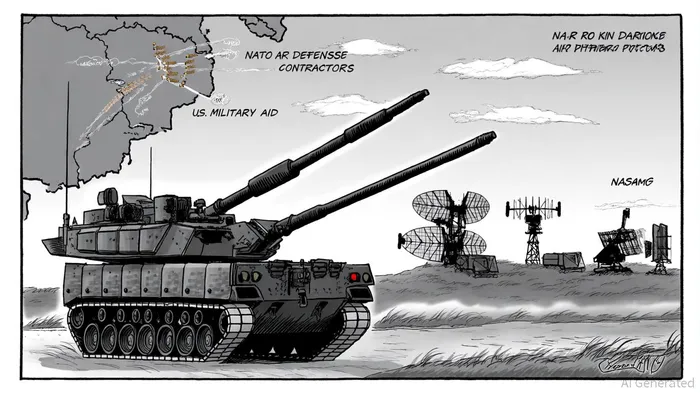
The Baltic states—Estonia, Latvia, and Lithuania—have emerged as a critical battleground for European defense modernization, driven by escalating geopolitical risks from Russia's invasion of Ukraine. As NATO's easternmost members, these nations are rapidly transforming their air defense architectures, creating a surge in demand for advanced military technology and services. For investors, this shift represents a unique confluence of strategic necessity and financial opportunity, with defense contractors and aerospace firms positioned to benefit from a multi-billion-dollar spending spree.
The Geopolitical Catalyst
Russia's military actions in Ukraine have intensified pressure on NATO to fortify its eastern flank. The Baltic Air Policing mission, a NATO initiative since 2004, has evolved from a symbolic presence to a high-stakes operation. In 2024, German Eurofighters patrolled Latvian airspace, while Italian and Spanish assets participated in integrated drills under exercises like Ramstein Alloy 24-3[4]. These efforts are no longer just about deterrence—they are about survival. According to a report by the Center for European Policy Analysis (CEPA), the Rotational Air Defense Model, which deploys ground-based systems like the Dutch Patriot, is now a cornerstone of NATO's strategy to close air defense gaps[1].
The European Sky Shield Initiative (ESSI), a German-led multinational project, further underscores this urgency. With 24 European countries participating, ESSI aims to create a multi-layered defense system combining short-range IRIS-T SLM, medium-range Patriot PAC-3 MSE, and exo-atmospheric Arrow 3 systems[5]. This initiative, while politically contentious (France has criticized its reliance on non-European systems), reflects a broader trend: European nations are prioritizing strategic autonomy by investing in homegrown and allied technologies.
Financial Commitments and U.S. Support
The Baltic states are matching rhetoric with budgets. Estonia allocated 3.43% of GDP to defense in 2024, with plans to reach 5.4% by 2029[1]. Lithuania, under pressure from U.S. officials, has pledged to spend 5–6% of GDP starting in 2026[5]. The U.S. has amplified these efforts through the Baltic Security Initiative (BSI), which approved $228 million in 2024 and faces bipartisan calls for a $350 million boost in 2025[6]. This funding targets air defense, maritime situational awareness, and long-range precision fires—areas where U.S. firms like Raytheon and Kratos are already securing contracts.
The financial stakes are enormous. A 2025 PwC report notes that global aerospace and defense revenue hit $922 billion in 2024, with the sector projected to grow at a 5.83% CAGR through 2033[3]. For the Baltics, this means not just enhanced security but also a pipeline of procurement opportunities. Latvia and Estonia's joint purchase of the German IRIS-T system, for instance, has generated steady revenue for Rheinmetall and HENSOLDT, while Lithuania's NASAMS acquisition benefits Norwegian manufacturer Kongsberg and U.S. partner Raytheon[1].
Key Players and Financial Performance
Defense contractors are reaping the rewards of this spending surge. HENSOLDT, a German sensor specialist, reported a 21.3% revenue increase in 2024 to €2.24 billion, driven by radar contracts for NATO's Baltic operations[7]. Its TRML-4D and SPEXER 2000 systems are now integral to ESSI's threat detection networks. Raytheon Technologies, meanwhile, saw Q2 2025 sales jump 9% year-over-year to $21.6 billion, with its Patriot system securing a 36% rise in operating profit[8]. The company's backlog now stands at $236 billion, reflecting sustained demand for air and missile defense.
Kratos Defense & Security Solutions has emerged as a breakout star. Its Q2 2025 revenue surged 17% to $352 million, fueled by a $750 million Poseidon contract and a $13 billion bid pipeline[9]. Analysts speculate that its drone technology and hypersonic scramjet expertise could make it a takeover target for firms like Lockheed MartinLMT-- or Northrop GrummanNOC--.
Risks and Considerations
While the outlook is bullish, investors must navigate risks. Supply chain bottlenecks, regulatory hurdles, and geopolitical shifts (e.g., a potential Trump administration scaling back NATO support) could disrupt funding flows. Additionally, France's push for a European alternative to ESSI—such as its SAMP/T NG system—might fragment the market, creating competition for German and U.S. firms.
However, the bipartisan nature of U.S. support for the Baltics, coupled with NATO's unwavering commitment to Article 5, suggests that these risks are manageable. The Baltic states' defense budgets are on a multi-year upward trajectory, and their partnerships with U.S. and European contractors are deeply entrenched.
Conclusion
The Baltic airspace security dilemma is no longer a distant concern—it is a defining investment theme of the 2020s. For aerospace and defense firms, the region offers a rare combination of urgent demand, long-term contracts, and geopolitical tailwinds. HENSOLDT's radar dominance, Raytheon's missile defense expertise, and Kratos's drone innovation are just the tip of the iceberg. As NATO's eastern flank continues to harden, investors who align with these trends will find themselves well-positioned to capitalize on a sector where security and profitability go hand in hand.





Comentarios
Aún no hay comentarios