
Geopolitical Tensions and Emerging Market Investments: The Role of Diplomatic Access and International Recognition
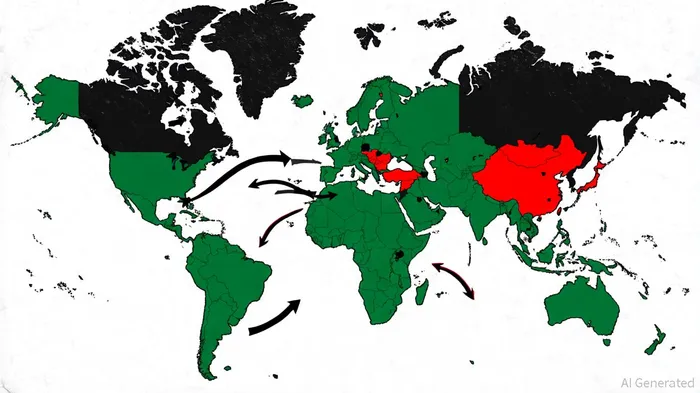
In an era marked by escalating geopolitical tensions, emerging markets are increasingly viewed through the lens of risk and uncertainty. Recent conflicts, such as the Russia-Ukraine war and the potential for instability in the Taiwan Strait, have significantly altered capital flow dynamics and asset valuations in these regions. This article explores how diplomatic access and international recognition influence investment behaviors, drawing on empirical evidence from recent studies.
Diplomatic Access and Capital Flow Volatility
Diplomatic shifts directly shape capital flows to emerging markets, particularly in conflict-affected regions. For instance, since Russia's invasion of Ukraine, China has experienced a sharp decline in nonresident portfolio inflows and foreign direct investment (FDI), a trend consistent with the broader phenomenon of "financial deglobalization" [1]. Investors are increasingly reallocating capital away from perceived geopolitical hotspots, favoring advanced economies or emerging markets with stable diplomatic ties.
Strategic partnerships, such as China's Belt and Road Initiative (BRI), demonstrate how diplomatic engagement can mitigate capital flight. Infrastructure projects under the BRI have attracted foreign investment by enhancing connectivity and institutional trust, even amid global uncertainties [4]. Conversely, sanctions and reduced diplomatic access—such as those imposed on Russia after its annexation of Crimea—have triggered negative capital outflows, with Ukraine also witnessing a sharp decline in inflows during its political turmoil [2].
International Recognition and Asset Valuations
International recognition plays a critical role in determining asset valuations for emerging market firms (EMFs). A study of 14 emerging economies reveals that heightened geopolitical risk (GPR) correlates with deteriorating firm value, as investors demand higher risk premiums [2]. EMFs often face a cost–benefit trade-off when accessing foreign capital markets: while geographic diversification reduces systematic risks for global investors, institutional differences between home and host markets can lower equity valuations due to perceived legitimacy gaps [1].
India, however, stands as an exception. As of January 1, 2025, the MSCIMSCI-- Emerging Markets Index has a trailing P/E ratio of 15.13, while India's stock market trades at a premium, reflecting strong investor demand and growth expectations [3]. This contrast highlights how geopolitical stability and institutional credibility can drive valuations, even in a risk-averse environment. In contrast, Russia's equity market remains undervalued and largely inaccessible to Western investors, underscoring the long-term impact of geopolitical isolation [3].
The Dollar's Dominance and Alternative Currencies
The U.S. dollar's strength remains a pivotal factor in shaping capital flows to emerging markets. Dollar depreciation typically boosts investor risk appetite, while appreciation exacerbates outflows [3]. However, geopolitical tensions are accelerating the rise of alternative currencies. For example, the use of the RMB in trade finance within the China bloc has increased from 4% to 8% since 2022, signaling a shift away from dollar dependency [6]. This trend underscores how diplomatic realignments can reshape global financial architecture.
Policy Implications and Future Outlook
Emerging markets must address institutional vulnerabilities to attract capital in a fragmented geopolitical landscape. Strengthening regulatory frameworks and enhancing transparency can mitigate the "flight to safety" effect observed in advanced economies [5]. Additionally, multilateral cooperation—such as trade agreements or infrastructure partnerships—can reduce dependency on volatile capital flows and foster resilience.
For investors, the key lies in balancing risk and reward. While conflict-affected regions remain challenging, opportunities exist in markets with robust diplomatic ties and stable institutions. As geopolitical tensions persist, the interplay between diplomatic access, international recognition, and capital flows will continue to define the investment landscape in emerging markets.







Comentarios
Aún no hay comentarios