
Geopolitical Tensions and the Defense Sector: How Trump's Policy Shifts Could Ignite Military Spending and Stock Gains
The U.S. defense sector is at a pivotal crossroads in 2025, driven by a confluence of geopolitical risks and policy shifts under the Trump administration. At the heart of this transformation is the potential decision to supply Tomahawk missiles to Ukraine-a move that could redefine the trajectory of the Russia-Ukraine war and catalyze a surge in military spending. For investors, this creates a unique opportunity to capitalize on defense stocks poised to benefit from both immediate conflict-driven demand and long-term modernization initiatives.
The Tomahawk Dilemma: Escalation or Containment?
The Trump administration's consideration of selling Tomahawk missiles to Ukraine has ignited a firestorm of debate. With a range of 1,500 miles, these weapons would enable Ukraine to strike deep into Russian territory, including Moscow, potentially crossing Putin's "red line" on long-range attacks, according to a Newstarget article. A Foreign Policy report notes that U.S. Special Envoy Keith Kellogg has argued that "there are no such things as sanctuaries in war," framing the move as a necessary escalation to force Russia into negotiations. However, Russian officials have warned that this could trigger a "qualitatively new stage of escalation," raising the specter of a direct NATO-Russia confrontation, analysts at the CFR have warned.
While the decision remains pending, the mere possibility has already spurred a reevaluation of defense budgets. The administration's "One Big Beautiful Bill Act," signed on July 4, 2025, allocates $156.2 billion in additional defense funding for FY26, including $29 billion for shipbuilding, $25 billion for munitions, and $25 billion for the Golden Dome space-based missile shield (analysis by the CFR). This surge in spending is not merely a response to Ukraine but part of a broader strategy to modernize U.S. military capabilities, particularly in artificial intelligence, directed energy, and space-based systems (CFR analysis).
Defense Stocks: A Historical and Structural Analysis
The defense sector's performance under Trump's policies has been marked by volatility and opportunity. During his first term (2017–2021), defense stocks like Lockheed MartinLMT-- (LMT), Raytheon (RTX), and BoeingBA-- (BA) surged by 32.57%, 88.02%, and 32.55%, respectively, driven by increased procurement and favorable rhetoric, according to Benzinga. However, the market's skepticism toward Trump's 2025 policies has led to a divergence: U.S. defense stocks have declined by an average of 4% since his re-election, while European counterparts have risen by nearly 40%. This gap reflects concerns over inconsistent U.S. security guarantees and the administration's perceived lack of support for Ukraine.
The recent $1 trillion defense spending bill, however, may reverse this trend. A Benzinga piece on the defense rally reports that the iShares U.S. Aerospace & Defense ETF (ITA) surged 23.2% in Q2 2025, its best quarter ever, as investors bet on the bill's long-term implications (Benzinga news). Companies like Raytheon Technologies (RTX), General Electric (GE), and Kratos Defense (KTOS) have outperformed, with GEGE-- up 50.59% year-to-date. The bill's emphasis on shipbuilding and missile defense has also elevated firms like General DynamicsGD-- (GD) and L3HarrisLHX-- Technologies (LHX), while emerging players like Palantir and Anduril are gaining traction in AI-driven analytics and autonomous systems.
Geopolitical Risks and Market Realities
The Tomahawk missile debate underscores a critical tension: while escalation could destabilize the region, it also creates a tailwind for defense contractors. U.S. stockpiles of Tomahawks are reported to be robust, with thousands in reserve, making the transfer logistically feasible (as noted in the Foreign Policy report). However, the administration's decision to involve European NATO countries in financing these weapons-aimed at ensuring greater European investment in the conflict-adds another layer of complexity, a shift highlighted by CBS News in its coverage. This shift could either strengthen transatlantic unity or exacerbate frictions if European partners perceive the U.S. as offloading costs.
For investors, the key lies in balancing short-term volatility with long-term structural trends. The Golden Dome initiative, for instance, is expected to involve Boeing, Lockheed Martin, and SpaceX, while next-generation combat aircraft and nuclear warhead development will favor firms like Raytheon and Northrop GrummanNOC--. Meanwhile, the emphasis on AI and cyber capabilities positions Palantir and Anduril as high-growth contenders (Benzinga analysis).
Conclusion: Navigating the New Normal
The Trump administration's defense policies are reshaping the geopolitical and economic landscape. While the Tomahawk missile decision remains a wildcard, the broader trend of increased spending and technological modernization is clear. For investors, this presents a dual opportunity: to capitalize on immediate demand for conflict-related assets and to position for long-term gains in innovation-driven sectors. However, the risks of escalation cannot be ignored. As the administration weighs its options, defense stocks will likely remain a barometer of both U.S. strategic priorities and global stability.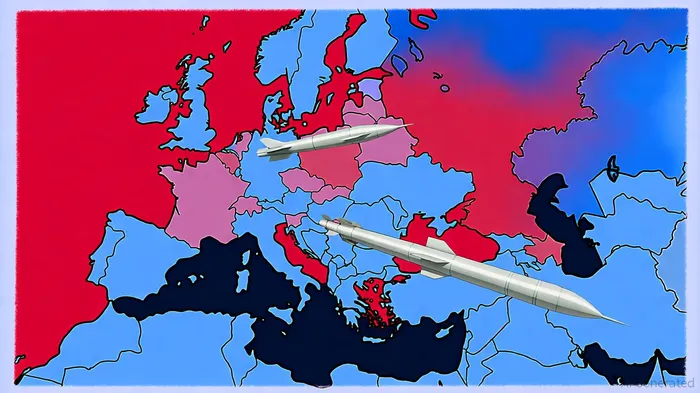





Comentarios
Aún no hay comentarios