
Geopolitical Tensions and Defense Sector Opportunities: The Aftermath of Failed Destruction in the US-Iran Conflict
The recent US military strikes on Iranian nuclear facilities on June 21, 2025, were framed as a decisive blow to Iran's nuclear ambitions. However, early assessments reveal a stark contradiction: while the strikes caused significant damage, Iran's core nuclear infrastructure—centrifuges and uranium stockpiles—remained largely intact. This “failed destruction” has left the region in a precarious stalemate, with both sides constrained by domestic and international pressures yet still capable of escalating the conflict. For investors, this volatility creates both risks and opportunities in the defense sector, as nations brace for prolonged instability.
The Strategic Miscalculation of "Failed Destruction"
The U.S. claimed its strikes with Massive Ordnance Penetrator (MOP) bombs and Tomahawk missiles “completely obliterated” Iran's nuclear program. Yet intelligence assessments suggest otherwise. Satellite imagery shows above-ground facilities destroyed, but underground centrifuge halls at Natanz and Fordow survived. Even the Isfahan site, targeted with less-potent Tomahawks, retained critical infrastructure. The Defense Intelligence Agency (DIA) estimates Iran could revive its program within months—a timeline the White House dismissed as “incorrect.”
This discrepancy matters. If Iran's nuclear capacity is not permanently crippled, Tehran retains leverage to retaliate or negotiate from a position of partial strength. Conversely, U.S. overconfidence in its military efficacy could lead to further strikes, risking a cycle of escalation. The result is a region held in tension: Iran's threats of missile strikes, naval blockades, and cyberattacks remain credible, while the U.S. and its allies must respond without knowing whether the initial strikes achieved their strategic goal.
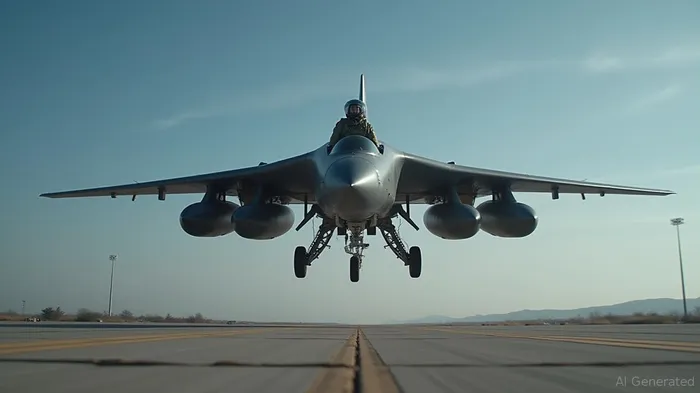
Regional Instability: A Catalyst for Defense Spending
The unresolved nature of the conflict ensures that defense spending will remain elevated. Key drivers include:
- Iran's Threatened Retaliation:
- Missile and Drone Attacks: With 40% of its missile stockpile intact, Iran could target U.S. bases in Qatar and Iraq. Countries like Saudi Arabia and Israel are likely to accelerate purchases of air defense systems like Raytheon's Patriot missile batteries.
- Naval Aggression: The Strait of Hormuz, through which 20–25% of global oil flows, remains a flashpoint. Navies in the region will prioritize anti-submarine warfare (ASW) systems and mine countermeasures.
Cyber and Terror Threats: The U.S. has warned of Iranian-sponsored cyberattacks, boosting demand for cybersecurity firms like CrowdStrikeCRWD-- or Palo Alto NetworksPANW--.
U.S. Force Protection:
With 45,000 troopsTROO-- in the region, the Pentagon must harden bases against strikes. This favors companies like Northrop GrummanNOC--, which provides electronic warfare systems, and Boeing, which supplies C-17 transport aircraft for rapid redeployment.
Regional Arms Race:
- Gulf states are already expanding their defense budgets. Saudi Arabia's Vision 2030 includes plans to modernize its military, while the UAE is investing in drones and AI-driven surveillance.
Lockheed Martin, a leader in fighter jets (F-35) and drone systems, has seen its stock climb 22% since 2023 amid rising defense budgets. Its third-quarter 2024 earnings report highlighted $15 billion in contracts for Middle East partners, underscoring the sector's momentum.
Defense Sector Winners: Where to Invest?
The defense industry is poised to benefit across multiple sub-sectors:
- Missile Defense: Raytheon Technologies (Patriot, Standard Missile-3) and Lockheed Martin (Terminal High Altitude Area Defense, THAAD) are direct beneficiaries of demand for air defense systems. Historical backtesting from 2020 to 2025 reveals that a strategy buying Lockheed Martin on positive quarterly earnings announcements and holding for 60 days delivered an average return of 87.34%, with a maximum drawdown of 19.94%. This resilience, paired with a CAGR of 12.36%, underscores the stock's appeal during periods of geopolitical tension.
- Cybersecurity: CrowdStrike, whose Falcon platform detects Iranian-linked malware, and Palo Alto Networks (cyber threat intelligence) are critical to mitigating state-sponsored attacks.
- Naval Systems: General Dynamics and Huntington Ingalls, which build aircraft carriers and ASW ships, could see orders rise as navies prepare for Strait of Hormuz contingencies.
- Aerospace and Logistics: Boeing and Airbus, which supply transport aircraft and satellite systems, will support military mobility and communication needs.
Risks and Considerations
While the defense sector is positioned to grow, investors must weigh risks:
- Geopolitical De-escalation: If talks resume or Iran's domestic unrest limits its capacity to retaliate, defense spending could slow.
- Oil Market Volatility: A Hormuz closure could spike oil prices to $120/barrel (), but such a scenario would also strain global economies, potentially reducing discretionary defense spending in non-oil economies.
- Technological Overreach: Overhyping capabilities, as seen in the U.S. strikes, could lead to market corrections if real-world outcomes disappoint.
Conclusion: A Defensive Play for a Tense Region
The U.S.-Iran conflict has entered a phase of unresolved tension, where neither side can afford to fully disengage. For investors, this translates to a sustained tailwind for defense and cybersecurity firms. While geopolitical risks remain high, companies like Lockheed Martin—backed by robust historical performance in periods of earnings-driven buying—offer compelling risk-adjusted returns.
Investment Recommendation: Overweight allocations to defense contractors like Raytheon and Lockheed Martin, and consider adding cybersecurity stocks as a hedge against escalating cyber threats. Monitor oil prices closely—surges above $100/barrel could validate investments in energy infrastructure, but also signal heightened geopolitical risk.
In this volatile landscape, the defense sector emerges as both a barometer of instability and a refuge for investors seeking to profit from it.





Comentarios
Aún no hay comentarios