
Geopolitical Supply Risks vs. Oversupply Dynamics: Navigating Short-Term Oil Market Volatility
The global oil market in early 2026 is caught in a tug-of-war between geopolitical uncertainties and a persistent supply glut. While Iran and Venezuela remain focal points of strategic tension, their evolving dynamics intersect with OPEC+'s cautious production policies to shape a market characterized by short-term volatility but long-term oversupply. For traders, the challenge lies in balancing exposure to geopolitical shocks with the structural realities of a market oversaturated by OPEC+ and non-OPEC+ output.
Iran's Resilience and Vulnerabilities
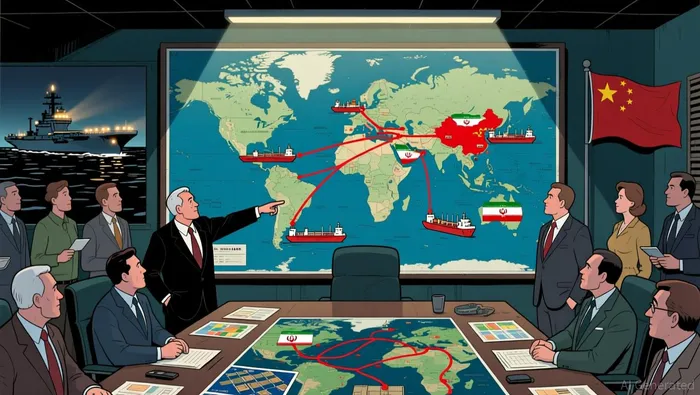
Iran's oil production has defied U.S. sanctions, maintaining output between 3.2 and 4 million barrels per day in 2024, supported by robust demand from Chinese independent refiners-so-called "teapots"- which accounted for 13.6% of China's oil imports in the first half of 2025. However, the U.S. military intervention in Venezuela on January 3, 2026, has introduced a critical wildcard. Chinese refiners, now wary of overreliance on Iranian crude amid shifting geopolitical alliances, may diversify their sourcing strategies. This shift could pressure Iran's exports, particularly as U.S. sanctions on Iran's financial sector and shipping infrastructure persist.
Venezuela's Uncertain Path to Recovery
Venezuela's oil sector, once a cornerstone of global supply, remains fractured. Despite holding 303 billion barrels of proven reserves-the largest in the world- production has plummeted to less than 1 million barrels per day due to years of mismanagement and U.S. sanctions. The U.S.-backed interim government, which took control in early 2026, has signaled openness to foreign investment, including from American majors like Exxon MobilXOM-- and ChevronCVX--. While this could eventually revive production, the immediate outlook is mixed. The U.S. has seized control of Venezuela's oil sales, auctioning stored crude to refineries and using revenues to repay nationalized assets. This intervention risks accelerating the market's oversupply, as increased Venezuelan output could flood an already saturated market.
OPEC+'s Strategic Pause
OPEC+ has opted for a measured approach in Q1 2026, maintaining steady production levels to avoid exacerbating the existing surplus. The group's decision reflects a broader strategy to stabilize prices amid a forecasted global surplus of 3.84 million barrels per day in 2026, driven by strong output from both OPEC+ and non-OPEC+ producers like the U.S. and Brazil. While geopolitical tensions in Iran and Venezuela have introduced short-term volatility, OPEC+ members emphasize that these disruptions are unlikely to offset the structural oversupply. The International Energy Agency (IEA) underscores that global demand growth remains subdued, limiting the market's ability to absorb additional supply.
Short-Term Trading Opportunities
The interplay of these factors creates a complex landscape for traders. Oil prices initially spiked after the U.S. intervention in Venezuela but remain in contango-a condition where future prices trade below spot prices- indicating no immediate scarcity fears. This suggests that while geopolitical risks can trigger short-term rallies, the market's fundamental oversupply will cap sustained gains. For now, prices are expected to trade between $52 and $62 per barrel in Q1 2026.
Traders may find opportunities in hedging against geopolitical shocks while capitalizing on the contango environment. For instance, selling futures contracts to lock in near-term prices could mitigate risks from potential supply disruptions in Iran or Venezuela. Conversely, buying options to hedge against a sudden spike in prices-such as from renewed U.S.-Iran tensions-could offer asymmetric upside. However, given OPEC+'s commitment to steady output and the IEA's surplus forecast, aggressive long positions in crude may carry higher risk.
Conclusion
The oil market's short-term dynamics are defined by a delicate balance: geopolitical risks in Iran and Venezuela inject volatility, while OPEC+'s production discipline and a global supply glut anchor prices. For investors, the key is to navigate this duality by prioritizing flexibility and risk management. While the U.S. intervention in Venezuela may temporarily disrupt trade flows, the broader trend of oversupply ensures that prices will remain range-bound unless demand surges or OPEC+ implements meaningful production cuts. In this environment, strategic hedging and a focus on contango-driven arbitrage may offer the most compelling opportunities.





Comentarios
Aún no hay comentarios