
Geopolitical Supply Risks and the Bull Case for Energy Commodities in 2026
The global energy and commodities markets in 2026 are being reshaped by a confluence of geopolitical tensions in Iran, Venezuela, and Russia. These developments are creating a volatile but potentially lucrative environment for investors seeking to position themselves in oil and precious metals. As supply risks escalate and central banks recalibrate their strategies, the interplay between geopolitical instability and market dynamics is generating a compelling bull case for energy commodities.
Iran: A Powder Keg of Supply Disruptions
Iran's internal unrest, marked by nationwide internet blackouts and protests over economic hardship, has cast a long shadow over global oil markets. According to a Reuters report, crude oil prices surged to a seven-week high in late December 2025 as concerns mounted over potential disruptions to Iran's exports, a key OPEC producer. The U.S. government's imposition of 25% tariffs on goods from countries trading with Iran further intensified market anxieties, adding a geopolitical risk premium of $3–$4 per barrel to oil prices, as estimated by Barclays. While global oil inventories remain high, analysts warn that any escalation in hostilities-whether through U.S. military action or Iranian countermeasures-could trigger sharper price spikes.
Venezuela: A Ticking Time Bomb for Oil Exports
Venezuela's oil sector has become a geopolitical flashpoint following the U.S.-led seizure of its president and the imposition of sanctions. Data from The Economic Times indicates that U.S. intervention has created significant barriers for energy companies seeking to resume operations in Venezuela, including the need to repay historical debts and navigate regulatory hurdles. While the anticipated resumption of Venezuelan oil exports has provided some downward pressure on prices, this is being offset by broader regional instability. For instance, Russia's renewed military actions in Ukraine have added another layer of uncertainty, complicating the outlook for global crude supplies.
Russia: A Persistent Source of Energy Volatility 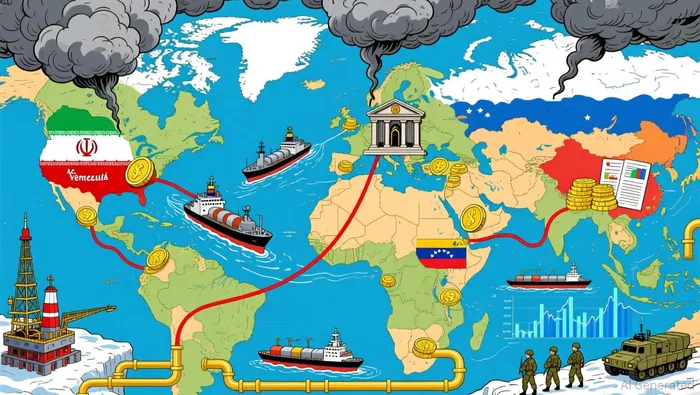
Russia's continued military involvement in Ukraine has kept energy markets on edge. Despite OPEC's efforts to manage supply, the risk of further disruptions in Russian oil and gas exports remains a critical factor. Goldman Sachs projects that while global oil prices may drift lower in 2026 due to a market surplus, geopolitical risks from Russia and other regions could still drive volatile price swings. This duality-between oversupply and geopolitical fragility-creates a unique opportunity for investors who can navigate short-term volatility while hedging against long-term supply shocks.
Precious Metals: The New Safe Haven
As geopolitical risks mount, precious metals have emerged as a critical hedge. Gold prices, for example, surged to a record $4,601.17 an ounce in early 2026, driven by expectations of Federal Reserve rate cuts and global economic uncertainty. Central banks, particularly in emerging markets, are accelerating their shift away from the U.S. dollar, further reinforcing gold's role as a store of value. Silver, too, is gaining traction due to its industrial applications in renewable energy and electric vehicles, despite stagnant mine production creating a structural supply-demand imbalance.
Strategic Investment Opportunities
For investors, the key lies in balancing exposure to energy commodities with defensive positions in precious metals. Goldman Sachs' forecast highlights the importance of disciplined risk management, as oil prices may face downward pressure from global oversupply but remain vulnerable to geopolitical shocks. In this context, gold mining equities-such as Harmony Gold Mining Company (HMY) and Agnico Eagle Mines (AEM)-are gaining favor among institutional investors for their leverage to rising bullion prices. Similarly, U.S. Gulf Coast refiners could benefit from increased imports of Venezuelan heavy crude, though infrastructure constraints will limit near-term gains.
Conclusion
The geopolitical landscape of 2026 presents both challenges and opportunities. While tensions in Iran, Venezuela, and Russia threaten to destabilize energy markets, they also create a compelling case for strategic positioning in oil and precious metals. Investors who adopt a diversified approach-combining exposure to energy commodities with safe-haven assets-stand to capitalize on the volatility while mitigating downside risks. As central banks and corporations continue to recalibrate their strategies, the interplay between geopolitics and markets will remain a defining feature of the year ahead.







Comentarios
Aún no hay comentarios