
The Geopolitical Storm Brewing in Europe: Sanctions, Energy Security, and Strategic Resilience
The conflict in Ukraine has entered a prolonged phase, with Russian President Vladimir Putin's refusal to accept Kyiv's capitulation intensifying geopolitical tensions. This stalemate has cemented the European Union's resolve to sustain and expand sanctions against Russia, reshaping energy markets and exposing vulnerabilities in European energy security. For investors, this environment demands a dual focus: mitigating risks tied to European equities and capitalizing on opportunities in defense and energy resilience sectors.
Sanction Dynamics and Russian Resilience
The EU's sanctions regime, now in its fourth year, has evolved into a multifaceted tool targeting Russia's economy, military, and political elite. Recent measures include bans on diamond imports, expanded export controls on dual-use technologies, and the listing of entities in third countries (e.g., China, Iran) that support Russia's war effort. A 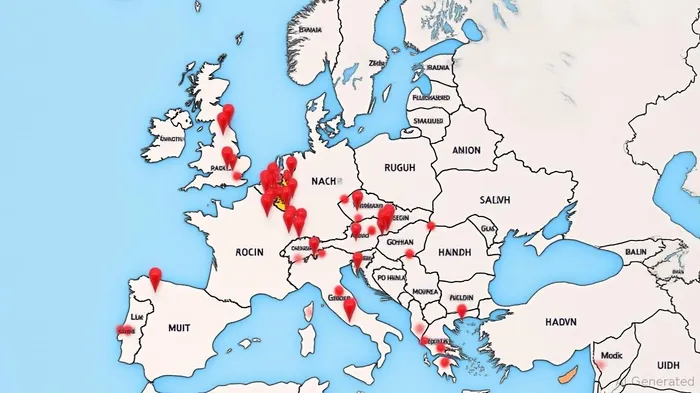 underscores the geographic and sectoral breadth of these restrictions.
However, internal EU divisions threaten cohesion. Hungary's repeated veto threats over the renewal of sanctions targeting over 2,400 Russian individuals and entities highlight the bloc's reliance on unanimity. Budapest's demands to remove names like oligarch Mikhail Fridman from the list have forced other members to consider “Plan B” measures, such as unilateral EU-level oversight if consensus collapses. This uncertainty adds geopolitical risk to European equities, particularly in sectors exposed to Russian trade or energy dependency.
Energy Security: A Crucial Vulnerability
The EU's reliance on Russian energy has plummeted, but risks remain. Russian crude oil deliveries to the EU fell by 76% since 2022 due to sanctions and the G7 oil price cap, while natural gas imports dropped by 40%. Yet, gas pipelines like Nord Stream 1 remain operational, and Russia continues to sell energy to third-party buyers. The EU's Sakhalin-2 exemption, extended to June 2026, allows Japan to import Russian crude under the price cap, illustrating the fine line between energy security and sanctions enforcement.
This data reveals the EU's pivot to LNG and renewables, but supply chain bottlenecks and infrastructure gaps persist. Utilities and energy-intensive industries face rising costs, squeezing profit margins. Investors should scrutinize European equities in these sectors, as prolonged sanctions could exacerbate inflation and economic slowdowns.
Investment Opportunities: Defense and Energy Resilience
The prolonged conflict has created clear opportunities in sectors building resilience to geopolitical shocks:
1. Defense Contractors: Companies like BAE Systems (BAES.L) and Rheinmetall (RHM.DE) benefit from NATO's €100 billion defense spending pledge by 2030.
2. Renewables and Energy Storage: Firms such as NextEra Energy (NEE) and Northvolt (NVTOL.ST) are key to the EU's REPowerEU plan, aiming to cut gas imports by 2/3 by 2030.
3. Cybersecurity: Threats to energy grids and critical infrastructure have fueled demand for firms like Cyberark (CYBR) and Palo Alto Networks (PANW).
This comparison shows defense stocks outperforming broader markets since 2022, a trend likely to continue as NATO reinforces deterrence.
Risks to Consider
- NATO Cohesion: Internal EU disputes over sanctions could weaken collective resolve, creating opportunities for Russian diplomatic or military escalation.
- Sanctions Evasion: Russia's use of “shadow fleets” and third-country intermediaries to bypass bans remains a concern, as seen in the 342 vessels listed by the EU.
- Economic Fallout: Prolonged sanctions may strain EU member states reliant on Russian energy (e.g., Germany, Italy) or commodity exports (e.g., France's wine trade with Russia).
Conclusion: Navigating the Geopolitical Crossroads
Investors must adopt a “risk-aware” strategy, balancing exposure to European equities with defensive allocations. Avoid utilities and energy firms with Russian ties, and favor companies driving energy independence and defense modernization. The EU's push for resilience—backed by €800 billion in green and defense spending by 2030—offers fertile ground for long-term gains.
As Putin's war grinds on, the EU's sanctions regime and energy transition will define both risks and opportunities. The path forward is clear: prioritize sectors building resilience, and prepare for a prolonged geopolitical storm.
This comparison underscores the defensive outperformance, guiding investors toward sectors insulated from geopolitical volatility.







Comentarios
Aún no hay comentarios