
Geopolitical Stability and Strategic Investment Opportunities in Eastern Europe's Defense and Energy Sectors
In the shadow of the Russia-Ukraine war, Eastern Europe has emerged as a crucible of geopolitical transformation. The region's defense and energy sectors are not only reshaping security dynamics but also offering compelling investment opportunities. As Ukraine's military modernization accelerates and its neighbors bolster their own capabilities, the interplay between defense innovation and energy reconstruction is creating a unique landscape for capital deployment.
The Defense Sector: A Catalyst for Regional Stability
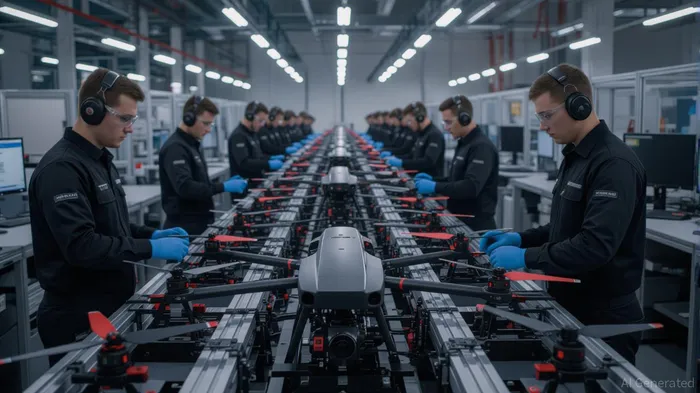
Ukraine's defense industry has undergone a seismic shift. By 2025, the country produces 40% of its military equipment domestically, a leap driven by necessity and innovation. The Zbroyari program, backed by $1.5 billion in foreign investment, has catalyzed partnerships with firms like Rheinmetall (RHG.DE) and Lockheed MartinLMT-- (LMT), scaling production of 155mm artillery and HIMARS launchers. Ukraine's drone revolution—200,000 FPV units monthly—has redefined modern warfare, with 80% of Russian casualties attributed to these systems.
The ripple effect extends beyond Ukraine. Poland, Estonia, and Lithuania are aligning their defense spending with NATO interoperability standards, while the EU's 100-billion-euro reconstruction fund for Ukraine underscores a commitment to regional stability. Defense budgets across Eastern Europe now rival those of traditional powerhouses, with NATO's 2024 spending hitting $1.5 trillion.
Investors should focus on companies embedded in this ecosystem. AeroVironmentAVAV-- (AVAV), a leader in drone technology, and BAE Systems (BAES.L), a key player in armored vehicles, are poised to benefit from sustained demand. Emerging regional innovators, such as Estonia's Milrem Robotics, which co-develops THeMIS UGVs with Ukrainian startups, also present high-growth potential.
Energy Sector: Rebuilding for Resilience
The war has exposed vulnerabilities in Eastern Europe's energy infrastructure, but it has also accelerated a green transition. Ukraine's reconstruction plans include renewable energy projects, such as solar farms in the Kharkiv region and wind power initiatives in the Black Sea. The EU's use of frozen Russian assets to fund these efforts adds a layer of financial predictability.
Poland and the Baltic states are doubling down on energy independence, with Poland's $12 billion investment in offshore wind farms and Lithuania's $5 billion grid modernization. These projects attract capital from firms like Ørsted (DONG.CO) and NextEra EnergyNEE-- (NEE), which are expanding into Eastern Europe.
Energy investments here are not without risks. Geopolitical tensions could disrupt supply chains, and regulatory shifts in the EU may alter subsidy structures. However, the region's strategic pivot to renewables and its alignment with EU green targets make it a fertile ground for long-term gains.
Navigating Geopolitical Risks
The U.S. remains a wildcard. President Trump's opposition to new aid packages threatens to slow military equipment deliveries, though existing commitments will sustain flows through 2025. European support, meanwhile, is more resilient, with Germany and France committing $40 billion in undelivered aid. Investors should hedge against U.S. policy swings by diversifying portfolios across European defense contractors and energy firms.
Strategic Investment Recommendations
- Defense Contractors with Eastern Exposure: Prioritize firms like Lockheed Martin (LMT) and Rheinmetall (RHG.DE), which are deeply integrated into Ukraine's supply chains.
- Regional Innovators: Allocate capital to startups like TenCore, which exemplify the agility of Ukraine's defense sector.
- Energy Infrastructure: Target renewable projects in Ukraine and Poland, leveraging EU funding and green transition momentum.
- Dual-Use Technologies: Invest in companies producing both military and civilian infrastructure, such as BAE Systems (BAES.L), which balances defense contracts with energy sector projects.
Conclusion
Eastern Europe's defense and energy sectors are no longer peripheral to global markets. They are central to a new era of geopolitical stability, driven by innovation, resilience, and strategic alignment with Western institutions. For investors, the region offers a rare combination of high-growth potential and policy-driven tailwinds. By adopting a diversified approach that balances established players with regional disruptors, capital can thrive in this dynamic landscape.
The war in Ukraine has forced a reimagining of security and energy paradigms. Those who recognize the strategic value of this transformation will find themselves at the forefront of a pivotal investment opportunity.





Comentarios
Aún no hay comentarios