
Geopolitical Stability and Market Dynamics: U.S. Middle East Policies Reshape Defense, Tech, and Energy Sectors
The U.S. political landscape in the Middle East under President Donald Trump's second term has catalyzed a seismic shift in global markets, with defense, technology, and energy sectors emerging as both beneficiaries and battlegrounds of geopolitical recalibration. Trump's transactional diplomacy-marked by peace brokering, sanctions, and strategic alliances-has not only reshaped regional dynamics but also introduced new investment paradigms. This analysis explores how U.S. Middle East policies are influencing these sectors, drawing on recent developments and authoritative data.
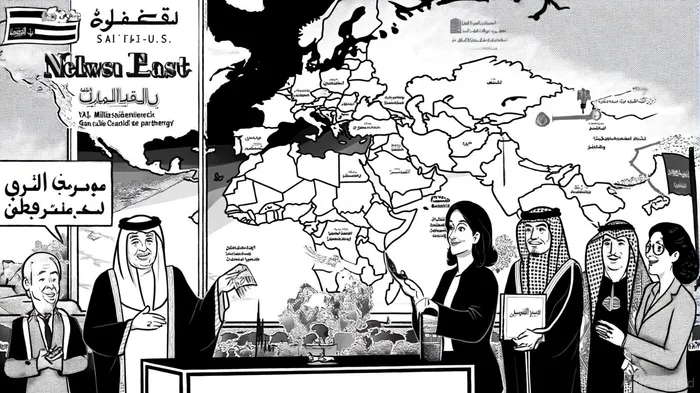
Defense Sector: A Surge in Spending and Strategic Alliances
The October 2023 Hamas attack on Israel and subsequent regional conflicts have triggered a 15.6% average annual increase in Middle Eastern defense budgets in 2024, with Saudi Arabia alone allocating $71.4 billion to its defense apparatus, according to a Defense One snapshot. U.S. military support, including $3.3 billion in Foreign Military Financing for Israel and $500 million annually for joint missile defense programs, has further fueled this growth, according to an Economy Middle East article.
The U.S. has also deployed carrier strike groups and advanced fighter jets to deter Iranian aggression, signaling a renewed commitment to regional stability. Defense contractors like Lockheed MartinLMT-- and Raytheon Technologies stand to benefit from this surge, as Middle Eastern nations prioritize modernizing their arsenals with advanced air-defense systems, naval vessels, and fifth-generation fighter jets, according to Dallas Fed energy indicators. However, the sector faces challenges from rising competition, with Russia, France, and China vying for lucrative contracts. Meanwhile, regional powers such as Saudi Arabia and the UAE are pursuing defense localization strategies, as seen in Saudi Vision 2030's push for domestic military production, as noted in a SemiAnalysis piece.
Technology Sector: AI and Semiconductor Agreements Redefine Geopolitical Power
The U.S. has leveraged its technological edge to forge high-stakes partnerships with the UAE and Saudi Arabia, reshaping the global AI landscape. The UAE-U.S. Partnership for Accelerating Clean Energy (PACE) aims to mobilize $100 billion in financing by 2035, with Masdar's acquisition of Terra-Gen adding 5 GW of U.S. renewable energy capacity, according to Economy Middle East. Simultaneously, the Trump administration has approved the export of 500,000 advanced AI chips annually to the UAE, with Saudi Arabia committing $10 billion to AMD and Nvidia systems, according to The Financial Analyst.
These agreements, however, come with risks. The scale of chip exports-such as Saudi Arabia's 500 MW order for Nvidia's GB300 chips-could enable the Gulf to build frontier-scale data centers, potentially challenging U.S. AI leadership, a point highlighted in Defense One reporting. To mitigate this, the U.S. must enforce strict security protocols to prevent technology diversion to adversaries like China. For investors, the semiconductor sector offers both upside (via U.S. tech firms securing Gulf contracts) and downside risks (from geopolitical tensions and regulatory scrutiny).
Energy Sector: Tariffs, Sanctions, and the Clean Energy Transition
U.S. energy policies have introduced volatility into oil markets, with tariffs on Gulf imports and sanctions on Iran reducing its crude exports from 1.4 million to 500,000 barrels per day by mid-2025, a trend noted in Defense One reporting. OPEC+ responded by increasing output by 411,000 barrels per day in May 2025, pushing benchmark prices below $70 per barrel, according to Economy Middle East. Meanwhile, the U.S. aims to boost domestic production to 13.6 million barrels per day by late 2025, though falling prices threaten to stall exploration, as indicated by Dallas Fed energy indicators.
In contrast, the UAE-U.S. clean energy partnership has emerged as a bright spot. The $100 billion PACE initiative includes 15 GW of U.S. clean energy projects by 2035, with Masdar and ADNOC leading investments in solar, wind, and low-carbon hydrogen, as reported by SemiAnalysis. These efforts align with the Gulf's push to diversify away from oil, though challenges like supply chain reliance on China persist, according to a ME Council report. For energy investors, the sector presents a dual narrative: short-term turbulence from geopolitical tensions and long-term growth from clean energy transitions.
Conclusion: Navigating the New Geopolitical Order
The U.S. Middle East strategy under Trump has created a complex interplay of risks and opportunities. Defense contractors and tech firms are poised to capitalize on increased regional spending and AI partnerships, while energy markets grapple with the dual forces of sanctions and decarbonization. Investors must remain agile, balancing exposure to high-growth sectors like AI and renewables with hedging against geopolitical uncertainties. As the region's landscape continues to evolve, the durability of U.S. policies-and their market implications-will hinge on the success of peace efforts and the resilience of strategic alliances.







Comentarios
Aún no hay comentarios