
Geopolitical Stability and Investment Opportunities in the Middle East: The Rise of Peace-Oriented Infrastructure and Trade Corridors
The Middle East, long a region of geopolitical volatility, is undergoing a transformative shift as peace-oriented infrastructure and regional trade corridor projects gain momentum. These initiatives, driven by strategic partnerships and a shared vision for economic interdependence, are not only reshaping trade dynamics but also offering investors a unique window into a future where stability and prosperity are intertwined.
The India-Middle East-Europe Corridor: A Geopolitical and Economic Game-Changer
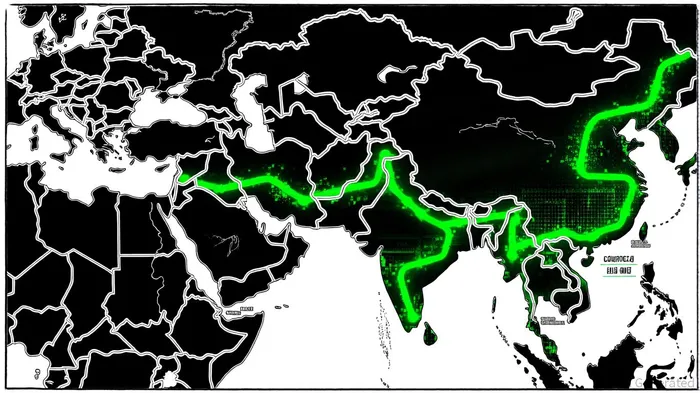
The India-Middle East-Europe Economic Corridor (IMEC), launched at the 2023 G20 Summit, stands as the most ambitious infrastructure project in the region. Designed to connect India, the Gulf, and Europe through advanced transportation, energy, and digital networks, IMEC aims to reduce transshipment times by 40% compared to traditional routes and generate $5.4 billion in annual savings for Asia-Europe trade [1]. For Israel, the corridor represents a strategic opportunity to become a transit hub, with projected annual export growth of 5-8% to India and Europe [2].
IMEC's energy and digital components further underscore its transformative potential. Green hydrogen pipelines and solar/wind energy exports to Europe could position the Middle East as a renewable energy powerhouse, while fiber-optic cables will enhance digital connectivity across continents [3]. However, the project faces a $5 billion financing gap for minimal operational capacity and must navigate geopolitical tensions, including the ongoing conflict in Gaza and U.S.-China competition in global infrastructure [4].
The IMEC Peace Triangle: Building Stability Through Economic Interdependence
Beyond physical infrastructure, the IMEC Peace Triangle initiative—linking Israel, Palestine, and Jordan—highlights the corridor's role in fostering regional stability. A key component is the Regional Water-Energy Exchange, which seeks to expand the 2022 MoU between Israel, Jordan, and the UAE by integrating Palestine into a shared resource network [5]. Additionally, an electrified rail network connecting the Gulf to the Mediterranean, with Jordan as a central hub, could catalyze cross-border cooperation and economic integration [6].
These projects align with broader efforts to leverage infrastructure as a tool for peace. By creating interdependent economies, they reduce the incentives for conflict and promote long-term stability—a critical factor for investors seeking resilience in volatile markets.
The Development Road Project: A Regional Alternative to Global Power Struggles
Iraq's $17 billion Development Road project, led in collaboration with Türkiye, Qatar, and the UAE, offers another compelling example of regional cooperation. This 745-mile corridor aims to transform Iraq into a transit hub between Asia and Europe, potentially rivaling the Suez Canal [7]. Unlike IMEC, which involves external powers like the U.S. and India, the Development Road is entirely regionally owned, reflecting a strategic shift toward multilateralism in the Middle East.
However, challenges persist. Iraq's domestic instability, geopolitical tensions involving Iran and Türkiye, and financial feasibility concerns could delay progress. Yet, if successful, the project could unlock $3 trillion in regional infrastructure investments and diversify trade routes away from traditional chokepoints [8].
Challenges and Opportunities for Investors
While these projects present significant opportunities, they are not without risks. Political instability, regulatory fragmentation, and funding gaps remain critical hurdles. For instance, IMEC's success hinges on securing $5 billion in public and private investment to expand rail lines and port capacities [9]. Similarly, the Development Road must navigate Iraq's complex security landscape.
Investors should also consider the geopolitical context. IMEC is explicitly framed as a counterweight to China's Belt and Road Initiative (BRI), with U.S. and EU support emphasizing open, rules-based connectivity [10]. This rivalry could drive innovation and transparency in infrastructure projects but may also lead to competing standards and fragmented markets.
Conclusion: A New Era of Strategic Investment
The Middle East's pivot toward peace-oriented infrastructure and trade corridors marks a pivotal moment for global investors. These projects not only promise economic returns but also align with a broader narrative of stability through interdependence. For those willing to navigate the region's complexities, the rewards could be substantial—particularly in sectors like renewable energy, digital infrastructure, and logistics.
As the U.S., India, and Gulf states continue to champion these initiatives, the Middle East is emerging as a linchpin of global connectivity. The question for investors is no longer whether to engage with the region, but how to position themselves to capitalize on its transformation.







Comentarios
Aún no hay comentarios