
Geopolitical Stability in Emerging Markets: Navigating Russia-NATO Tensions and Investor Sentiment Shifts
The Russia-NATO tensions of 2025 have become a defining force in shaping investor sentiment toward emerging markets, creating a landscape of volatility and strategic recalibration. As geopolitical instability persists, the interplay between military posturing, economic sanctions, and global trade dynamics has forced investors to reassess risk exposure in regions heavily reliant on cross-border capital flows and supply chains. This analysis explores how these tensions are reshaping emerging market economies, drawing on recent data and expert insights to outline the implications for investors.
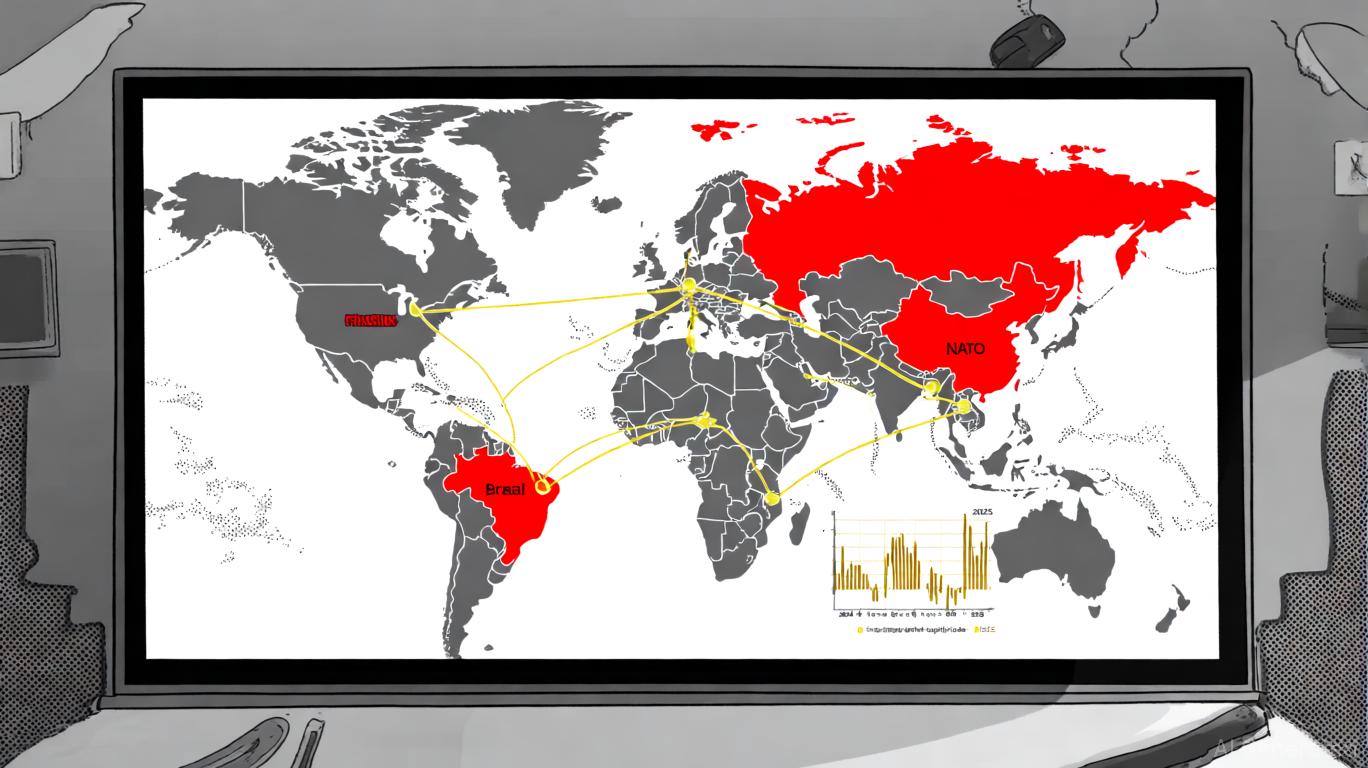
![]https://cdn.ainvest.com/aigc/hxcmp/images/compress-qwen_generated_1760595637053.jpg.pngThe Dual Impact of Geopolitical Uncertainty
Russia's protracted war in Ukraine, coupled with its economic isolation from Western markets, has triggered a cascade of indirect effects on emerging economies. According to a DW report, Moscow's reliance on increased taxation and reduced public spending has constrained investments in critical sectors like education and healthcare, creating a ripple effect on global trade partners. Meanwhile, NATO allies have accelerated defense spending, boosting demand for advanced military systems and reshaping corporate strategies, as shown in a FinancialContent analysis. For instance, defense contractors such as Lockheed MartinLMT-- and Raytheon have seen surges in orders, while energy firms in Europe pivot toward LNG infrastructure to reduce dependence on Russian hydrocarbons.
However, the fallout is uneven. Multinational corporations with significant operations in Russia or Ukraine, such as Dell and McDonald's, face operational and financial losses due to sanctions and supply chain disruptions (the FinancialContent analysis cited above outlines several such cases). Emerging markets, particularly those with exposure to global trade flows, are especially vulnerable. A BlackRock geopolitical risk dashboard underscores how rising tariffs and protectionist policies have exacerbated uncertainty, leading to capital flight and increased risk premiums for equities in developing economies, as noted by Capital Street FX.
Investor Sentiment and the Safe-Haven Shift
The Q3 2025 Schroders review highlights a paradox: while emerging markets posted strong returns due to the Fed's rate cuts and U.S.-China trade progress, the Russia-Ukraine conflict remains a medium-term threat. This duality reflects investor behavior oscillating between optimism and caution. Gold prices, for example, have surged as a safe-haven asset, with Capital Street FX noting that geopolitical tensions and inflationary pressures from tariffs have driven demand.
Emerging market currencies and equities, however, remain fragile. A ScienceDirect study reveals that geopolitical risk has increased the cost of equity capital in emerging economies, as investors prioritize stability over growth. This trend is particularly pronounced in BRICS nations, where contagion effects from the Russia-Ukraine war have amplified stock market volatility (the ScienceDirect study cited above discusses these contagion effects in detail).
Structural Shifts and Long-Term Implications
The Russia-NATO standoff has accelerated strategic realignments in global trade. Russia's deepening economic ties with China and pariah states like Iran and Belarus are fragmenting the global economic order (the FinancialContent analysis referenced earlier examines these alignments). For emerging markets, this means navigating a bifurcated world where trade alliances are increasingly defined by geopolitical blocs. A KPMG report warns that high tariffs and regulatory divergence could force companies to restructure supply chains, adding compliance costs and operational complexity (see the Schroders review for related market commentary).
Moreover, the war economy model adopted by Russia—characterized by inflationary pressures and labor market strains—raises questions about long-term sustainability, a theme explored in the DW report linked above. Emerging markets with limited fiscal buffers may face contagion risks if global energy markets or trade routes are disrupted.
Strategic Considerations for Investors
For investors, the key lies in balancing risk mitigation with opportunities in resilient sectors. Defensive assets like gold and government bonds remain attractive, while sectors aligned with energy transition and digital infrastructure may offer long-term growth. However, exposure to emerging markets requires careful due diligence, particularly in regions with high geopolitical risk.
Conclusion
The Russia-NATO tensions of 2025 underscore the fragility of global economic interdependence. While emerging markets face heightened volatility, they also present opportunities for investors who can navigate the shifting geopolitical landscape. By prioritizing diversification, hedging against currency risks, and focusing on sectors insulated from conflict, investors can position themselves to weather the storm while capitalizing on long-term structural shifts.





Comentarios
Aún no hay comentarios