
Geopolitical Stability and Emerging Market Opportunities in the Middle East: Conflict Resolution and Defense Sector Implications for Regional Investors
The Middle East in 2025 remains a paradox of volatility and opportunity. While geopolitical tensions between Israel and Iran, alongside protracted conflicts in Gaza and Syria, continue to destabilize the region, emerging market investors are navigating a landscape where strategic resilience and innovation are reshaping economic and defense dynamics. For regional investors, the interplay between conflict resolution efforts and defense sector growth presents both risks and rewards, demanding a nuanced understanding of how geopolitical instability and military modernization intersect with long-term investment horizons.
Geopolitical Instability: A Double-Edged Sword
The region's geopolitical instability has persisted despite diplomatic overtures. According to a report by the Economist Intelligence Unit, the Israel-Iran standoff and stalled Gaza ceasefire negotiations have created a "trajectory of targeted military actions," prolonging humanitarian crises and deterring large-scale foreign direct investment (FDI) in high-risk areas (Economist Intelligence Unit). However, Gulf Cooperation Council (GCC) nations-particularly Saudi Arabia and the UAE-have demonstrated remarkable economic resilience. Saudi Arabia's non-oil GDP grew by 3.9% year-on-year in Q2 2025, driven by infrastructure projects like NEOM and The Line, while the UAE's fintech sector and economic cluster policies continue to attract FDI despite a 3.9% GDP slowdown in Q1 2025, according to the Deloitte MEcon (Deloitte MEcon).
The Trump administration's transactional approach to U.S. foreign policy has further complicated the landscape. A report by the Middle East Institute highlights how Trump's May 2025 Gulf visit catalyzed $250 billion in clean energy and technology deals, signaling a shift in U.S. support toward infrastructure and ESG-aligned projects rather than traditional military interventions (Middle East Institute). This pivot has encouraged Gulf states to diversify their economic partnerships, with China, Türkiye, and South Korea emerging as key suppliers of cost-effective defense technologies, according to an ORF analysis (ORF analysis).
Defense Sector Growth: A Supercycle in Motion
The Middle East's defense sector is undergoing a transformation driven by asymmetric warfare, regional rivalries, and the need for strategic autonomy. According to Defense One, MENA defense spending reached $220.6 billion in 2024, with Saudi Arabia allocating $71.4 billion to its military budget-a figure aligned with Vision 2030's goals of modernization and self-sufficiency (Defense One). The UAE's EDGE Group has become a focal point of this shift, advancing AI-driven cybersecurity and local production initiatives to reduce reliance on foreign contractors, as noted by Defence Procurement International (Defence Procurement International).
Conflict resolution efforts, though limited in success, have inadvertently spurred demand for niche defense capabilities. For instance, the fragile ceasefire in Lebanon and ongoing tensions in Syria have heightened the need for advanced surveillance and counterterrorism systems. An IGSDA briefing notes that Gulf investments in Syria's infrastructure, including energy and transportation projects, are not only economic gambles but also strategic moves to secure regional influence amid shifting alliances (IGSDA briefing).
Investment Opportunities: Balancing Risk and Resilience
For regional investors, the Middle East's emerging markets offer a mosaic of opportunities. The Deloitte Middle East Economic Monitor underscores the region's projected $4.1 trillion GDP by 2025, fueled by large-scale infrastructure projects in Egypt, Saudi Arabia, and the UAE; a related overview appears in a Southwest Journal article (Southwest Journal article). However, integration challenges-such as fragmented capital markets and divergent regulatory frameworks-remain significant hurdles.
The defense sector, meanwhile, presents high-conviction opportunities in areas like green hydrogen, AI-ready power grids, and smart city development. The Saudi-UAE clean energy initiative, for example, aligns with global ESG trends while serving as a hedge against geopolitical shocks, according to News of Israel (News of Israel). Investors are also turning to infrastructure ETFs and gold as safe-haven assets, with gold prices hitting $3,380 per ounce in Q3 2025 amid heightened uncertainty, as reported in a LinkedIn post (LinkedIn post).
Challenges and the Path Forward
Despite these opportunities, the region's least financially integrated capital markets and currency controls continue to deter institutional investors, according to the CFA Institute (CFA Institute). Moreover, the failure of international actors to resolve conflicts in Gaza and Lebanon has led to a "conflict management" paradigm, where defense spending is prioritized over diplomatic solutions. A Carnegie Endowment report warns that without a regional security framework-such as a Middle Eastern Organization for Security and Cooperation-militarized spending will persist, diverting resources from sustainable development (Carnegie Endowment).
Conclusion
The Middle East's 2025 investment landscape is defined by duality: a volatile geopolitical environment coexisting with ambitious economic and defense modernization. For regional investors, success hinges on balancing short-term hedging strategies with long-term bets on sectors like renewables, fintech, and infrastructure. While conflict resolution remains elusive, the region's pivot toward strategic autonomy and technological innovation offers a glimpse of a future where stability and growth are not mutually exclusive.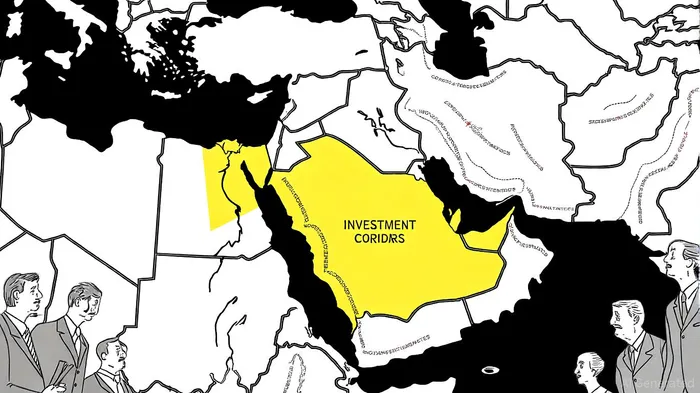







Comentarios
Aún no hay comentarios