
Geopolitical and Social Instability Risks Reshape Urban U.S. Markets: A Dual Analysis of Real Estate and Tech Sector Valuations
In the evolving landscape of urban U.S. markets, geopolitical and social instability risks have emerged as critical drivers of valuation dynamics, particularly in real estate and technology sectors. Political polarization and public safety concerns are no longer abstract societal challenges-they are tangible forces reshaping investment flows, regulatory environments, and long-term growth trajectories. This analysis examines how these factors are redefining urban markets, drawing on recent data and expert insights to outline the implications for investors.
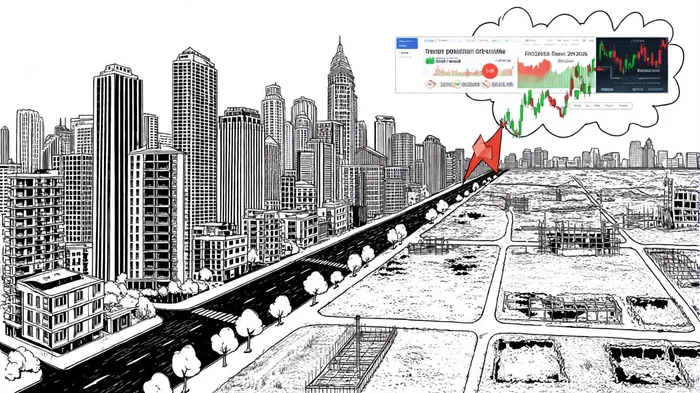
Political Polarization and Real Estate Valuations: A Policy-Driven Dilemma
Urban real estate markets are increasingly sensitive to the interplay between political polarization and policy uncertainty. A ScienceDirect study finds that political uncertainty, particularly during election years, correlates with declining house price growth and reduced transaction volumes. For instance, the RCLCO Real Estate Market Index (RMI) fell to 37 in mid-2025-a level typically associated with economic stress or recession-reflecting investor concerns over tariffs, labor shortages, and geopolitical instability.
Policy divergence between states further exacerbates regional disparities. Tenant-friendly regulations in states like California have dampened investor confidence, while landlord-friendly policies in Florida have attracted capital inflows, as reports. These contrasting approaches highlight how political preferences are not just shaping local governance but also directly influencing asset allocation decisions. The 2024 Emerging Trends in Real Estate report notes that Sun Belt markets remain resilient due to demographic shifts and climate resilience strategies, yet high interest rates and a "lock-in" effect among homeowners are constraining broader market recovery.
Tech Sector Valuations: Navigating Polarization and Public Safety Concerns
The tech sector, a cornerstone of urban economic growth, faces unique challenges from political polarization and public safety dynamics. A Brookings Institution analysis reveals that social media algorithms amplify partisan divides, fragmenting public discourse and undermining trust in democratic institutions. That analysis also notes this erosion of societal cohesion indirectly impacts tech valuations by creating regulatory uncertainty and deterring long-term innovation investments.
Investor behavior in 2025 reflects a cautious yet adaptive stance. Deloitte's Technology Industry Outlook highlights that AI and cybersecurity remain top priorities, with IT spending projected to rise despite macroeconomic headwinds. However, the sector's market capitalization has fluctuated between $16.1 trillion and $22.2 trillion, influenced by trade policy shifts and antitrust scrutiny, according to Simply Wall St. For example, increased U.S. tariffs have introduced volatility in global supply chains, prompting tech firms to diversify production and prioritize cybersecurity.
Political polarization also manifests in media coverage, which drives abnormal trading volumes for firms perceived as politically aligned. A ScienceDirect analysis found that polarized reporting by outlets like the Wall Street Journal and New York Times has led to heightened investor disagreement and trading activity. That study also reports that 60% of institutional investors now incorporate political risk into board-level discussions, underscoring the growing importance of political risk management.
Strategic Implications for Investors
For investors, the key lies in balancing resilience with agility. In real estate, prioritizing markets with stable policy environments and adaptive zoning laws-such as those in the Sun Belt-can mitigate polarization-driven risks, as noted in the PwC Emerging Trends report. Similarly, in the tech sector, focusing on sectors like cybersecurity, AI infrastructure, and renewable energy aligns with both regulatory trends and long-term demand, a point emphasized in Deloitte's outlook.
However, the interconnected nature of these risks demands a holistic approach. As PwC's 2025 Global Investor Survey notes, trust in leadership and transparent sustainability reporting are becoming non-negotiables for capital allocation. Investors must also anticipate how political shifts could reshape urban infrastructure priorities, such as AI-driven power demand and climate-resilient development, according to Goldman Sachs.
Conclusion
The urban U.S. markets of 2025 are defined by a fragile equilibrium between political polarization and economic resilience. While real estate and tech sectors face distinct challenges, both are united by the need to navigate policy uncertainty and public safety concerns. For investors, the path forward requires not only a granular understanding of these dynamics but also a commitment to adaptive strategies that prioritize long-term stability over short-term gains.







Comentarios
Aún no hay comentarios