
The Geopolitical Risks of Stablecoin Use in Sanctioned Regimes
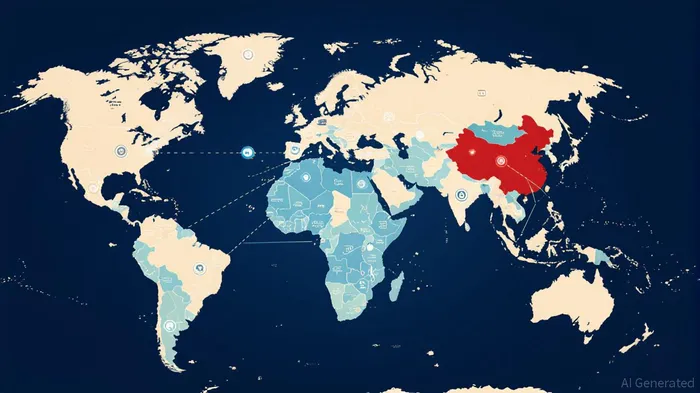
The rise of stablecoins has introduced a paradox: while their design aims to provide stability and utility in volatile markets, their adoption in sanctioned regimes has exposed crypto-related investment portfolios to unprecedented regulatory and compliance risks. As of 2025, stablecoins like TetherUSDT-- (USDT) and USD Coin (USDC) have become critical tools for sanctioned actors to circumvent traditional financial systems, prompting regulators to impose stringent frameworks such as the U.S. GENIUS Act and the EU's MiCA regulations. For investors, the challenge lies in balancing the transformative potential of stablecoins with the escalating geopolitical and compliance costs of their misuse.
Regulatory Tightening and the New Compliance Landscape
The U.S. Treasury's Office of Foreign Assets Control (OFAC) has intensified its focus on stablecoin-related sanctions evasion. In August 2025, OFAC sanctioned Kyrgyzstan-based entities for facilitating $1 billion daily in ruble-backed stablecoin transactions linked to Russian sanctions violations[2]. Similarly, North Korea has leveraged stablecoins for ransomware payments and cybercrime, with OFAC adding associated addresses to its Specially Designated Nationals (SDN) list[4]. These actions reflect a broader trend: regulators are no longer treating stablecoins as mere payment tools but as vectors for illicit finance.
Legislative responses have followed. The GENIUS Act, enacted in July 2025, mandates 1:1 reserve backing for stablecoins and imposes monthly public disclosures[1]. Compliance costs for smaller issuers now range between $2M–$5M annually, while larger programs face up to $10M+ in expenses[1]. The EU's MiCA framework, meanwhile, classifies stablecoins as either electronic money tokens (EMTs) or asset-referenced tokens (ARTs), requiring strict reserve and audit requirements[3]. These measures aim to mitigate risks but have also raised concerns about stifling innovation and centralizing market power[5].
Portfolio Exposure: Case Studies and Financial Impacts
The financial toll of non-compliance is stark. Binance Holdings, Ltd. was fined $968.6 million in 2023 for 1.6 million sanctions violations, including transactions with users in Iran and Crimea[4]. Similarly, Cryptex, a St. Vincent-based exchange, was sanctioned for laundering $51.2 million in ransomware proceeds via stablecoins[4]. These cases underscore the vulnerability of portfolios lacking robust AML/KYC protocols.
For institutional investors, the GENIUS Act's prohibition on interest-bearing stablecoins has reshaped market dynamics. Smaller issuers unable to absorb compliance costs have exited the market, while larger players like CircleCRCL-- (USDC) have gained dominance by aligning with regulatory expectations[3]. The result is a more concentrated stablecoin ecosystem, where liquidity and market share are increasingly tied to regulatory compliance.
Geopolitical Risks and Strategic Adjustments
Sanctioned regimes continue to exploit stablecoins' borderless nature. Venezuela's state-owned oil company, for instance, has requested partial oil contract settlements in USDTUSDT-- to bypass traditional banking restrictions[1]. In Russia, stablecoins have become a lifeline for sanctioned entities, with reports indicating their use in cross-chain bridges and decentralized exchanges to obscure transactions[2].
Investors must now grapple with jurisdictional fragmentation. While the U.S. and EU enforce strict oversight, countries like China and India have adopted hybrid approaches, balancing innovation with controls. This patchwork of regulations creates compliance arbitrage risks, particularly for portfolios with global exposure. For example, the EU's MiCA transition period ends in mid-2026, forcing firms to realign strategies or face delisting from major exchanges[3].
Mitigating Risks: A Path Forward
To navigate these challenges, crypto portfolios must adopt proactive compliance frameworks. Key strategies include:
1. Real-Time Monitoring: Integrating blockchain analytics tools to detect sanctioned addresses and suspicious transactions[1].
2. Reserve Transparency: Prioritizing stablecoins with publicly audited reserves and MiCA/GENIUS compliance[3].
3. Diversification: Reducing exposure to non-compliant or algorithmic stablecoins, which remain high-risk assets[5].
Conclusion
The geopolitical risks of stablecoin use in sanctioned regimes are no longer theoretical. As regulators close loopholes and sanctioned actors innovate evasion tactics, the exposure of crypto portfolios to compliance shocks has become a critical concern. For investors, the path forward lies in aligning with regulatory expectations while fostering innovation that respects financial integrity. The next phase of stablecoin evolution will likely be defined by those who can balance these competing demands.







Comentarios
Aún no hay comentarios