
Geopolitical Risks and Regulatory Scrutiny: How Tariffs and Compliance Challenges Reshape Anker's Valuation and Investor Confidence
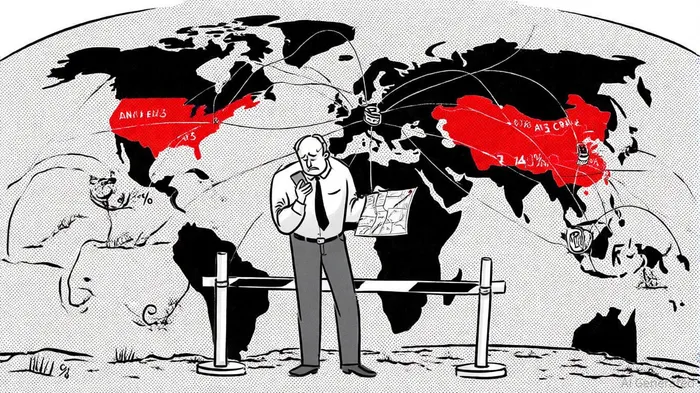
In 2025, the intersection of geopolitical risk and corporate strategy has become a defining challenge for supply chain-dependent tech firms. Nowhere is this more evident than in the case of Anker Innovations, a Chinese consumer electronics giant whose valuation and investor confidence have been tested by a perfect storm of escalating U.S. tariffs, product safety recalls, and regulatory scrutiny. As global trade policies grow increasingly fragmented and protectionist, Anker's experience offers a cautionary tale—and a blueprint—for navigating the new normal.
Tariff Shockwaves: A 145% Tax on Globalization
The U.S. under President Trump has pushed import duties to their highest levels in decades, with tariffs on Chinese goods reaching 145% in 2025. According to a report by Times of Innovation, Anker has passed these costs to consumers, raising prices by an average of 18% on 127 products, including power banks and charging stations[1]. This price hike reflects the company's limited ability to absorb costs in a market where competitors face similar pressures. The tariffs, part of a broader “America First” agenda, have forced Anker to rethink its supply chain strategy, with the firm exploring nearshoring and Southeast Asian manufacturing hubs to mitigate exposure[2].
The ripple effects extend beyond pricing. As noted in a Chertoff Group analysis, the 2025 tariff regime includes a 10% baseline rate on all imports and higher levies on sectors like steel and automobiles[2]. While Anker operates in a less directly targeted category, the broader uncertainty has disrupted trade flows and forced companies to prioritize supply chain resilience. Anker's pivot to diversification—expanding into Europe and Southeast Asia—highlights the strategic imperative to reduce reliance on any single market[4].
Regulatory Scrutiny: Product Recalls and Investor Sentiment
Beyond tariffs, Anker has faced a regulatory reckoning. In Q3 2025, the company issued a global recall of over a million lithium-ion battery power banks due to fire and overheating risks, prompting a class-action lawsuit alleging deceptive advertising[1]. The U.S. Consumer Product Safety Commission reported defects in models like the PowerCore 10000 (A1263), with similar recalls in Canada, Japan, and other markets[2]. These incidents have tested Anker's compliance framework, even as the company emphasizes adherence to global regulations[6].
Regulatory scrutiny, while not unique to Anker, has broader implications for investor confidence. A study by Investment Fraud Lawyers notes that heightened oversight by bodies like the SEC can erode trust, particularly when companies face allegations of misleading disclosures[2]. For Anker, the recalls and litigation add a layer of risk to an already volatile valuation. Despite robust net margins and profitability, the firm's enterprise value-to-sales ratio ranks among the highest globally[4], a metric that may struggle to justify itself if product safety issues persist.
Valuation Under Pressure: Balancing Innovation and Risk
Anker's valuation reflects a paradox: high multiples driven by innovation and market leadership, yet vulnerable to geopolitical and regulatory headwinds. According to a Marketscreener analysis, the company's premium pricing is underpinned by its reputation for quality and R&D-driven differentiation[4]. However, the 2025 recalls and tariff-driven price increases have introduced volatility. Investors now face a critical question: Can Anker's agility in supply chain redesign and product innovation offset the drag from regulatory and trade policy risks?
The answer may lie in Anker's response to these challenges. The company has offered free replacements, gift cards, and detailed disposal guidelines to address the recall[2], while its compliance program emphasizes global regulatory adherence[6]. Yet, as Harvard Law's Corporate Governance blog highlights, boardrooms are increasingly prioritizing geopolitical risk in long-term planning[3]. For Anker, this means not only diversifying suppliers but also embedding compliance agility into its corporate DNA.
Strategic Pathways: Mitigating Risk in a Fractured World
The 2025 trade landscape demands proactive scenario planning. As outlined in a Riverway Risk guide, companies must adopt robust compliance frameworks and diversify supply chains to navigate regulatory volatility[5]. Anker's exploration of nearshoring and alternative markets aligns with these principles, though execution will be key. The firm's ability to balance cost efficiency with quality control—particularly in high-risk categories like lithium-ion batteries—will determine its long-term resilience.
Conclusion: A Test of Resilience
Anker's journey in 2025 underscores the dual pressures facing global tech firms: geopolitical forces that reshape trade and regulatory environments that test corporate governance. While the company's innovation and market position remain strengths, its valuation and investor confidence now hinge on its ability to navigate a world where tariffs and compliance challenges are no longer peripheral but central. For investors, the lesson is clear: in an era of fragmented globalization, resilience is not just a strategic asset—it is a survival imperative.







Comentarios
Aún no hay comentarios