
The Geopolitical Risks of the Israel-Qatar Strike and Its Impact on Gulf Normalization Deals
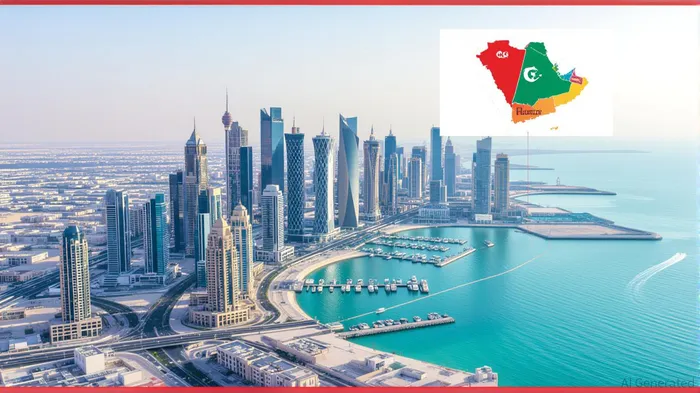
The 2025 Israel-Qatar strike on Hamas leadership in Doha has sent shockwaves through the Middle East, exposing the fragility of Gulf normalization deals and reshaping the geopolitical landscape. For investors, the incident underscores the growing risks of volatility in energy markets, U.S. foreign policy credibility, and regional stability. This analysis dissects the ripple effects of the strike and offers actionable insights for navigating emerging markets in a fractured region.
1. Regional Stability: A Fractured Gulf and the Fate of Normalization Deals
The strike has destabilized the Gulf's delicate balancing act between U.S. alliances and Palestinian solidarity. Qatar, a key mediator in Israel-Hamas ceasefire talks, suspended its role as a peace broker after the attack, which killed a Qatari security official and five Hamas members. This move signals a shift in Gulf diplomacy, where states may now prioritize sovereignty over neutrality.
The UAE and Saudi Arabia, which have pursued normalization with Israel under U.S. auspices, now face heightened domestic pressure to reassess their strategies. The strike has amplified anti-Israel sentiment in the Arab world, with Gulf states wary of appearing complicit in actions that undermine Palestinian solidarity. For investors, this raises concerns about the sustainability of normalization deals, which were predicated on economic incentives and U.S. security guarantees.
2. Energy Markets: Volatility and the Shadow of Disruption
Qatar, the world's largest LNG exporter, is a linchpin of global energy markets. While the strike caused no direct damage to energy infrastructure, the symbolic threat to Qatari sovereignty has already triggered market jitters. Brent crude prices surged 2% in the aftermath, reflecting fears of supply chain disruptions.
Investors should monitor two key trends:
- Short-term volatility: Geopolitical shocks often lead to overreactions in energy markets. A prolonged conflict could disrupt Gulf shipping lanes or trigger insurance premium hikes for energy firms.
- Long-term reallocation: Gulf states may accelerate investments in energy diversification (e.g., renewables, hydrogen) to reduce reliance on politically sensitive corridors.
3. U.S. Foreign Policy: Erosion of Credibility and Strategic Realignments
The U.S. response to the strike—condemning the operation while tacitly acknowledging its strategic goals—has eroded trust among Gulf allies. Qatar's foreign ministry accused Washington of failing to protect its sovereignty, while Saudi Arabia and the UAE expressed frustration over the lack of clarity on U.S. support.
For investors, this signals a potential shift in U.S. defense contracts and regional partnerships. Gulf states may diversify their security partnerships, increasing demand for European or Russian defense systems. Conversely, U.S. defense firms with Gulf ties (e.g., Lockheed MartinLMT--, Raytheon) could face short-term headwinds if Gulf allies recalibrate their strategies.
4. Investment Implications: Navigating a Fractured Landscape
a. Hedge Against Geopolitical Risk
- Energy sector: Consider long positions in LNG infrastructure firms (e.g., Cheniere Energy) and short-term hedges via energy ETFs.
- Diversification: Allocate to non-GCC energy producers (e.g., Canada, Norway) to mitigate Gulf-specific risks.
b. Capitalize on Defense and Cybersecurity Demand
Gulf states are likely to ramp up spending on advanced defense systems and cybersecurity. Firms like Northrop GrummanNOC-- and PalantirPLTR-- Technologies could benefit from increased regional demand.
c. Monitor Political Risk Indicators
Track indices like the Political Risk Services (PRS) Gulf Risk Index and MSCI Emerging Markets Geopolitical Volatility Index to gauge market sentiment.
d. Reassess Gulf Real Estate and Infrastructure Investments
The strike has heightened uncertainty in Doha's real estate market. Investors with exposure to Gulf commercial properties should reassess valuations and liquidity risks.
Conclusion: A New Era of Uncertainty
The Israel-Qatar strike has exposed the Gulf's vulnerability to geopolitical shocks and the fragility of normalization deals. For investors, the key is to balance exposure to high-growth Gulf markets with hedging strategies that account for volatility. The region's future will hinge on whether Gulf states can rebuild trust with the U.S. and Israel while maintaining their sovereignty. In the interim, agility and diversification will be critical to navigating a landscape where stability is increasingly elusive.







Comentarios
Aún no hay comentarios