
Geopolitical Risks and Humanitarian Logistics in Ukraine: Unearthing Opportunities in Forensic Tech and Repatriation Services
The Ukraine conflict has become a testing ground for cutting-edge forensic technologies and humanitarian logistics, driven by the urgent need to document war crimes, repatriate displaced populations, and manage the chaos of modern warfare. While geopolitical risks dominate headlines, investors should look beyond the volatility to identify sectors poised for growth—specifically in forensic identification technologies and repatriation services. These fields are not only critical to resolving the conflict's humanitarian fallout but also present tangible investment opportunities in an era of global instability.
Forensic Identification Technologies: Precision in the Age of War Crimes
The Ukraine conflict has accelerated demand for advanced forensic tools to identify victims, preserve evidence, and prosecute war crimes. Key technologies include:
- DNA Analysis: Critical for identifying remains in mass graves, with studies like Haliti et al. (2023) highlighting its role in Ukraine's forensic investigations.
- Digital Forensics: Used to document atrocities via social media and satellite imagery, as seen in the Bucha massacre.
- AI Systems: Enhancing efficiency in evidence analysis, as demonstrated by Oksana Kaplina et al. (2023) in Ukraine's criminal procedures.
Investment Opportunities:
- Bioscience Firms: Companies like Thermo Fisher Scientific (TMO) and Illumina (ILMN) dominate DNADNA-- sequencing tools, which are essential for victim identification.
- Cybersecurity & Digital Forensics: Firms such as Palo Alto Networks (PANW) and CrowdStrike (CRWD) could expand into conflict zones, where preserving digital evidence is vital.
- AI Startups: Firms like Palantir (PLTR), with its data analytics platforms, are already supporting military and humanitarian operations.
Repatriation Services: Navigating Chaos with Adaptive Logistics
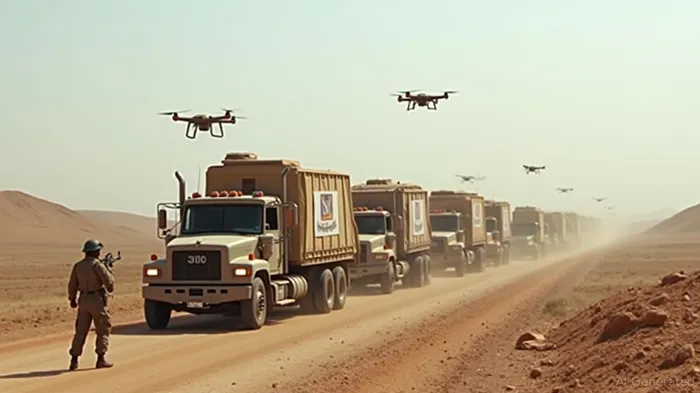
The repatriation of displaced populations and war victims is a logistical nightmare, compounded by funding shortages and infrastructure damage. Over 4.3 million Ukrainians have returned home since 2022, but many face power outages, housing shortages, and ongoing violence. Key challenges include:
- Infrastructure Damage: 80% of frontline communities (within 25 km of the conflict) lack reliable energy and shelter.
- Funding Gaps: The Central Emergency Response Fund (CERF) faces its lowest funding in decades, risking aid disruptions.
Investment Opportunities:
- Logistics & Supply Chain Firms: DHL (DHLGy) and FedEx (FDX) have experience in conflict zones and could scale up humanitarian logistics.
- Humanitarian NGOs: Organizations like ZOA (supported by the Ukraine Humanitarian Fund) provide livelihoods training and infrastructure rebuilding—areas ripe for public-private partnerships.
- Protection Services: Firms offering cybersecurity, legal aid, and psychosocial support (e.g., IOM's trafficking prevention programs) are critical to repatriation success.
Risks and Considerations
Investors must weigh geopolitical risks against growth potential:
- Volatility: Sanctions, shifting alliances, and battlefield dynamics could disrupt operations.
- Funding Dependence: Projects reliant on international aid (e.g., UNDP-funded forensic labs) face uncertainty if donor budgets shrink.
- Ethical Dilemmas: Technologies like AI-driven forensics raise privacy concerns, requiring compliance with international standards.
Conclusion: Investing in Resilience
The Ukraine conflict underscores a global truth: modern crises demand innovation in both forensic rigor and humanitarian adaptability. Forensic tech firms with scalable solutions for DNA analysis and digital evidence management, alongside logistics giants capable of operating in unstable environments, are well-positioned to profit. Meanwhile, repatriation efforts offer a niche for investors in NGOs and protection services, though these require patience and risk tolerance.
For investors, the Ukraine conflict is a microcosm of 21st-century challenges. Those who back the right technologies and partnerships today may find themselves at the forefront of solving tomorrow's humanitarian crises—while securing returns in an era of geopolitical turbulence.
Investment Takeaway:
- Buy: AI and cybersecurity stocks (e.g., PLTR, PANW) for forensic applications.
- Hold: Logistics giants (DHL, FDX) for repatriation logistics.
- Monitor: NGOs like ZOA for potential public listings or partnerships.
Stay vigilant, but stay invested—resilience is the new growth driver.







Comentarios
Aún no hay comentarios