
Geopolitical Risks vs. Fundamentals: Why Middle East Tensions Make Oil a Compelling Contrarian Bet
The July 6 OPEC+ meeting and the evolving Iran-Israel conflict have set the stage for a rare asymmetric opportunity in oil markets. While traders fixate on near-term oversupply fears, the underpriced risk of geopolitical disruption—and its potential to ignite a $100/bbl rally—creates a compelling contrarian bet. Here's why energy equities and short-dated Brent options are positioned to outperform as catalysts converge.
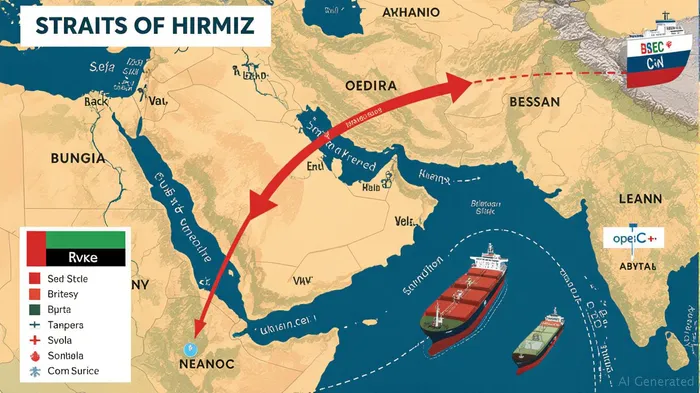
Asymmetric Risk in Oil Markets: Why the Downside Is Priced, the Upside Isn't
The recent OPEC+ decision to boost production by 548,000 b/d in August, paired with Goldman Sachs' bearish $55–59/bbl year-end forecast, has fueled a selloff in oil. Yet this ignores two critical asymmetries:
1. Supply Fragility: OPEC's spare capacity (5.9 million b/d) is concentrated in just four members, with geopolitical hotspots like Saudi Arabia and Iran accounting for 70%. A single Houthi drone strike on Red Sea shipping—or a breakdown in the Israel-Iran ceasefire—could disrupt 20% of global crude exports.
2. Demand Resilience: Emerging markets are the engine here. China's petrochemical demand (70% of oil growth) and India's 3.2% 2025 oil demand expansion are structural tailwinds. Even if OPEC+ ramps up production, it can't offset a supply shock without triggering a liquidity crisis in oil markets.
The risk-reward here is skewed: oil is priced for perfection in geopolitics but offers a $20–30/bbl upside if disruptions materialize. This is the core of the contrarian case.
The OPEC+ Catalyst: Overproduction Masks Strategic Weakness
The July 6 meeting's 548,000 b/d hike—38% larger than expected—was framed as a market-share grab. But look deeper:
- Saudi Arabia's Gamble: The Kingdom's 450,000 b/d export surge in June to reclaim dominance against U.S. shale is a high-risk move. If Asian buyers back away from discounted crude due to geopolitical instability, oversupply could become a self-inflicted wound.
- OPEC+ Compliance Risks: Kazakhstan's overproduction and Iraq's chronic underinvestment in infrastructure mean actual supply growth could fall short of targets. Barclays' analysis highlights a 290,000 b/d surplus in 2025, but this assumes flawless execution—a dubious bet amid Middle East tensions.
Geopolitical Premium Dynamics: Why $100/bbl Isn't a Fantasy
Goldman Sachs' $10/bbl “risk premium” for Middle East instability is already baked into prices—but only in theory. The reality is far more volatile:
- Iran-Israel Uncertainty: The U.S.-brokered ceasefire is a brittle truce. If hostilities reignite, the East-West diesel spread (currently $73/tonne) could widen further, as European refineries lack capacity to offset Iranian/Asian supplies. This would push Brent toward $85–$90/bbl.
- Barclays' Silent Signal: While BarclaysBCS-- hasn't explicitly called for $100/bbl, their surveys show 56% of traders expect lower inventories over the next year. Pair this with U.S. shale's $60/bbl breakeven threshold, and a $100/bbl spike becomes a plausible insurance play for investors.
Contrarian Catalysts: Timing the Break
Three near-term events could trigger a re-pricing:
1. August OPEC+ Compliance Reports: If overcompliance persists (e.g., Algeria or Iraq missing targets), the projected surplus shrinks.
2. Houthi Attacks on Shipping: A repeat of the July 2023 drone strike on the Front Alfa tanker could spike Brent by $5–$10/bbl overnight.
3. U.S. Sanctions on Russian Oil: A new round of restrictions, combined with Iran's potential return to OPEC+, could tighten supply by 1 million b/d by year-end.
Investment Strategy: Position for the Black Swan
This is a high-conviction overweight on energy equities, with a focus on short-dated options to capture volatility:
- Oil Majors: ChevronCVX-- (CVX) and Sinopec (SHI) offer balance sheet strength and exposure to petrochemical demand.
- ETFs: The Energy Select Sector SPDR (XLE) and United States Brent Oil Fund (BNO) track equity and spot price movements, respectively.
- Options Play: Buy Brent call options with a strike of $75 (expiring in December 2025) at a 15% premium. The asymmetric payoff here is massive: a $10 move to $85 nets a 67% return, while downside is capped at the premium.
Conclusion: Betting on Chaos, Reaping Stability
Oil markets are pricing a world where OPEC+ executes flawlessly and Middle East tensions fade. Reality is messier—and that's where the contrarian wins. With geopolitical risks underpriced and demand fundamentals holding firm, now is the time to overweight energy ahead of the next supply shock. The $100/bbl barrier isn't a stretch—it's a probable outcome if history repeats.
Final Call: Deploy 10–15% of a portfolio to energy equities and layer in leveraged options exposure. The catalysts are coming—and the asymmetry is too favorable to ignore.
This article is for informational purposes only. Always consult a financial advisor before making investment decisions.





Comentarios
Aún no hay comentarios