
Geopolitical Risks and the Fragile Global Supply Chains: A 2025 Investment Playbook
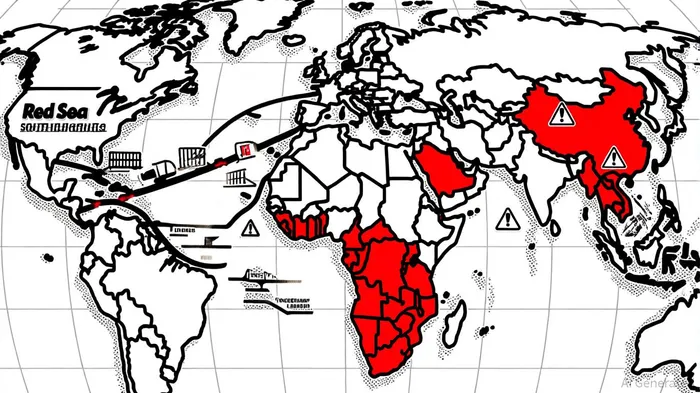
The global supply chain crisis of 2025 is no longer a distant threat-it is here. As state-based armed conflicts, trade wars, and cyber-physical disruptions reshape the economic landscape, investors must confront a reality where geopolitical risks are no longer abstract but deeply embedded in sector-specific vulnerabilities. From energy to agriculture, the ripple effects of instability are forcing a reevaluation of traditional investment strategies.
Sector-Specific Vulnerabilities: Where the Weakness Lies
Energy and Technology remain at the epicenter of geopolitical risk. According to the World Economic Forum's Global Risks Report, conflicts in the Red Sea and Eastern Europe have disrupted critical trade routes, while regulatory battles over AI development have created volatility in access to semiconductors and rare earth elements. The U.S.-China rivalry, with tariffs spiking to 145% on Chinese imports, has further fragmented supply chains, causing a 64% drop in container shipments from China to the U.S., according to a SHRM report. Energy prices, already strained by Middle Eastern tensions, are now subject to sudden spikes, compounding operational uncertainty for energy-dependent industries, as noted in a Global Banking & Finance Review article.
Agriculture and Manufacturing face a paradoxical challenge. While the Russia-Ukraine war has destabilized European grain exports, reduced international competition in agriculture has led to unexpected boons for some producers, positive sentiment that appears in a Federal Reserve study. Meanwhile, manufacturing-particularly in automotive and electronics-struggles with cascading disruptions from proposed tariffs on China, Mexico, and Canada, which could inflict $1 trillion in economic damages, according to a SupplyChains analysis.
Cyber-Physical Threats are an emerging wildcard. The EU's NIS 2 Directive underscores the growing need for cybersecurity frameworks, as adversaries target GPS systems and logistics infrastructure, threatening to paralyze global trade in ways highlighted by a Maritime Magazine report.
Hedging Strategies: Building Resilience in a Fractured World
For investors, the playbook must evolve beyond diversification. Safe-haven assets like gold and U.S. Treasuries remain foundational, but 2025 demands more nuanced approaches. Gold demand surged 16% year-over-year in Q1 2025, yet its volatility-exemplified by sharp ETF outflows in May-highlights the need for complementary strategies, as described in an Observer analysis.
Rare earth elements have emerged as a critical hedge. With the U.S. government backing firms like MP Materials, these assets offer resilience in semiconductors, defense, and renewable energy sectors, a point discussed in a CFA Institute blog post. A satellite portfolio allocation of 5–10% in rare earths, paired with gold and Treasuries, provides a balanced buffer against supply chain shocks, consistent with recommendations in a KPMG supply-chain update.
Thematic investing in resilient sectors is equally vital. Energy hedges, such as ChevronCVX--, benefit from the U.S.-EU trade deal, while AI-driven innovators capitalize on reshoring trends, as suggested by a Motley Fool guide. Defensive tech stocks and infrastructure equities offer dual exposure to growth and stability.
Digitalization and AI-driven risk monitoring are not just corporate strategies but investor tools. Platforms leveraging real-time geopolitical sentiment analysis-such as the Federal Reserve's industry-specific index-enable proactive portfolio adjustments, in line with findings from a ScienceDirect study.
Conclusion: Navigating the New Normal
The 2025 geopolitical landscape demands a shift from reactive to anticipatory investing. As supply chains fracture and risks multiply, success lies in identifying sectors with structural resilience and deploying hedging strategies that align with long-term trends. For investors, the message is clear: adapt or be disrupted.





Comentarios
Aún no hay comentarios