
Geopolitical Risks and Equity Resilience: Tactical Reallocation in European Markets
The European equity markets of 2025 have navigated a treacherous geopolitical landscape with surprising resilience, driven by strategic policy responses and sectoral reallocations. As geopolitical tensions-ranging from Russian gray-zone warfare to U.S.-China trade uncertainties-intensified, European markets demonstrated a unique capacity to absorb shocks while capitalizing on long-term structural trends. This analysis examines the interplay between geopolitical risks and equity performance, with a focus on tactical reallocation opportunities in defense, technology, and healthcare sectors.
Geopolitical Volatility and Market Resilience
According to an ESMA report, 2025 has seen "sharp falls and fast recoveries" in EU equity markets, particularly following U.S. tariff announcements in April 2025. Despite this volatility, the ESMA report notes the EU equity market ended the first half of 2025 with an 11% gain year-to-date, outperforming U.S. benchmarks in euro terms. This resilience contrasts with historical patterns, where a J.P. Morgan analysis notes that large-cap equity markets typically avoid long-term damage from geopolitical shocks. However, 2025's distinct context-compounded trade tensions, hybrid disruptions, and cyber threats-has created a landscape of sudden corrections and rapid rebounds, as documented by ESMA.
The European Sovereignty agenda has emerged as a critical stabilizing force. Germany's "whatever it takes" fiscal stimulus, coupled with EU-wide investments in defense and strategic industries, has underpinned earnings growth. While 2025 earnings growth for European equities is projected at 2%, Allianz Global's outlook expects this to accelerate to 12% in 2026, narrowing the valuation gap with U.S. markets.
Sectoral Reallocation: Defense, Technology, and Healthcare
Q3 2025 fund flows reveal a clear reallocation toward sectors aligned with European sovereignty. According to the Equiti outlook, the European Defence Fund (EDF) allocated €1.065 billion in 2025 for collaborative R&D in ground combat, air, naval, and cyber technologies. This surge in defense spending has directly benefited companies like Rheinmetall AG, which secured an €8.5 billion artillery contract in 2024 and is expanding production to meet Germany's 3.5% GDP defense spending target by 2029.
Technology remains a focal point as the EU mobilizes EUR 200 billion for AI-related investments, aiming to reduce reliance on non-European tech ecosystems, a trend highlighted in the J.P. Morgan analysis. Regulatory simplification under the EU Omnibus Regulation further fosters innovation, making the sector a magnet for capital inflows.
Healthcare has also gained traction as governments prioritize sectors critical to national resilience. With aging populations and pandemic preparedness on the agenda, healthcare equities are benefiting from both policy support and long-term demand trends, as noted by J.P. Morgan.
Tactical Implications for Investors
The convergence of geopolitical risks and strategic policy responses creates a compelling case for tactical reallocation. Defense and technology sectors, in particular, offer dual advantages: immediate demand from security spending and long-term growth from technological sovereignty. For instance, the MSCI Europe index rebounded 16% from April 2025 lows, driven by these sectors, according to Allianz Global.
Investors should also consider the macroeconomic backdrop. The U.S. Federal Reserve's September 2025 rate cut and a weaker dollar have bolstered European equities, which are trading at more attractive valuations compared to U.S. counterparts. This dynamic is likely to persist as European fiscal stimulus and structural reforms outpace U.S. policy responses.
Conclusion
European markets in 2025 exemplify how geopolitical risks can be mitigated-and even leveraged-through strategic reallocation. While volatility remains a feature of the landscape, the focus on sovereignty, coupled with sector-specific tailwinds, positions defense, technology, and healthcare as key beneficiaries. For investors, the imperative is clear: align portfolios with the structural shifts driving European resilience, while maintaining agility to navigate short-term shocks.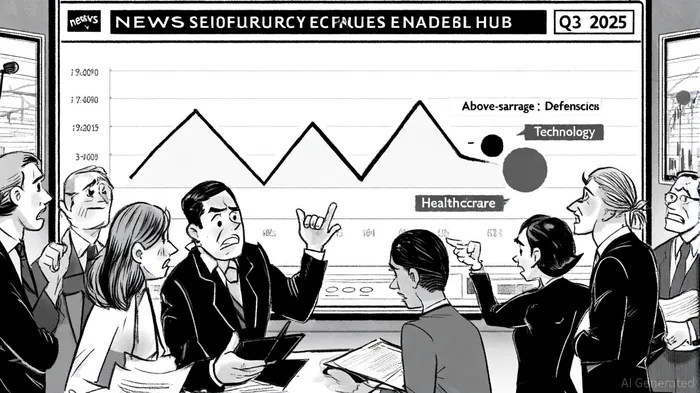







Comentarios
Aún no hay comentarios