
Geopolitical Risks and Energy Security in the European LNG Market: Strategic Implications of Resuming Sanctioned Russian Operations
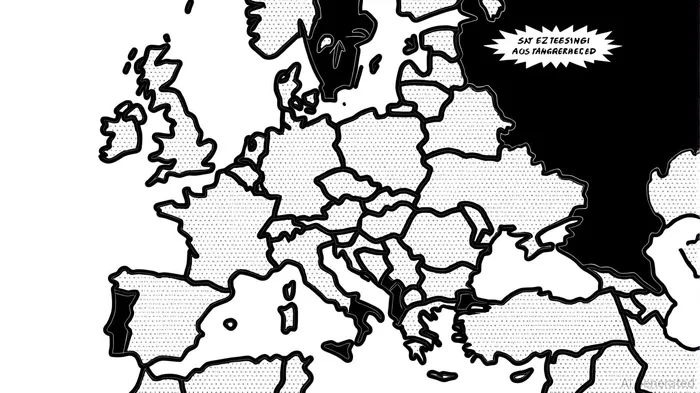
The European liquefied natural gas (LNG) market is at a crossroads, shaped by the interplay of U.S. and EU sanctions on Russian energy infrastructure and the geopolitical calculus of energy security. As the Biden administration and European Union (EU) accelerate efforts to sever Russia's access to global energy markets, the potential resumption of operations at sanctioned Russian LNG facilities—such as Gazprom's Portovaya and Novatek's Vysotsk—raises critical questions about market stability, investment risks, and the long-term viability of Europe's energy transition.
The Current Landscape: Sanctions and Operational Halt
U.S. sanctions imposed in January 2025 forced a halt to exports from Portovaya and Vysotsk by February 27, 2025, with tankers like the Pearl and Veliky Novgorod idling in the Gulf of Finland[1]. These facilities, with combined annual capacities of 2.3 million metric tons (mt), had supplied 3.1 billion cubic meters of LNG to Europe and Turkey in 2024[2]. The EU's 14th sanctions package further restricted Russian LNG by banning transshipment and limiting imports to terminals connected to the EU gas grid[3]. Meanwhile, the EU's 19th package, announced in September 2025, accelerated the phase-out of Russian LNG to January 1, 2027[4].
Market Implications of a Resumption
If sanctioned Russian LNG facilities resume operations—whether through sanctions evasion or policy shifts—the European market could face significant volatility. For instance, a return of Russian LNG to Europe could undercut U.S. LNG exports, which now account for 50% of EU imports[5]. This would strain the $120 billion in U.S. LNG investments targeting the European market, as highlighted by S&P Global Commodity Insights[6].
Moreover, Russian LNG's return could destabilize the EU's RePowerEU strategy, which aims to end Russian fossil fuel dependence by 2027[7]. Despite these goals, EU countries imported 21.5 billion cubic meters (bcm) of Russian LNG in 2024, with Spain, France, and Belgium accounting for 32%, 19%, and 14% of their LNG needs, respectively[8]. A resumption of Russian exports might tempt these nations to prioritize cost over geopolitical alignment, especially amid rising energy prices and economic uncertainty.
Geopolitical Risks and U.S. Policy Shifts
The strategic implications extend beyond market dynamics. U.S. policy under President Donald Trump could ease sanctions on Russian LNG, as part of broader peace negotiations[9]. Such a shift would not only revive Russian exports but also weaken the EU's leverage in pressuring Moscow to cease its Ukraine invasion. Conversely, maintaining sanctions would solidify U.S. LNG's dominance in Europe but risk retaliatory measures from Russia, such as pipeline gas cutoffs or cyberattacks on energy infrastructure[10].
The China-Russia Power of Siberia 2 pipeline, though economically unviable, further complicates the landscape. While it diverts Russian attention from European markets, it underscores Moscow's long-term strategy to pivot to Asia—a move that could reduce European exposure to Russian LNG in the future[11].
Investment Considerations for Stakeholders
For investors, the key risks lie in regulatory uncertainty and market volatility. European energy firms with exposure to Russian LNG—such as those involved in unloading or transshipment—face legal and reputational risks under the EU's 14th and 19th sanctions packages[12]. Conversely, U.S. LNG producers stand to benefit from sustained European demand, provided sanctions remain intact. However, the Biden administration's pause on new LNG export authorizations raises concerns about long-term supply adequacy[13].
A “high return” scenario—where Russian LNG floods the market—could depress European hub prices, eroding margins for U.S. exporters and renewable energy projects[14]. In contrast, a “phasing down” scenario aligned with RePowerEU would likely spur $45.5 million metric tons per annum (MMtpa) in U.S. liquefaction investments by 2027[15].
Conclusion: Navigating a Fractured Energy Order
The resumption of sanctioned Russian LNG operations would test the EU's resolve to balance energy security with geopolitical objectives. While immediate market impacts might include price fluctuations and U.S. LNG competition, the broader challenge lies in aligning short-term energy needs with long-term decarbonization goals. For investors, the path forward hinges on monitoring U.S.-EU policy coherence, Russia's adaptive strategies, and the EU's capacity to enforce binding sanctions. In this fractured energy order, agility and geopolitical foresight will be paramount.







Comentarios
Aún no hay comentarios