
Geopolitical Risk vs. Structural Oversupply: The Oil Market's New Equilibrium
The Middle East is flashing red. Two distinct crises are converging, introducing a fresh layer of volatility to an oil market already grappling with structural oversupply. On one front, Iran is in the grip of a brutal crackdown on protests, with rights groups reporting at least 538 people killed and over 10,000 arrested. The U.S. response is being weighed in real time, with President Trump stating he is receiving hourly reports and that the U.S. military is examining "very strong" military options against the regime. Iran, for its part, has reportedly reached out for negotiations, a development the U.S. president says shows the regime is "tired of being beat up by the United States." On the other, the dramatic arrest of Venezuelan President Nicolás Maduro has further destabilized a key oil-producing region.
The critical risk here is to the physical flow of crude. Iran itself exports roughly 2 million barrels per day, and the Strait of Hormuz, through which roughly 20 million barrels per day of oil flows, is the essential maritime artery for that volume. This chokepoint, which handles about 20% of global petroleum liquids consumption, is a known flashpoint. In 2024, Iran's parliament authorized closing it in response to U.S. strikes. Goldman SachsGS-- has modeled a potential Brent crude spike to $110 per barrel in the event of a sustained closure, highlighting the severe price impact a disruption could trigger.
This sets up the core tension of the current market. The geopolitical shocks introduce material supply risks, and the market's reaction is immediate: crude prices have been rallying as tensions flare. Yet, the market's forward view is tempered by a powerful countervailing force. Energy analysts point to a 3.84 million barrels per day surplus in 2026, a cushion that would blunt the impact of any localized disruption. The bottom line is that while these dual shocks can spike prices and increase volatility, the structural oversupply and the existence of alternative shipping routes-however costly-limit their ability to force a fundamental, sustained re-pricing of oil. The risk is real, but the market's equilibrium is more resilient than it once was.
Market Fundamentals: A Record Structural Surplus Limits Shock Absorption
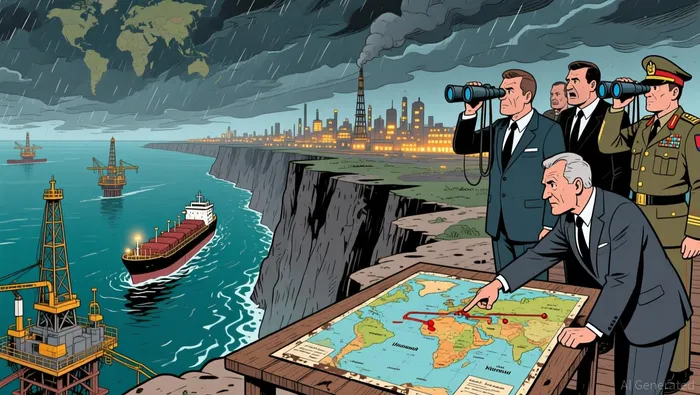
The market's reaction to geopolitical shocks is being decisively shaped by a powerful structural reality: a record global supply surplus. This fundamental imbalance acts as a powerful brake on any price rally, ensuring that volatility spikes are likely to be sharp but short-lived. The data from 2025 is stark. Crude oil posted its sharpest annual decline since 2020, with Brent falling 19% and WTI dropping 20%. This wasn't a one-off event but the result of persistent oversupply, where global production consistently outpaced demand and inventories swelled.
The outlook for 2026 confirms this is a multi-year trend. The U.S. Energy Information Administration forecasts a widening gap, with global production expected to average 107.43 million barrels per day against consumption of 105.17 million barrels per day. That creates a structural surplus of roughly 2.26 million barrels per day. This is not a minor imbalance; it's a cushion that will absorb any localized disruption. As the EIA notes, growing global oil production and lower demand over the winter months will accelerate the accumulation of oil inventories, resulting in further price declines in the coming period.
This surplus dynamic explains why even significant geopolitical events have struggled to sustain price support. Periodic flare-ups, from the Middle East to Ukraine, have provided brief rallies, but the market's structural surplus has consistently prevailed. The arrest of Venezuela's president, while a political shock, has a limited physical impact given the country's current output is just under 1 million barrels per day and exports are already constrained. The surplus provides ample inventory to fill any temporary gaps.
The dollar adds another layer of pressure. A stronger greenback makes dollar-denominated oil more expensive for holders of other currencies, acting as a direct headwind. This was evident last week when crude oil prices tumbled to 2-week lows on expectations for a record global supply surplus, with the stronger dollar cited as a bearish factor.
The bottom line is that the oil market is now in a new equilibrium. Geopolitical risks remain a source of volatility, capable of triggering sharp price moves. But the underlying fundamentals-record production, a widening surplus, and ample inventory-create a powerful countervailing force. This structural oversupply limits the duration and magnitude of any shock-driven rally, keeping the forward trajectory of prices under clear pressure.
Financial Impact and Strategic Buffers: The Anatomy of a Limited Rally
The potential for a severe price shock from a Strait of Hormuz closure is real, but the market's current setup ensures the financial impact will be contained and short-lived. Goldman Sachs's model, which projects Brent crude spiking to $110 per barrel in a sustained closure scenario, underscores the magnitude of the risk. Yet, this shock is not a free pass for producers. The market's record structural surplus acts as a powerful buffer, capping the rally's duration and ultimate height. As seen in 2025, even brief geopolitical support was overwhelmed by persistent oversupply, with crude posting its sharpest annual decline since 2020.
The anatomy of this limited rally is defined by strategic buffers. For producers, the primary financial impact may not be on sales volume but on logistics and cost. Iran's exports, while significant, are not entirely dependent on the strait. The UAE has developed a critical alternative, with a pipeline that can move 1.8 million barrels per day from Abu Dhabi to Fujairah. This infrastructure reduces the strategic leverage of a Hormuz closure for key Gulf exporters, allowing them to reroute flows and maintain revenue streams. For the broader market, the shock would be felt most acutely in shipping and insurance markets, where premiums would surge for vessels navigating alternative, longer routes.
The bottom line is one of managed volatility. While a closure could trigger a sharp, spike in prices, the underlying fundamentals of ample global inventory and a production surplus of over 2 million barrels per day provide a clear ceiling. This structural cushion means the rally is likely to be a classic "sell the news" event, with prices moderating quickly as the market absorbs the disruption. The primary financial winners from such a scenario may be not the producers, but the insurers and logistics firms navigating the rerouted flows. For investors, the takeaway is that geopolitical shocks remain a source of tactical volatility, but they are increasingly unable to disrupt the long-term, supply-driven price trajectory.
Catalysts and What to Watch: Testing the Equilibrium
The immediate test for the market's new equilibrium is now. The catalysts are converging in the coming days, and the outcome will be dictated by the interplay between a volatile geopolitical event and the market's structural oversupply. The first key event is the U.S. presidential meeting scheduled for Tuesday, where President Trump will discuss options for Iran. The market's reaction to any subsequent military or diplomatic moves from Tehran will be the first real signal of whether this crisis escalates into a physical supply shock.
The second, more tangible metric is shipping activity. Watch for any official closure threats from Iran or, more critically, actual disruptions to the flow of crude through the Strait of Hormuz. The strait handles roughly 20 million barrels per day, a chokepoint that could trigger a sharp price spike. However, the market's underlying surplus will determine the rally's resilience. The forecast for 2026 is a structural cushion of 3.84 million barrels per day. This surplus, which analysts say is a record, will act as a powerful brake. Even if a closure causes a spike, the ample global inventory and production capacity mean prices are likely to moderate quickly.
Finally, monitor global oil inventory data and production levels. These metrics are the real-time gauge of the oversupply that limits shock absorption. The EIA expects growing crude oil production to outweigh the effect of increased drone attacks and sanctions, accelerating inventory builds and keeping prices under pressure. The bottom line is that the market is set up for a volatile test. Geopolitical risk provides the spark, but the structural surplus provides the extinguisher. The path of prices in the coming weeks will reveal how effectively that buffer can contain the flames.







Comentarios
Aún no hay comentarios