
Geopolitical Risk and the Shadow Fleet: How U.S. Sanctions Reshape Energy M&A and Commodity Trading
The Shadow Fleet and the Price Cap: A New Era of Commodity Trading
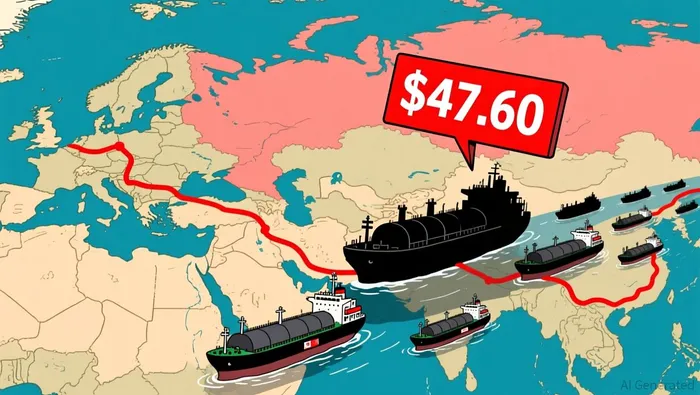
U.S. sanctions on Russian oil, initially framed as a price cap of $60 per barrel (later reduced to $47.60), have forced a reconfiguration of global crude oil trade routes. According to the Atlantic Council's Energy Sanctions Dashboard, these measures have driven Russian oil to buyers in China and India, but not without complications. While China's demand for Russian crude initially surged, its appetite has plateaued, limiting the Kremlin's ability to offset lost revenues, as the Atlantic Council dashboard shows. Meanwhile, the shadow fleet-tankers operating outside sanctioned jurisdictions-has emerged as a critical conduit for illicit trade.
The U.S. and EU have responded with aggressive measures, including targeting shadow fleet vessels and imposing secondary sanctions on foreign financial institutions facilitating Russian oil transactions, as HFW's analysis explains. However, as HFW's analysis shows, these efforts have not fully curtailed the flow of sanctioned oil. Instead, they've created a fragmented market where compliance risks and logistical bottlenecks drive up costs for buyers and sellers alike.
M&A in the Shadow of Sanctions: Indirect and Direct Impacts
While U.S. sanctions have not directly blocked energy sector M&A deals between 2020 and 2025, they have created a climate of uncertainty that indirectly stifles cross-border transactions. The Trump administration's tariffs-ranging from 10% to 200% on imports-have led to a 5.7% decline in U.S. M&A volume by dollar value through April 2025, according to Mitrade's analysis. This uncertainty has prompted companies like Boeing and Intel to adopt creative deal structures, such as divesting non-core assets to navigate regulatory and financial risks, as Mitrade reports.
The most direct impact, however, emerged in October 2025, when the U.S. Treasury's Office of Foreign Assets Control (OFAC) imposed full blocking sanctions on Rosneft and Lukoil. These measures prohibited U.S. persons from engaging in any transactions with the sanctioned entities, including debt or equity deals, effectively halting M&A activity involving these firms, as JDSupra reports. Non-U.S. actors also face secondary sanctions risks, complicating cross-border deals. For example, India's procurement of Russian oil triggered a 25% U.S. tariff, signaling Washington's intent to pressure third-party buyers, as NatLawReview notes.
The Future of Energy M&A: Adaptation and Resilience
Despite these challenges, the energy sector is not standing still. Singapore's proposed $1 billion state fund, for instance, aims to boost outbound M&A activity in green energy and advanced manufacturing, leveraging high R&D and capital needs to drive strategic expansion, according to SBR. Similarly, the EU's 19th sanctions package-banning Russian LNG imports and targeting cryptocurrency infrastructure-highlights the growing role of technology in circumventing traditional trade routes, as NatLawReview notes.
For investors, the key takeaway is clear: geopolitical risk is no longer a peripheral concern but a central driver of energy sector dynamics. Companies that adapt to this new reality-by diversifying supply chains, investing in compliance infrastructure, or pivoting to emerging markets-will outperform peers clinging to pre-sanction strategies.
Conclusion
The interplay between U.S. sanctions and energy sector M&A is a complex, evolving story. While direct impacts on deals remain limited, the indirect consequences-ranging from shadow fleets to tariff-driven uncertainty-have reshaped global commodity trading and investment strategies. As the EU and UK continue to tighten their noose around Russian energy exports, investors must remain vigilant to the secondary effects of sanctions, which will likely redefine the sector's landscape for years to come.







Comentarios
Aún no hay comentarios