
Geopolitical Risk and the Rise of East Asian Defense and Technology Stocks: A Strategic Investment Hedge
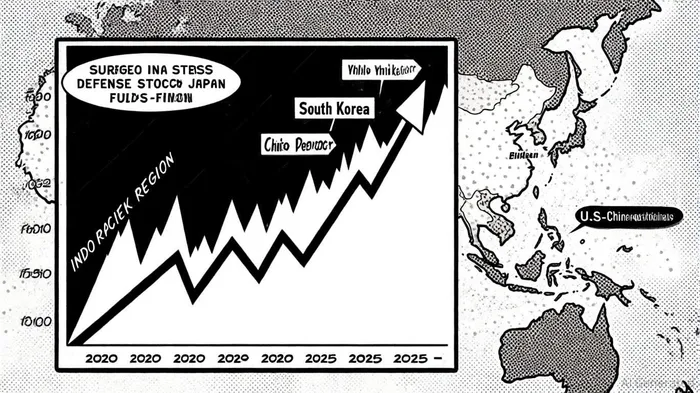
In an era of escalating geopolitical tensions, East Asia's defense and technology stocks have emerged as critical hedges against regional instability. As the U.S.-China rivalry intensifies and territorial disputes in the South China Sea and Taiwan Strait dominate global headlines, investors are increasingly turning to sectors that thrive amid volatility. Recent analyses underscore a clear pattern: defense and technology equities in the region are not only weathering geopolitical storms but also outperforming broader markets, driven by surging defense budgets, technological innovation, and strategic realignments.
Geopolitical Risk and Stock Performance: A Dual-Edged Sword
The interplay between geopolitical risk and stock returns in East Asia's defense and technology sectors is complex. According to a study published in The Asia-Europe Law Journal, geopolitical risk has a statistically significant negative impact on stock returns in China and South Korea within the first 16 months of a crisis, while Japan's markets exhibit heightened sensitivity in the 16–128 month window [1]. This divergence reflects differing national strategies: China and South Korea prioritize short-term military modernization, whereas Japan's prolonged fiscal adjustments to rising threats create delayed market responses.
However, the Russia-Ukraine War has amplified this dynamic. A report by the National Institutes of Health notes that 81.4% of global defense companies, including key East Asian firms, have faced operational disruptions or increased demand due to the conflict [2]. For instance, Japanese defense contractor IHI Corporation saw a 32% stock price surge in 2024 as the government pledged to double defense spending to 2% of GDP by 2027 [4]. Similarly, South Korean firms like Hanwha Aerospace and Korea Aerospace Industries (KAI) have benefited from a 25% increase in defense contracts, driven by regional anxieties over North Korea and China [3].
Innovation as a Catalyst for Resilience
While geopolitical risk remains a dominant factor, innovation in technology has proven to be an even stronger driver of growth. The same NIH study reveals that advancements in artificial intelligence, cyber defense, and autonomous systems have outperformed geopolitical risk in boosting defense stock valuations [2]. For example, India's Paras Defence and Space Technologies has seen its stock price triple since 2023, fueled by contracts to develop AI-powered surveillance drones and cyber-attack mitigation systems [3].
The integration of cutting-edge technologies is reshaping the APAC defense landscape. As highlighted in Data Insights Market, investments in unmanned aerial vehicles (UAVs), hypersonic missiles, and quantum computing are accelerating, with companies like China's CACI InternationalCACI-- Information Co. leading in quantum encryption solutions [5]. These innovations not only enhance military capabilities but also create new revenue streams, insulating firms from the cyclical nature of geopolitical events.
Regional Defense Spending: A Long-Term Tailwind
East Asia's defense budgets are reaching unprecedented levels, further solidifying the sector's appeal. In 2023, global defense spending hit $2.2 trillion, with the Indo-Pacific region accounting for 7.4% of the increase [1]. China's $293 billion defense budget—43% of Asia's total—fuels modernization projects such as aircraft carrier development and hypersonic missile programs [4]. Meanwhile, Japan's $68 billion and South Korea's $48 billion budgets are being redirected toward advanced systems like the F-35A stealth fighter and KF-21 Boramae jet [2].
This spending surge is not merely reactive. Governments are leveraging defense contracts to stimulate domestic industries. India's “Aatmanirbhar Bharat” initiative, for instance, has spurred self-reliance in defense manufacturing, with firms like Mazagon Dock Shipbuilders securing $5 billion in naval shipbuilding contracts [3]. Such policies create a virtuous cycle: increased procurement drives R&D investment, which in turn enhances technological competitiveness and export potential.
Strategic Realignments and Market Volatility
U.S. policy shifts further complicate the investment landscape. Protectionist measures, such as tariffs on Chinese technology and military pacts with Japan and South Korea, have fragmented supply chains and heightened volatility [2]. For export-dependent economies like Vietnam, this has led to a 15% decline in M&A activity in 2024 [2]. Conversely, U.S. allies are reaping benefits: South Korean defense firms have secured contracts in Canada and the Philippines, expanding their global footprint [3].
The Russia-Ukraine War has also indirectly bolstered Chinese defense firms through closer Sino-Russian partnerships. Chinese companies supplying radar systems and cyber-defense tools to Russia have seen a 12% revenue boost in 2024 [1]. This geopolitical alpha—where conflicts create asymmetric advantages—highlights the sector's potential for outsized returns amid chaos.
Conclusion: A Strategic Asset in Uncertain Times
For investors, East Asia's defense and technology stocks offer a compelling hedge against geopolitical uncertainty. While short-term volatility is inevitable, the long-term trajectory is clear: rising defense budgets, technological innovation, and strategic realignments are creating a resilient sector. As the region navigates flashpoints like the Taiwan Strait and South China Sea, companies adept at balancing geopolitical risk with technological agility will likely outperform. In this climate, defense and technology equities are not just a refuge—they are a gateway to capitalizing on the new geopolitics of the Indo-Pacific.





Comentarios
Aún no hay comentarios