
Geopolitical Risk and the Reshaping of Global Energy Markets: The EU's 2025 Sanctions on Russia
The European Union's 18th sanctions package against Russia, unveiled in July 2025, marks a pivotal shift in the global energy landscape. By targeting Russian-backed energy entities with precision and expanding enforcement mechanisms, the EU has not only tightened the screws on Moscow's war economy but also catalyzed a reconfiguration of refining and trading strategies worldwide. For investors, this represents a critical inflection point in understanding how geopolitical risk is now hardwired into energy markets—and how to navigate the resulting opportunities and pitfalls.
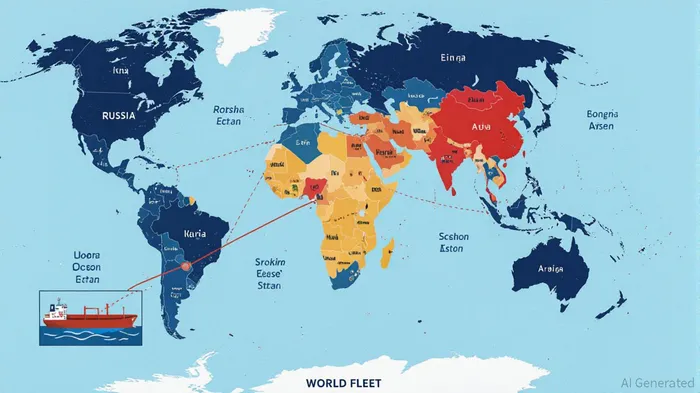
The EU's Strategic Leverage: Price Caps, Shadow Fleets, and Third-Country Processing
At the heart of the EU's 2025 package is a dynamic oil price cap, lowered from $60 to $47.60 per barrel and recalibrated every six months. This mechanism is designed to erode Russia's energy revenues while avoiding abrupt market shocks. However, its success hinges on enforcement. By banning Western insurers and shipping services for oil sold above the cap, the EU has leveraged its dominance in global maritime logistics to choke off illicit flows.
Yet Russia's adaptability is evident. The proliferation of a “shadow fleet”—444 sanctioned vessels now banned from EU ports—has created a parallel shipping network to bypass restrictions. These aging tankers, often operated by sanctioned entities, pose environmental and safety risks but underscore Russia's determination to maintain market share. Investors must monitor the interplay between EU enforcement and Russia's circumvention tactics, as this will dictate the efficacy of the price cap and the volatility of Urals crude.
Rerouted Supply Chains and the Rise of Asian Refiners
The EU's import ban on refined products derived from Russian crude, effective January 2026, has forced a seismic shift in global refining dynamics. European refineries, once reliant on Russian Urals, now face costly reconfigurations to process alternative crude blends. Meanwhile, Asian refiners—particularly in India and China—have capitalized on discounted Russian oil, refining it for domestic consumption and re-export.
India's energy strategy exemplifies this pivot. By increasing its Russian crude imports, New Delhi has secured a dual advantage: lower energy costs and geopolitical leverage. Indian refiners like Reliance Industries and Hindustan Petroleum have expanded processing capacity, while state-owned firms like ONGC Videsh have deepened ties with Rosneft. For investors, this signals a long-term realignment of refining margins and export arbitrage opportunities.
The Financial Tightrope: RDIF Sanctions and Payment Workarounds
The EU's full transaction ban on the Russian Direct Investment Fund (RDIF) and its affiliates has further isolated Russia from global capital markets. By cutting off access to foreign currency and investment services, the EU aims to cripple Russia's ability to fund its war effort. However, Moscow's reliance on non-dollar currencies, cryptocurrencies, and barter deals—such as gas-for-goods swaps with countries like Iran and Turkey—highlights the fragility of this financial front.
Investors should watch the ripple effects on global commodities traded in non-dollar terms. For instance, the ruble's role in energy transactions could expand, affecting hedging strategies for multinational corporations. Additionally, the rise of alternative payment systems may create regulatory arbitrage opportunities for fintech firms operating in sanctioned markets.
The Geopolitical Investment Thesis
For investors, the EU's sanctions package underscores three key themes:
Energy Diversification as a Strategic Asset: Countries and companies that can adapt to fragmented supply chains—such as Middle Eastern producers securing European contracts or Asian refiners optimizing Russian crude—will outperform. Saudi Aramco's recent long-term deals with European buyers, for example, reflect this trend.
Sanctions-Driven Innovation: The push to replace Russian oil with alternatives—from green hydrogen to synthetic fuels—could accelerate. Firms investing in carbon capture or modular refining technology may benefit from regulatory tailwinds.
Risk Premiums in Emerging Markets: Nations like India and China, leveraging discounted Russian energy to fuel growth, could see improved trade balances and inflation control. This may justify higher-risk allocations to their equity and debt markets.
Conclusion: Navigating the New Normal
The EU's 2025 sanctions are not just a geopolitical statement but a blueprint for a multipolar energy era. While Russia's ability to sustain exports remains uncertain, the market's response—reshaped refining strategies, rerouted trade flows, and financial workarounds—demonstrates the resilience and adaptability of global capital. For investors, the lesson is clear: Geopolitical risk is no longer a background variable but a central driver of market structure. The winners will be those who anticipate these shifts and position for a world where energy security and economic survival are inextricably linked.







Comentarios
Aún no hay comentarios