
Geopolitical Risk and Portfolio Resilience: Navigating Trade Conflicts Through Sector Rotation and Strategic Asset Allocation
In an era defined by escalating trade wars, military conflicts, and policy unpredictability, investors face a complex landscape where geopolitical risks act as both catalysts and accelerants for market volatility. From 2020 to 2025, the interplay between geopolitical tensions and financial markets has become increasingly pronounced, with studies revealing asymmetric risk transmission, sector-specific vulnerabilities, and the emergence of defensive assets as critical tools for portfolio resilience.
The Amplification of Market Volatility
Geopolitical risks have historically served as "risk transmitters," amplifying cross-market spillovers during trade conflicts. A 2024 Energy Economics study found that military conflicts-such as the Russia-Ukraine war-generate significantly higher volatility than non-military crises like the COVID-19 pandemic. This volatility is driven by interconnected financial systems, where bond markets act as primary conduits for risk transmission. For instance, rising geopolitical uncertainty often triggers flight-to-safety dynamics, pushing capital into sovereign bonds and away from equities.
Conversely, gold has emerged as a "risk receiver," consistently absorbing spillovers during both short-term crises and long-term geopolitical tensions. According to a 2025 EIU report, gold's role as a hedge has strengthened in 2025 amid tariff shocks and policy shifts, particularly in markets where central banks are diversifying reserves away from the US dollar.
Energy Markets and the Geopolitical Nexus
The energy sector remains a focal point of geopolitical risk, with conflicts directly influencing oil and gas volatility. Research from an Energy Policy study underscores how the Russia-Ukraine war and US-China trade disputes have disrupted global trade flows, forcing nations to reconfigure supply chains and energy dependencies. For investors, this means energy prices are no longer purely a function of demand-supply imbalances but are increasingly tied to geopolitical narratives.
Sector Rotation: From Defense to Resilience
As trade conflicts intensify, sector rotation has become a cornerstone of portfolio resilience. Defensive sectors such as utilities, healthcare, and consumer staples have historically outperformed during periods of geopolitical instability. A 2025 Portfolora analysis notes that these sectors benefit from their low sensitivity to international trade and stable cash flows, making them attractive during capital flight.
However, the narrative is not one-dimensional. Sectors like defense and energy often gain traction during military escalations or sanctions. For example, increased defense spending in response to regional conflicts has driven earnings growth in aerospace and defense firms. Similarly, energy infrastructure plays a dual role: it faces short-term volatility from geopolitical shocks but gains long-term tailwinds as nations prioritize energy security, as noted by the EIU report.
Strategic Adaptations for Investors
To navigate this landscape, investors must adopt a dual strategy:
1. Asset Allocation: Prioritize gold, bonds, and energy equities as hedges against geopolitical shocks.
2. Sector Rotation: Shift capital toward defensive sectors during high-risk periods while selectively allocating to defense and energy during military-driven volatility.
According to a report by Deccan Herald, sector rotation strategies are increasingly informed by real-time economic indicators such as GDP growth and inflation, which signal shifts in investor sentiment and policy responses. For instance, rising inflation linked to energy price spikes often favors commodities and infrastructure stocks, while declining trade volumes may pressure export-dependent sectors like manufacturing.
Conclusion
Geopolitical risks are no longer peripheral concerns-they are central to market dynamics. By understanding the asymmetric transmission of risk, leveraging defensive assets, and strategically rotating sectors, investors can build portfolios that not only withstand volatility but also capitalize on emerging opportunities. As 2025 unfolds, the ability to anticipate and adapt to geopolitical narratives will separate resilient portfolios from vulnerable ones.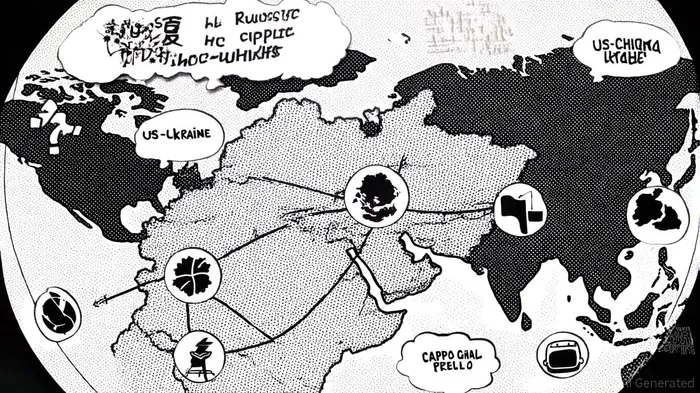







Comentarios
Aún no hay comentarios