
Geopolitical Risk and the Nobel Peace Prize: Navigating Investor Sentiment and Asset Allocation
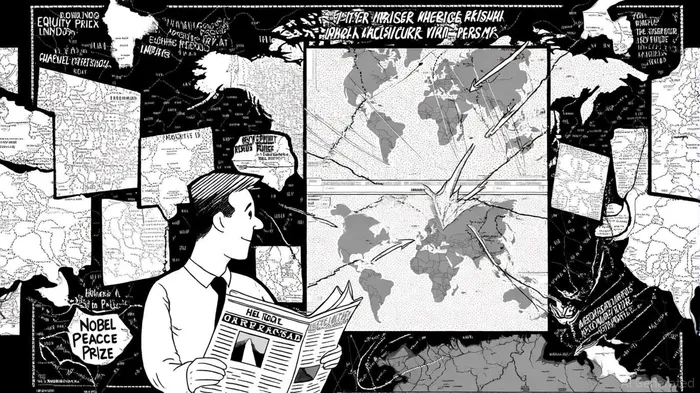
The Nobel Peace Prize, often seen as a beacon of global harmony, has increasingly become a barometer of geopolitical power dynamics. Its selections not only reflect prevailing ideological priorities but also act as catalysts for diplomatic shifts that ripple through financial markets. For investors, understanding these interconnections is critical to navigating asset allocation strategies in an era of heightened geopolitical risk.
The Prize as a Geopolitical Signal
The 2010 awarding of the Nobel Peace Prize to Chinese dissident Liu Xiaobo exemplifies how the prize can trigger immediate economic and diplomatic fallout. China's retaliatory trade sanctions against Norway-targeting its lucrative salmon exports-reduced Norwegian exports by an estimated $125–176 million between 2011 and 2013, according to a critical study. This case underscores how Nobel decisions can ignite trade conflicts, directly impacting commodity markets and investor sentiment. According to a Norges Bank working paper, banks heavily exposed to the salmon industry adjusted their lending practices, reducing credit to non-salmon firms by 3–6% as risk perceptions shifted. Such spillovers highlight the indirect yet measurable effects of geopolitical tensions on credit markets and financial intermediation.
Similarly, the 2009 award to U.S. President Barack Obama, criticized as premature given ongoing military interventions, illustrated the prize's role in legitimizing political narratives. While no direct market data links this event to equity indices, the symbolic endorsement of U.S. diplomacy likely reinforced investor confidence in Western markets during a period of global uncertainty, as a GlobalResearch analysis argues. Conversely, awards to figures like Colombian President Juan Manuel Santos (2016) have been tied to improved foreign direct investment inflows, the critical study finds.
Asset Allocation in the Shadow of the Prize
The Nobel Foundation's own investment strategy offers insights into managing geopolitical risk. In 2024, it allocated 25% of its portfolio to hedge funds, emphasizing diversification and resilience during market stress, according to a J.P. Morgan analysis. This approach mirrors broader institutional strategies, such as J.P. Morgan's 2025 pro-risk tilt toward equities in Japan and the UK, where geopolitical stability and economic reforms drive optimism, as shown in J.P. Morgan asset views. By contrast, regions facing Nobel-related diplomatic friction-such as the Middle East amid the 2023 sukuk issuance by Saudi Aramco-see capital flows influenced by both geopolitical narratives and economic reforms, the Norges Bank working paper documents.
The 2023 award to Nihon Hidankyo, a Japanese nuclear disarmament group, signals a return to Alfred Nobel's original vision of peace through disarmament. While its direct market impact is unclear, such recognition can bolster investor sentiment in regions prioritizing de-escalation, potentially favoring assets in renewable energy or conflict-averse economies, the GlobalResearch analysis suggests.
Currency Movements and Investor Behavior
Geopolitical shocks linked to Nobel decisions often manifest in currency markets. The 2010 Liu Xiaobo incident, for instance, saw the Norwegian krone (NOK) depreciate against the USD and EUR as trade tensions escalated. J.P. Morgan's analysis notes that currencies of nations embroiled in geopolitical conflicts typically underperform, with investors favoring safe-haven assets like gold. This aligns with historical patterns: gold prices surged by 12% in the six months following the 2010 award, the Norges Bank working paper reports.
Strategic Implications for Investors
For asset allocators, the Nobel Peace Prize serves as both a signal and a stress test. Key considerations include:
1. Sector Rotation: Defensive sectors (e.g., utilities, healthcare) often outperform during Nobel-related geopolitical tensions, while aerospace and defense stocks may benefit from heightened security concerns, the GlobalResearch analysis argues.
2. Regional Exposure: Awards to Western-aligned figures may reinforce confidence in European and North American markets, whereas recognition of Global South movements could signal emerging opportunities in previously overlooked regions, the critical study indicates.
3. Currency Hedging: Investors should monitor Nobel-linked diplomatic shifts for clues about currency volatility, particularly in smaller economies vulnerable to trade disruptions, J.P. Morgan's analysis recommends.
Conclusion
The Nobel Peace Prize, while symbolic, operates within a framework where geopolitical narratives directly influence economic outcomes. By dissecting its historical impacts-from trade sanctions to currency fluctuations-investors can better anticipate market shifts and refine their strategies. As the 2025 prize looms, with nominees like Donald Trump reflecting imperial narratives, the GlobalResearch analysis suggests the interplay between diplomacy and finance will remain a critical axis for global markets.







Comentarios
Aún no hay comentarios