
Geopolitical Risk Mitigation and Investment Opportunities: The Israel-Hamas Ceasefire and Its Global Implications
The recent Israel-Hamas ceasefire agreement, brokered in October 2025, marks a pivotal shift in the geopolitical risk landscape. This 20-point plan-brokered by U.S. President Donald Trump and supported by regional mediators like Qatar and Egypt-has temporarily paused hostilities, facilitated the release of all remaining Israeli hostages, and established humanitarian corridors for aid delivery[1]. While the deal remains fragile, its immediate effects on global markets and regional stability are already reshaping investment dynamics, particularly in safe-haven assets and post-conflict infrastructure.
Geopolitical Risk Mitigation: A New Paradigm
The ceasefire has reduced acute tensions in the Middle East, with analysts estimating a 1-2% decline in oil prices due to diminished risk premiums[2]. The easing of hostilities has also alleviated pressure on the Red Sea shipping route, which had been disrupted by Houthi attacks, fostering cautious optimism for trade resumption[3]. However, unresolved issues-such as Hamas's potential disarmament, Gaza's governance, and the role of international mediators-remain critical risks. As one expert notes, "The agreement's durability hinges on whether both parties can transition from tactical pauses to structural compromises"[4].
The U.S. and regional allies are pivotal in sustaining this fragile peace. Trump's plan emphasizes a technocratic governance structure for Gaza and a special economic zone with tariff benefits, aiming to balance humanitarian needs with long-term stability[5]. Yet, the involvement of Iran and groups like Hezbollah underscores the region's volatility, suggesting that geopolitical risk mitigation will require sustained diplomatic and economic engagement[6].
Safe-Haven Assets: Gold's Resurgence and Bond Market Anomalies
Amid the ceasefire's uncertainty, gold has surged to record highs, surpassing $4,000 per troy ounce in Q3 2025. This rally reflects its role as a hedge against inflation, currency devaluation, and geopolitical shocks, with central banks in emerging markets increasing gold reserves[7]. According to Bloomberg, gold-backed ETFs have seen unprecedented inflows, driven by both institutional and retail investors[8].
Government bonds, traditionally a safe-haven asset, have shown mixed behavior. While U.S. Treasury yields rose by 6.5 basis points to 4.423% during heightened tensions-contrary to typical safe-haven flows-Israel's successful $5 billion international bond issuance highlights market confidence in its financial resilience[9]. Analysts attribute this to narrower spreads and reduced risk premiums, signaling a shift in investor priorities toward high-quality sovereign debt[10].
Infrastructure Investment: Rebuilding and Regional Synergies
Post-conflict infrastructure investment in the Middle East is gaining momentum. Israel's "Revival District" initiative, allocating $5 billion for energy, housing, and environmental projects in the Gaza Envelope, exemplifies this trend[11]. The plan prioritizes renewable energy, aiming for 5GW of production by 2030, and includes prefabricated housing for displaced residents.
Regionally, the Gulf Cooperation Council (GCC) is leveraging its Vision 2030/2040 frameworks to drive infrastructure innovation. Saudi Arabia's NEOM megacity, the UAE's smart city projects, and Egypt's Ras El Hekma development underscore a shift toward sustainable, technology-driven growth[12]. The GCC Railway Project, aiming to unify member states via a regional rail network, and Jordan's high-speed rail initiatives further highlight the region's connectivity ambitions[13].
Conclusion: Balancing Opportunities and Risks
The Israel-Hamas ceasefire represents a critical but fragile step toward de-escalation. For investors, the shifting risk paradigm presents dual opportunities: capitalizing on safe-haven assets like gold and high-quality sovereign bonds while positioning for long-term gains in post-conflict infrastructure. However, the path to sustained stability remains uncertain, requiring vigilance against regional spillovers and political fragmentation. As global markets adapt to this new equilibrium, a balanced approach-combining short-term hedging with strategic, long-term investments-will be essential for navigating the evolving geopolitical landscape.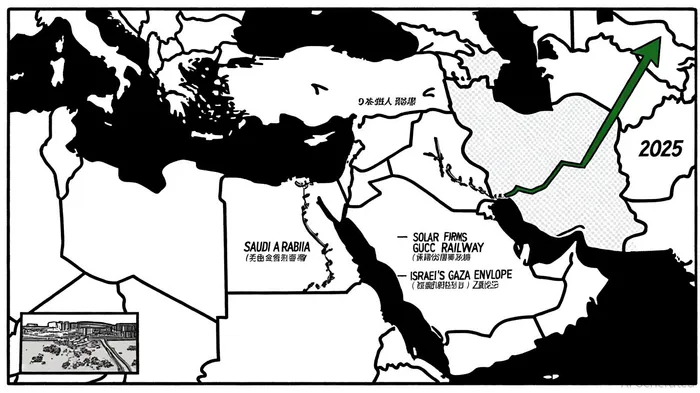







Comentarios
Aún no hay comentarios