
Geopolitical Risk Mitigation in Defense & Aerospace: Navigating the New Era of U.S.-Russia Talks
The recent U.S.-Russia diplomatic overture, marked by President Trump’s phone call with Putin on May 19, has injected a modicum of optimism into a geopolitical landscape long defined by tension. While the talks signal a potential reduction in near-term conflict probabilities, the underlying risks—Russia’s territorial ambitions, NATO’s Arctic militarization, and Ukraine’s unyielding stance—suggest that defense spending will remain a cornerstone of global strategy. For investors, this creates a nuanced opportunity to position portfolios in defense equities that thrive amid both de-escalation and lingering threats.
The Geopolitical Crossroads: Diplomacy vs. Deterrence
The May 19 talks, while historic, underscore the complexity of U.S.-Russia relations. While Trump emphasized reviving trade and peace negotiations—including a proposed Vatican venue—Putin’s insistence on addressing the “root causes” of the Ukraine war (read: regime change in Kyiv) highlights irreconcilable differences. Ukrainian President Zelensky, meanwhile, has conditioned talks on Russia’s acknowledgment of Ukraine’s sovereignty—a demand Russia has repeatedly dismissed.
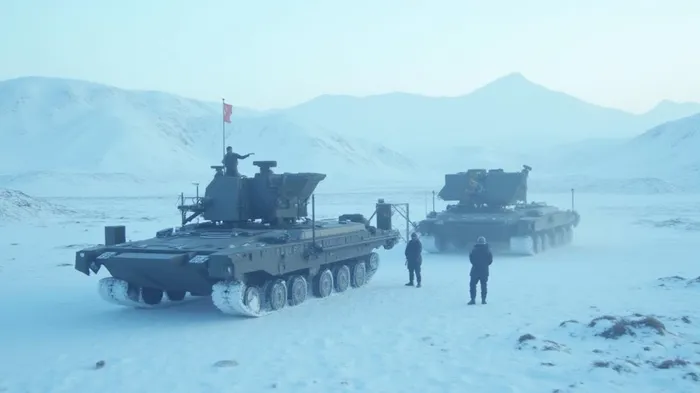
This stalemate leaves defense budgets in a precarious state. ISW’s analysis warns that Russia’s tactic of escalating territorial demands during negotiations could prolong the conflict indefinitely. Simultaneously, NATO’s detection of Russian military infrastructure near Finland and Estonia—evident in satellite imagery showing base expansions in Murmansk and Karelia—signals a strategic pivot toward Arctic dominance.
Defense Spending Cyclicality: Riding the Volatility
The near-term reduction in conflict risk may lead to short-term market optimism, but defense spending is unlikely to retreat. Historical data reveals that defense stocks often outperform during periods of geopolitical ambiguity, as governments prioritize deterrence over diplomacy.
Consider the performance of major defense contractors over the past three years:
While LMT’s stock has fluctuated with geopolitical headlines, its dividend yield has remained resilient, reflecting steady government contracts. Boeing’s defense segment, insulated from commercial aviation’s post-pandemic struggles, has grown steadily—a testament to the sector’s countercyclical nature.
The Dow Jones U.S. Defense Index (^DJUSDN) has surged 28% since 2022, outpacing broader market indices, as investors price in persistent global instability. Even if near-term conflict risks ease, Russia’s Arctic ambitions and NATO’s borderland deterrence (e.g., Finland’s €101M military aid to Ukraine) ensure that defense spending will remain elevated.
Where to Deploy Capital: Resilience Over Speculation
Investors must prioritize companies that thrive in both low- and high-tension environments. Focus on three pillars:
Cybersecurity and Intelligence Solutions:
As states increasingly weaponize digital systems, firms like Booz Allen Hamilton (BAH)—a leader in cyber defense and AI analytics—offer defensive tech with dual civilian-military applications.Advanced Weapons Systems with Export Potential:
Companies like Raytheon Technologies (RTX), which develops hypersonic missiles and radar systems, benefit from NATO’s need to modernize arsenals. RTX’s international contracts (e.g., F-35 exports to Japan) provide diversification against regional spending shifts.Space and Satellite Infrastructure:
The Space Force’s growth and Russia’s anti-satellite testing have fueled demand for resilient orbital systems. Maxar Technologies (MAXR), a builder of military satellites, and Northrop Grumman (NOC), which designs space-based surveillance, are prime plays on this trend.
Avoid overexposure to companies reliant on near-term combat spending (e.g., tank manufacturers) in favor of those with long-term strategic advantages.
Conclusion: A New Era of Pragmatic Investing
The U.S.-Russia dialogue marks a rare diplomatic opening, but it does not erase systemic risks. Defense equities will continue to reward investors who focus on resilience—companies with technologies that are both mission-critical and adaptable to shifting geopolitical winds.
Act now: Allocate to firms at the intersection of cybersecurity, space innovation, and advanced defense systems. The next phase of geopolitical uncertainty favors those who invest in preparedness, not panic.
The time to position for this new era is now.







Comentarios
Aún no hay comentarios