
Geopolitical Risk and the U.S. Middle East Policy: Navigating Market Volatility in 2025
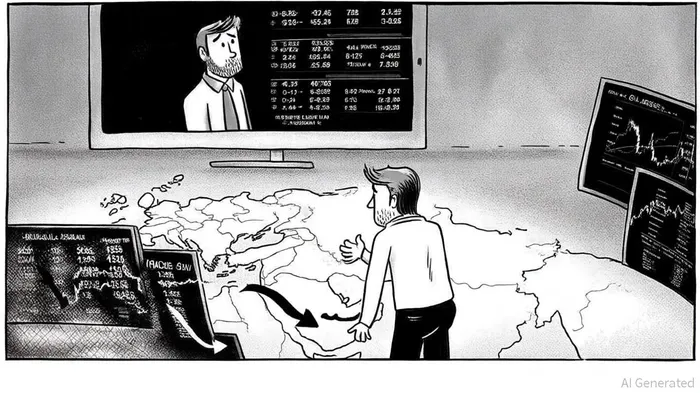
The U.S. Middle East policy statements and military actions in 2025 have reignited debates about the interplay between geopolitics and global markets. Recent Israeli airstrikes on Iranian nuclear and military infrastructure have not only escalated regional tensions but also triggered a sharp spike in oil prices—up over 10% in a single week—and a corresponding flight to safety in gold, which hit a two-year high[1]. These developments underscore how U.S. policy decisions, even when geographically localized, reverberate across asset classes and investor behavior worldwide.
The New Normal: Geopolitical Uncertainty and Market Resilience
While the immediate reaction to Middle East escalations has been volatile, historical patterns suggest markets are increasingly adept at parsing short-term shocks from long-term fundamentals. For instance, the Israel-Hamas conflict in late 2023 initially rattled equities but stabilized as corporate earnings and economic momentum took precedence[2]. Similarly, the Russia-Ukraine war in 2022 caused a temporary selloff, but equities rebounded within months as central banks adjusted policy[2].
However, the current landscape is distinct. The U.S. dollar's muted response to recent tensions—a 0.3% decline against the euro—contrasts with its traditional role as a safe-haven asset[1]. This reflects a broader erosion of the dollar's dominance, driven by structural factors like global diversification away from U.S. assets and the rise of alternative currencies[3]. Meanwhile, investors are hedging against energy shocks by prioritizing high-quality bonds and sectors like utilities and healthcare[3].
Strategic Shifts in Asset Allocation
The past year has seen a marked shift in asset allocation strategies. Tactical pullbacks during crises are now viewed as opportunities to overweight defensive sectors. For example, consumer staples and healthcare have outperformed cyclical industries like industrials and materials[3]. Credit strategies emphasize short-duration, high-grade bonds, with fund managers avoiding ultra-long maturities to mitigate interest rate risks[3].
The Strait of Hormuz remains a critical focal point. A prolonged disruption to oil shipments through this chokepoint could push prices above $100/barrel, exacerbating inflationary pressures globally[4]. Yet, the likelihood of such a scenario remains low, given the calculated nature of recent actions and U.S.-European diplomatic efforts to de-escalate[1]. This has allowed markets to remain anchored to macroeconomic narratives, including the Federal Reserve's potential rate cuts and progress on U.S.-China trade controls[1].
The Role of U.S. Policy in Shaping Investor Sentiment
The Trump administration's approach to Middle East policy—marked by unilateral economic nationalism and reduced U.S. diplomatic engagement—has compounded uncertainty[5]. Cutbacks in institutions like the U.S. Agency for International Development have weakened long-term partnerships, creating a vacuum that non-state actors and rival powers are quick to exploit[5]. This has forced investors to adopt a more fragmented view of risk, with portfolios increasingly diversified across regions and asset classes.
Despite these challenges, the Economic Policy Uncertainty Index has declined slightly in 2025, suggesting investors are adapting to a world of frequent policy shifts[3]. Global inflation is expected to peak in the U.S. by year-end, while disinflationary trends in Europe and Asia provide room for accommodative monetary policies[3]. This divergence highlights the importance of relative value strategies, with fund managers prioritizing emerging markets and commodities over overvalued U.S. equities[3].
Conclusion: Balancing Risk and Opportunity
The Middle East remains a wildcard in 2025, but its impact on markets is increasingly mediated by macroeconomic fundamentals. While oil and gold will continue to act as barometers of geopolitical risk, the broader market's resilience—rooted in strong earnings and central bank interventions—suggests that selloffs will remain short-lived[4]. For investors, the key lies in maintaining a balanced portfolio: overweighting defensive assets during crises, while staying positioned for a rebound in risk-on sentiment.
As the U.S. navigates its evolving role in the Middle East, one thing is clear: geopolitical risk is no longer a binary on-off switch but a dynamic force that demands constant recalibration.







Comentarios
Aún no hay comentarios