
Geopolitical Risk and Market Volatility in Trump's Second Term: Navigating the New Normal
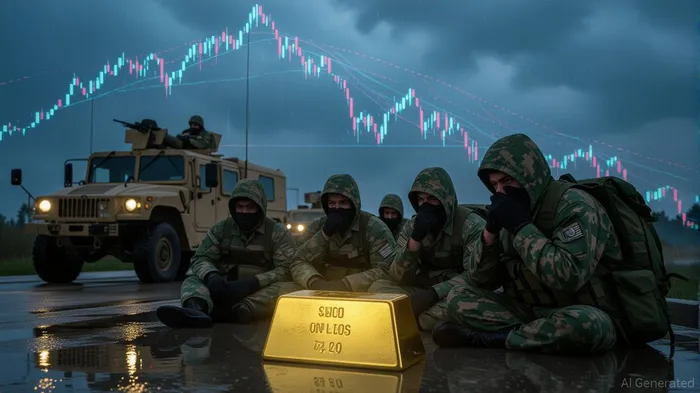
In 2025, the global economy is grappling with the seismic shifts wrought by President Donald Trump's second-term policies. Tariffs, military escalation, and federal law enforcement actions have created a landscape of heightened geopolitical risk and market volatility. For investors, understanding the interplay between these policies and asset class performance is critical to navigating the new normal.
Tariffs and Trade Fragmentation: A Catalyst for Uncertainty
Trump's aggressive tariff regime—averaging 18.2% by July 2025, the highest since 1934—has fractured global trade networks[1]. The immediate fallout was stark: U.S. stocks lost $5.4 trillion in value within two days of the initial announcement, while oil prices plummeted to a four-year low[3]. Countries like China swiftly redirected exports to Europe and North America, achieving 6% and 25% growth in those regions, respectively[1]. This realignment has not only disrupted supply chains but also accelerated geoeconomic fragmentation, with nations scrambling to negotiate bilateral trade deals to circumvent U.S. tariffs[1].
The World Economic Forum's Chief Economist Outlook underscores the gravity of the situation, noting that trade policy now ranks as the highest area of global uncertainty for chief economists[1]. This uncertainty has stifled long-term investment, as businesses adopt cautious financial strategies to mitigate exposure to volatile trade environments[1].
Military Escalation and the Defense Sector: A New Era of Preparedness
Trump's military actions—controversial strikes on a Venezuelan drug boat and an Israeli attack on Hamas leaders in Doha, Qatar—have raised questions about his administration's use of force[1]. Domestically, the rebranding of the Department of Defense to the Department of War, coupled with a focus on a “warrior ethos,” signals a strategic pivot toward heightened readiness[3]. Defense Secretary Pete Hegseth's pledge to conduct a $850 billion budget audit and eliminate waste further emphasizes fiscal discipline amid increased spending[1].
The defense sector has responded with renewed vigor. Investors are flocking to defense-focused ETFs, such as the XHE (Defense & Aerospace Equipment), which saw a 12% surge in Q3 2025[1]. This growth is driven by both geopolitical tensions and Trump's emphasis on military modernization. For investors, defense stocks and ETFs offer a hedge against instability, though risks remain tied to policy shifts and budgetary constraints.
Energy Market Volatility: Policy Whiplash and Transition Challenges
The energy sector is caught in a crossfire of Trump's protectionist policies and abrupt legislative changes. The One Big Beautiful Bill Act (OBBBA) terminated key energy credits, such as the residential clean energy credit, by August 2025[2]. This move has stymied renewable energy investments, forcing a reevaluation of long-term strategies in the sector[2]. Meanwhile, the administration's push for energy independence—through domestic oil and gas production—has stabilized short-term energy costs but introduced volatility in global markets[2].
Gold, however, has emerged as a beneficiary of this uncertainty. Prices surged 22% in Q3 2025 as investors flocked to safe-haven assets[1]. The U.S. dollar's weakening further amplified gold's appeal, with the World Economic Forum noting that geopolitical risk has become a primary driver of its price trajectory[3]. For energy investors, a diversified approach—balancing traditional energy producers with safe-haven allocations—is essential to weathering policy-driven shocks.
Positioning Strategies: Diversification in a High-Risk Environment
In this climate, investors must prioritize resilience over growth. Here are three actionable strategies:
- Defense Sector Exposure: Allocate to ETFs like XHE or individual stocks (e.g., Lockheed MartinLMT--, Raytheon) to capitalize on military modernization trends[1].
- Energy Diversification: Balance portfolios with a mix of traditional energy producers (e.g., ExxonMobil) and renewable energy innovators to hedge against policy swings[2].
- Safe-Haven Assets: Increase gold allocations to 10–15% of portfolios, leveraging its inverse correlation with geopolitical risk[1]. Government bonds, particularly U.S. Treasuries, also offer stability amid volatility[3].
Conclusion: Preparing for the Unpredictable
Trump's second term has ushered in an era of unprecedented geopolitical and economic volatility. While tariffs and military actions have disrupted global markets, they have also created opportunities for investors who prioritize adaptability. By focusing on defense, energy, and safe-haven assets, investors can navigate the turbulence while positioning themselves for long-term resilience.
As the world adjusts to this new reality, one thing is clear: the ability to anticipate and respond to policy-driven shocks will define success in the markets of 2025 and beyond.







Comentarios
Aún no hay comentarios