
Geopolitical Risk and Market Volatility: Trump's Hamas Comments and Strategic Investment Implications
Geopolitical Risk and Market Volatility: Trump's Hamas Comments and Strategic Investment Implications
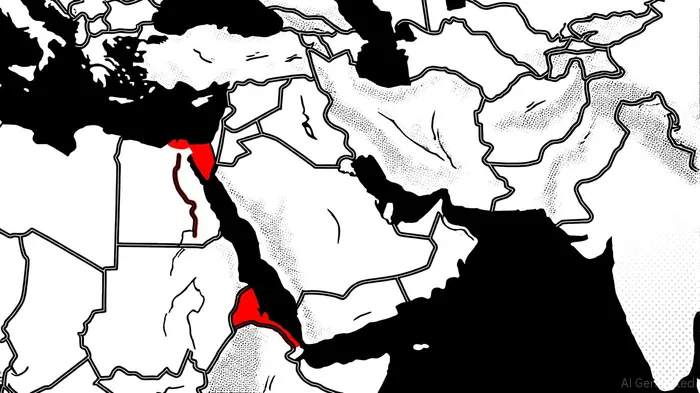
In October 2025, U.S. President Donald Trump's 20-point ceasefire proposal for Gaza-aimed at ending the Israel-Hamas war-has reignited debates about geopolitical risk and its cascading effects on global markets. While Trump celebrated Hamas's conditional acceptance of the plan, including the release of all hostages, as a "victory," according to CNN, the conditional nature of Hamas's response and Trump's ultimatum-threatening "all hell" in Gaza if the plan fails-highlight the fragility of the situation. This volatility mirrors historical patterns where Trump's Middle East-related statements have triggered market turbulence, underscoring the need for investors to adopt hedging strategies and reassess asset allocations.
Escalating Tensions and Diplomatic Uncertainty
Trump's recent intervention has created a precarious balancing act for regional actors. While Israeli Prime Minister Benjamin Netanyahu's office cautiously endorsed the proposal, right-wing factions within Israel, such as Finance Minister Bezalel Smotrich, criticized it as premature, as reported by the Los Angeles Times. Meanwhile, Hamas has not committed to disarming, a core demand of the plan, CNN reported. This ambiguity raises the risk of renewed hostilities, particularly if Israel perceives the ceasefire as insufficient to secure its long-term security.
Historically, Trump's transactional approach to Middle East diplomacy-marked by abrupt policy shifts and high-stakes ultimatums-has exacerbated regional instability. For instance, his 2017 recognition of Jerusalem as Israel's capital and 2020 withdrawal from the Iran nuclear deal triggered spikes in oil prices and regional stock market declines, as noted in an FXStreet analysis. Similarly, his recent warnings to Hamas could amplify market jitters, especially if the ceasefire collapses and military operations resume.
Market Volatility: Lessons from the Past
Trump's past statements and policies have demonstrated a clear correlation with market volatility. During the 2017–2021 period, his tariff announcements on Middle Eastern countries, including 10% on Gulf Cooperation Council states and 41% on Iraq and Syria, caused Gulf stock markets to plummet and oil prices to swing wildly, as CNN reported. The VIX, or "fear index," frequently spiked during this era, particularly when Trump issued unexpected trade threats or geopolitical provocations, according to a PKF-L analysis.
For example, in April 2019, Trump's sudden announcement of higher tariffs on China led to a 16% peak-to-trough drop in the MSCI World index, followed by a rapid recovery, PKF-L noted. Similarly, his 2025 tariff policies triggered sharp declines in the S&P 500 and increased bond market volatility, as PKF-L observed. These episodes illustrate how Trump's rhetoric and policy shifts can act as catalysts for short-term market turbulence, even if long-term fundamentals remain unchanged.
Strategic Investment Recommendations
Given the current geopolitical climate, investors should prioritize risk mitigation and flexibility. Here are three actionable strategies:
- Hedge Against Geopolitical Shocks
- Safe-haven assets: Increase allocations to gold, U.S. Treasuries, and Swiss francs, which historically perform well during periods of uncertainty (FXStreet analysis referenced above).
Diversified equities: Reduce exposure to energy and regional banking stocks, which are vulnerable to Middle East volatility. Instead, consider defensive sectors like healthcare and utilities.
Leverage Currency and Commodity Hedges
- Oil-linked instruments: Given the potential for renewed hostilities to disrupt oil supplies, consider short-term hedging via Brent crude futures or energy ETFs.
Currency diversification: Allocate to non-U.S. dollar assets, such as the euro or yen, to offset potential dollar strength driven by U.S. geopolitical tensions (see FXStreet analysis referenced earlier).
Adopt a Dynamic Asset Allocation Framework
- Rebalance portfolios: Shift toward high-quality, liquid assets with strong cash flows, such as dividend-paying stocks or short-duration bonds.
- Scenario planning: Stress-test portfolios against worst-case scenarios, including a 20% drop in global equities or a 30% surge in oil prices, as discussed in the PKF-L analysis referenced above.
Conclusion
Trump's recent Hamas-related statements underscore the enduring link between U.S. Middle East policy and global market volatility. While the 20-point plan offers a glimmer of hope, the conditional nature of Hamas's response and Trump's aggressive rhetoric heighten the risk of renewed conflict. Investors must remain vigilant, leveraging historical precedents to navigate uncertainty. By prioritizing hedging strategies, diversification, and dynamic asset allocation, portfolios can better withstand the turbulence of a world where geopolitical risk remains a dominant force.







Comentarios
Aún no hay comentarios