
Geopolitical Risk and Market Volatility: Navigating Short-Term Turbulence and Sectoral Resilience
In an era marked by persistent geopolitical tensions, investors face a dual challenge: managing short-term market turbulence while identifying sectors capable of withstanding-or even thriving in-uncertain environments. From the protracted Russia-Ukraine conflict to the 2025 U.S.-initiated trade wars, global markets have experienced heightened volatility, with cross-border risk spillovers amplifying macroeconomic uncertainty. According to a report by the International Monetary Fund (IMF), emerging markets have seen average monthly stock returns decline by 5 percentage points during major international military conflicts, underscoring the fragility of asset prices in times of geopolitical stress; an EY insight also emphasizes the need for nimble strategy in aerospace and defense.
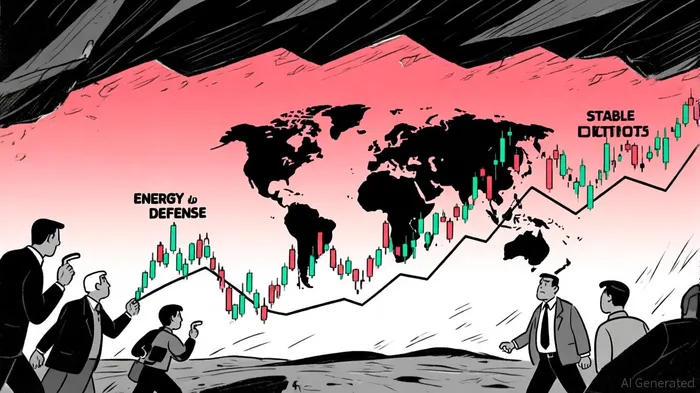
Short-Term Volatility: The Cost of Uncertainty
Geopolitical shocks act as catalysts for market instability by disrupting supply chains, inflating commodity prices, and eroding investor confidence. For instance, the 2025 Israel-Iran escalation triggered a nearly 3% weekly drop in the S&P 500 Energy sector, while the "Trump Slump" saw major U.S. indices like the S&P 500 and Nasdaq contract amid trade policy uncertainty, according to a MarketMinute article. These events highlight the asymmetric nature of geopolitical risks: while some shocks are short-lived, others, such as the Russia-Ukraine war, create prolonged volatility. Data from JPMorgan indicates that bond markets often serve as conduits for transmitting these risks, with sovereign debt yields spiking as investors recalibrate risk premiums, a point documented in a ScienceDirect paper.
Sectoral Resilience: Defense and Energy as Contrasting Anchors
Amid this turbulence, certain sectors exhibit resilience. The aerospace and defense industry, for example, has historically outperformed during conflicts. The S&P 500 Aerospace & Defense sector recorded average returns of +10.8% over six months following major geopolitical events, driven by increased government spending on military procurement, according to a PLOS One study. This trend reflects a strategic shift: nations prioritizing security are allocating resources to modernize defense capabilities, creating a tailwind for firms specializing in air defense systems, naval technology, and cybersecurity, as noted in the EY insight.
Conversely, the energy sector remains a double-edged sword. While supply shocks from conflicts like the Ukraine war initially boosted energy stocks-recording a 27.1% gain over twelve months-the sector's long-term performance is inconsistent. A 2025 World Energy Report notes that energy markets require robust policy frameworks to enhance resilience, as oil markets, in particular, face longer recovery periods compared to natural gas and coal, a point explored in the ScienceDirect paper. This volatility underscores the sector's sensitivity to both geopolitical and regulatory dynamics.
Strategic Adaptation: Supply Chains and Cybersecurity
Beyond traditional sectors, geopolitical risks are reshaping corporate strategies. The EY-Parthenon CEO Outlook Survey reveals that 78% of companies are adopting near-sourcing and in-sourcing to mitigate supply chain vulnerabilities, while integrating automation and AI to enhance operational agility. Similarly, cybersecurity has emerged as a critical investment area, with energy infrastructure increasingly targeted by cyberattacks. A PLOS One study highlights the asymmetric relationships between geopolitical uncertainty and market volatility in defense and cybersecurity sectors, suggesting these industries serve as effective hedges during crises.
Conclusion: Balancing Risk and Opportunity
For investors, the key lies in balancing short-term risk mitigation with long-term strategic positioning. While defense and cybersecurity sectors offer relative stability, energy markets demand cautious optimism. Policymakers and corporate leaders must also prioritize resilience-building measures, from diversified energy portfolios to AI-driven supply chain solutions. As geopolitical risks persist, markets will continue to test the mettle of both investors and institutions-a reality that demands adaptability, foresight, and a nuanced understanding of sectoral dynamics.







Comentarios
Aún no hay comentarios