
Geopolitical Risk and Market Resilience in a Fractured World
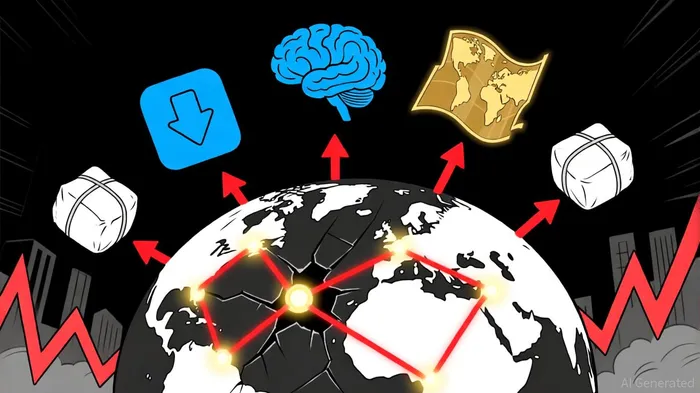
Near-Term Volatility: Sectors Under Geopolitical Pressure
The U.S. cotton industry exemplifies the immediate risks of trade uncertainty. While Texas remains the backbone of U.S. cotton production, global competition and tariff fluctuations-driven by U.S.-China negotiations-threaten margins. These talks, which extend beyond traditional trade to include rare earth elements and intellectual property disputes, have triggered triple-digit tariff threats and supply chain shifts toward Southeast Asia, according to a analysis. Similarly, the smart tourism sector faces headwinds from U.S. tariff hikes, forcing hospitality firms to adopt local sourcing strategies to offset rising costs, according to a .
Meanwhile, technology decoupling between the U.S. and China has intensified volatility in AI and semiconductor industries, with firms recalibrating R&D investments and inventory strategies. A BlackRock geopolitical risk dashboard highlights how cyber threats and trade protectionism are amplifying uncertainty, particularly in consumer durables and Treasury markets. European firms, however, have shown greater resilience, prioritizing intangible assets like R&D over physical expansion, according to a column.
Long-Term Growth: Adapting to Structural Shifts
Amid the chaos, certain sectors are poised for sustained growth. The nootropics market, for instance, , driven by mental health awareness and e-commerce innovation, according to a . This resilience stems from structural demand, insulated from short-term geopolitical shocks. Similarly, smart tourism, despite near-term challenges, , fueled by 5G expansion and AI-driven personalization (the Smart Tourism report cited earlier projects this growth).
Investors should also consider the indirect benefits of trade tensions. For example, U.S. firms retreating to domestic supply chains may boost industries like advanced manufacturing, while EU firms diversifying import sources could strengthen regional agricultural and tech ecosystems, as noted in the VoxEU column referenced above.
Strategic Positioning: Balancing Risk and Reward
To thrive in this fractured world, investors must adopt a dual strategy: hedging against near-term volatility while capitalizing on long-term trends. Sectors like nootropics and smart tourism offer asymmetric upside, with growth drivers insulated from geopolitical noise. Conversely, cotton and other trade-sensitive industries require careful hedging against tariff fluctuations and supply chain disruptions.
Technology decoupling also demands a nuanced approach. Firms investing in AI and cybersecurity-areas prioritized by both U.S. and Chinese policies-can benefit from fragmented innovation ecosystems, as highlighted earlier by BlackRock's dashboard. Meanwhile, KPMG's risk report underscores the importance of corporate agility, urging firms to align compliance and workforce strategies with geopolitical realities.
Conclusion
The 2025 geopolitical landscape is neither uniformly bleak nor optimistic. While trade tensions and technological fragmentation create near-term turbulence, they also catalyze long-term structural shifts. By prioritizing sectors with resilient demand and adaptive supply chains, investors can navigate volatility and position for growth in an increasingly fractured world.







Comentarios
Aún no hay comentarios