
Geopolitical Risk and Market Divergence: Assessing the Oil Price Rally and Sectoral Implications
The market is sending a clear signal. On Friday morning, Dow Jones Industrial Average futures edged higher while Nasdaq futures slipped. The specific moves-Dow up 0.01% and Nasdaq down 0.03%-are small, but they mirror a broader split that defined Thursday's session. That day, the Dow jumped toward a record high, while the Nasdaq was pressured by its tech-heavy names. This isn't random choppiness. It's a deliberate reallocation of capital, a classic flight to perceived safety and inflation hedges in the face of escalating geopolitical risk.
The barometer for this shift is oil. As the Iranian regime faces its most severe existential threat in decades, crude oil prices are climbing on fears of supply disruptions. West Texas Intermediate futures snapped a bearish streak, rising on the week. In this environment, the market is pricing in a tangible risk premium. Energy and defense stocks, the Dow's heavyweights, are seen as direct beneficiaries of potential supply shocks and heightened global tensions. Their modest gains reflect that bet. Meanwhile, the Nasdaq's slight decline underscores the market's calculation that a Middle East conflict carries significant inflationary baggage, which weighs on the growth-sensitive, high-multiple tech sector.
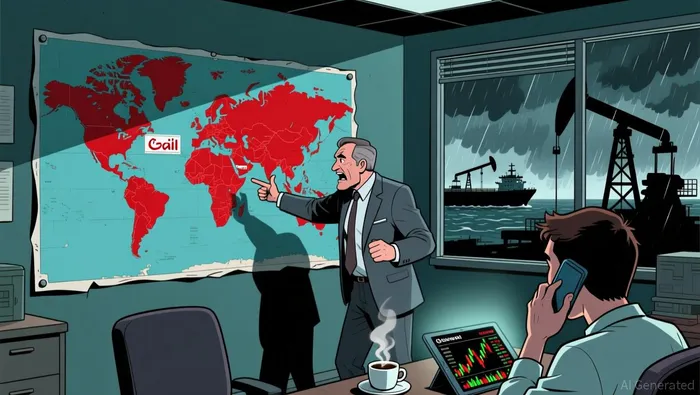
The Geopolitical Catalyst: Iran's Existential Threat
The current oil price rally is not a reaction to a minor regional flare-up. It is a direct response to a structural threat to a major global supplier. The scale and spread of the unrest in Iran are what make this different from previous events. This is not a localized protest; it is a nationwide movement that has engulfed over 100 cities and towns and resulted in at least 36 deaths. The regime's violent crackdown has triggered a nationwide "general strike" call, a move that threatens to paralyze the economy and signals a level of dissent that the government views as an existential security threat.
This sets Iran apart from recent geopolitical events like the Venezuela situation. While the U.S. seizure of Venezuelan assets and tankers last week introduced a new variable, the scale of potential disruption is fundamentally different. Venezuela's 0.5 million barrels per day of production is a notable supply source, but it is a fraction of the global market. Iran, by contrast, is a major exporter around 2 million barrels per day and a producer of 3.2-3.5 million barrels per day. Any sustained disruption to that flow would be materially significant for global inventories and prices.
The risk is amplified by the regime's likely response. As the protests have expanded into sensitive western and northwestern regions, the government has shown a willingness to deploy its elite Islamic Revolutionary Guards Corps (IRGC) Ground Forces to crush dissent. This suggests a brutal crackdown is underway, which in turn raises the stakes for external actors. The U.S. has already signaled it may act, with recent comments warning of retaliation if Iranian protesters are killed. This creates a dangerous feedback loop: a more violent domestic crackdown could invite a more direct foreign intervention, further destabilizing a region that is already a critical oil transit zone.
The bottom line is that Iran represents a higher-impact risk. The sheer volume of its production, the depth of the domestic unrest, and the potential for a regional escalation make this a more potent catalyst for a sustained oil price rally than isolated events elsewhere. The market is pricing in that material risk.
Market Mechanics: Pricing the Risk Premium
The market is not pricing a broad Middle East war, but a specific, high-impact risk: the potential for a major oil supply chokepoint. This is a classic risk premium in action, where traders are hedging against the closure of the Strait of Hormuz or damage to Iranian infrastructure. The mechanics are clear in the price action. Brent crude futures rose to $62.43 per barrel, while West Texas Intermediate climbed to $58.15. Both benchmarks are set for weekly gains, with Brent up over 3% for the week. This rally is a direct response to the escalating situation in Iran, where the regime's violent crackdown has triggered a nationwide "general strike" and expanded unrest into sensitive western regions.
Yet, this rally faces a powerful constraint. The primary driver of oil markets remains a structural oversupply, as evidenced by global inventories rising. This fundamental backdrop acts as a ceiling on gains, reminding traders that the risk premium is a bet on a specific, not a general, disruption. The market is sensitive to early indicators that the regime's control is eroding. The nationwide internet blackout reported on Thursday is a critical data point in this calculus. Such a move is a classic sign of a state losing grip, and it has directly fueled the risk premium in energy markets.
The setup is one of contained escalation. The U.S. seizure of Venezuelan assets last week introduced another variable, but the scale of potential disruption from Venezuela's 0.5 million barrels per day of production is a fraction of what Iran represents. Iran's 2 million barrels per day of exports and 3.2-3.5 million barrels per day of production are the material numbers that keep the market on edge. For now, the risk premium is being priced in, but it is a premium that must constantly battle the reality of rising inventories and the market's memory of a $55 low. The oil price rally is a story of selective fear, not broad panic.
Scenarios and Catalysts: Pathways for Oil and Equity Markets
The path forward for oil prices hinges on a binary outcome: either the regime's control erodes further, or it successfully crushes dissent. The primary upside catalyst is a broader regional conflict or direct damage to Iranian oil infrastructure. This would trigger a classic supply shock, likely forcing the Strait of Hormuz closed and materially disrupting the 2 million barrels per day of exports that are the market's focal point. Such an event would validate the current risk premium and likely send prices sharply higher, potentially breaking through recent resistance levels. The market is already hedging this scenario, with traders pricing in the threat of U.S. intervention to "rescue" protesters.
The key downside risk is a brutal but effective crackdown that stabilizes the regime. If the government can reassert control, quell the nationwide "general strike" call, and restore order, the geopolitical premium would evaporate. The recent nationwide internet blackout is a critical early indicator of this strategy. While it may temporarily suppress information, a successful crackdown would remove the core fear of a supply chokepoint, leading to a swift unwind of the rally. The market's memory of a $55 low for WTI remains a powerful anchor.
For investors, the watchlist is clear. First, monitor for any U.S. intervention signals, particularly from the White House, as these directly influence the risk calculus. Second, track the regime's response for signs of control erosion: sustained internet blackouts, security force defections, or the spread of protests into new regions. These are the on-the-ground indicators that the risk premium is being priced in correctly. Third, be aware of broader economic catalysts that could indirectly affect the setup. The U.S. Supreme Court's decision on tariffs could reshape global trade and demand dynamics, while the upcoming jobs report will influence the Federal Reserve's path and, by extension, the economic backdrop for oil.
The bottom line is that the oil market is in a state of high sensitivity. The rally is a bet on a specific, high-impact scenario. Until that scenario materializes or is ruled out, the price will remain volatile, swinging on each new development from Tehran. For equity markets, the divergence between the defensive Dow and the growth-sensitive Nasdaq will persist as long as this geopolitical uncertainty lingers.







Comentarios
Aún no hay comentarios